
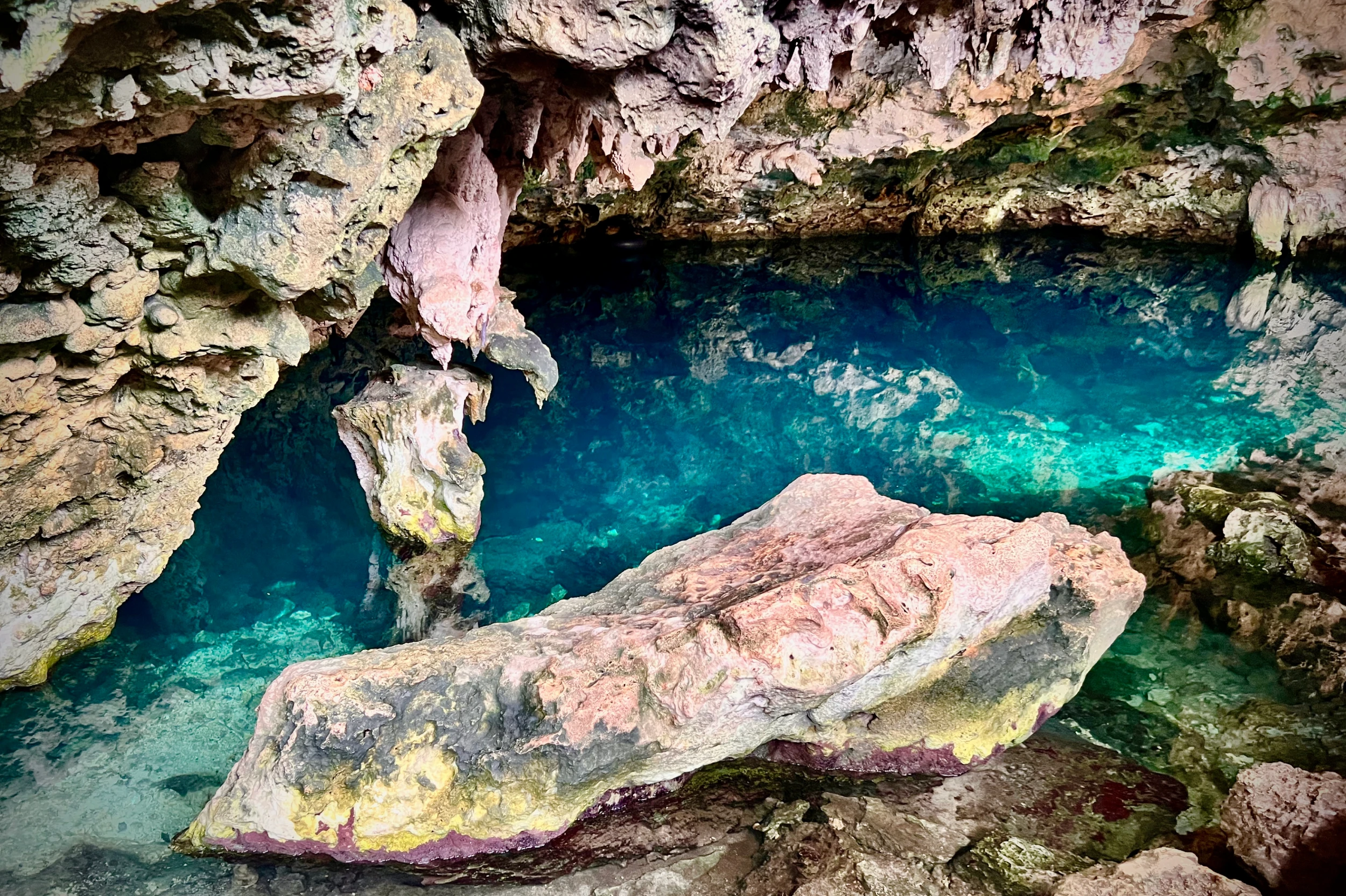

Zanzibar is famous for beaches. White sand. Warm sea. Coconut palms leaning at the usual Instagram angle. But some of the best swimming experiences on the island are inland, below the coral rock.
Inside natural cave pools where the water is clear, cool, and slightly outerworldly.
Maalum and Kuza are the obvious pair to compare. They sit only a few kilometres apart on the southeast coast, around Paje and Jambiani. Both have clear water. Both offer a break from the heat. Both involve walking down into coral rock and jumping into a natural pool.
That is where the similarities end: Maalum is polished, Kuza rougher. Maalum feels curated and almost spa-like. Kuza is darker, quieter, and closer to my initial idea of a cave swim before visiting. One has lockers, stairs, a spa, and a restaurant. The other has more shadow, more rock, and less polish. I like both, for different reasons.
Maalum Cave near Paje
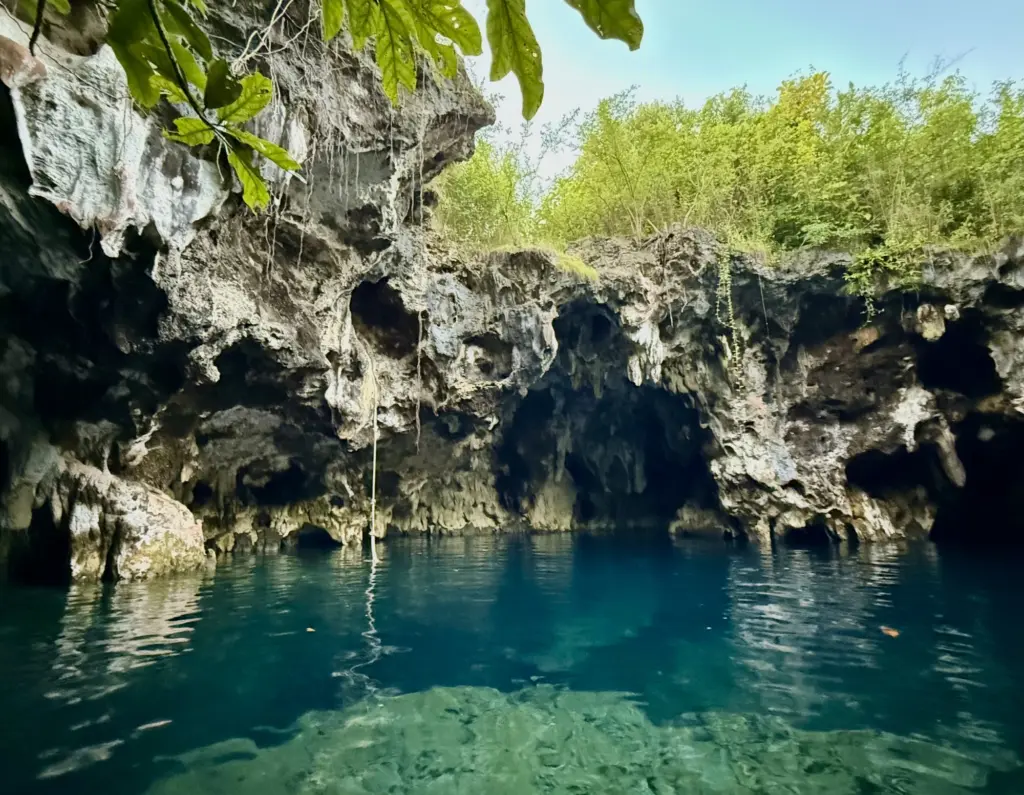
Maalum is the easy one: proper entrance, changing rooms, lockers, wooden stairs, and a setup built for a neat visit. After a hot Zanzibar drive, a clean changing room is not anti-adventure. Maalum also has a spa and restaurant that I’m yet to try. Research excuse secured!
The pool sits below the coral rock, open to daylight from above. The main pool is bright and clear, with pale blue-green Zanzibar water that sends half the visitors reaching for a phone. Wooden stairs lead down. A small pier works for jumping and diving. There is also a rope for climbing and dropping back in.
The rope is fun, and a quick audit of your actual upper-body strength versus your remembered one. The coral rock walls carry the place: rough walls, clean water, patches of shade, and enough drama to keep it from feeling like a hotel pool with better branding.
The water is refreshing, not cold. This is Zanzibar. If you want punishment from water, Norway has lakes.
A smaller side pool sits away from the main cave. Darker, tighter, more enclosed, reached by separate stairs. A tunnel links it back towards the main pool. That is the part of Maalum that feels more cave, less spa.
Maalum is a pleasant swim: clear water, dramatic rock, easy access, proper facilities. And busy: Expect other visitors. Many of them. Almost regardless of time.
Maalum is the comfortable cave pool: natural rock, shaped around comfort, photos, and easy access. Just don’t expect silence, solitude, or the feeling of discovering a hidden cave. That ship sailed, probably with a tour group on board.
Kuza Cave near Jambiani
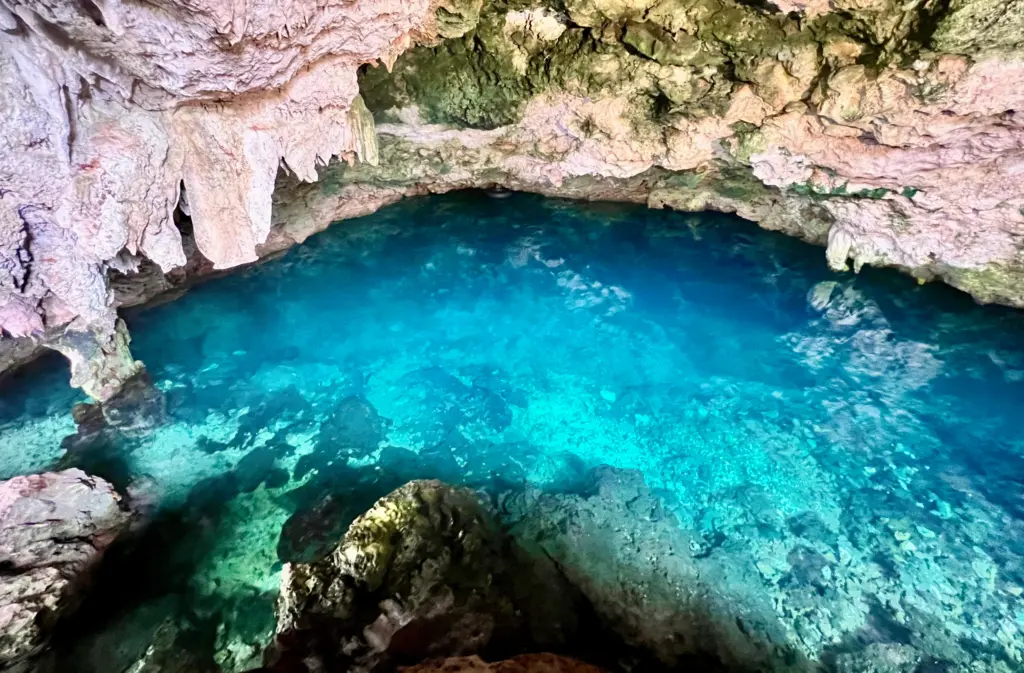
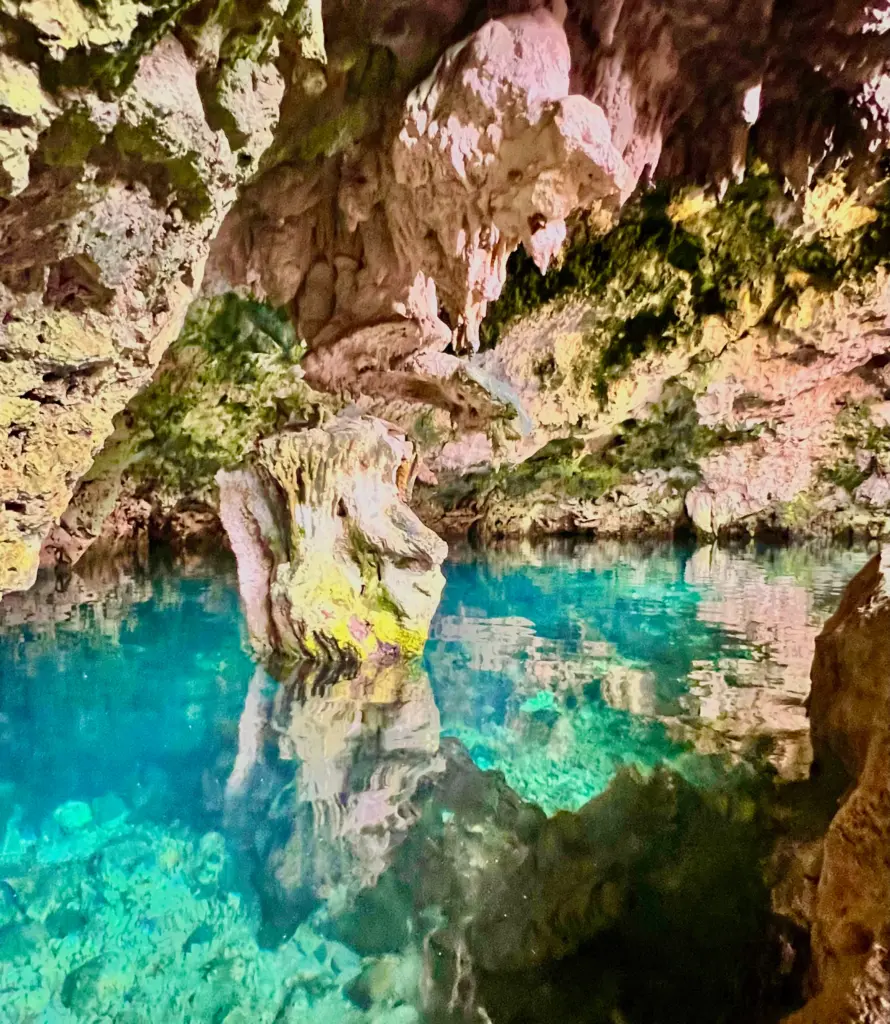
A few kilometres further south, near Jambiani, Kuza is the rougher counterpart. This one is simpler and rougher. A fence. Some stairs. Less design. Less décor. More cave.
Kuza is smaller than Maalum, but the setting is stronger. The pool sits under an overhang, so daylight enters, but direct sun barely reaches the water. The place is cooler. More dramatic.
The light setting brings out all colours more strongly, in a setting that feels more dramatic. While Kuza may be simpler, rougher, and more rugged, it is still also a visitor site with organised activities around and cultural experiences.
But entering the place feels more like an exploration mission. To some extent, at least. With less visitors, the place is also quieter and feels more pristine. A little bit more of that adventure vibe.
Maalum or Kuza?
Maalum for comfort. Kuza for cave: Maalum is brighter, cleaner around the edges, and easier for families, couples, casual swimmers, and anyone who just want a memorable swim in an instagrammable setting. Kuza is darker, rougher, and more dramatic, with some atmosphere. would take a first-time Zanzibar visitor to Maalum if they wanted something easy and beautiful.
But the answer is really a no-brainer unless time is a big constraint: visit both. Especially if you stay in Paje, Bwejuu, or Jambiani, or anywhere nearby, both are just a quick trip away.
Mnarani Aquarium in Nungwi
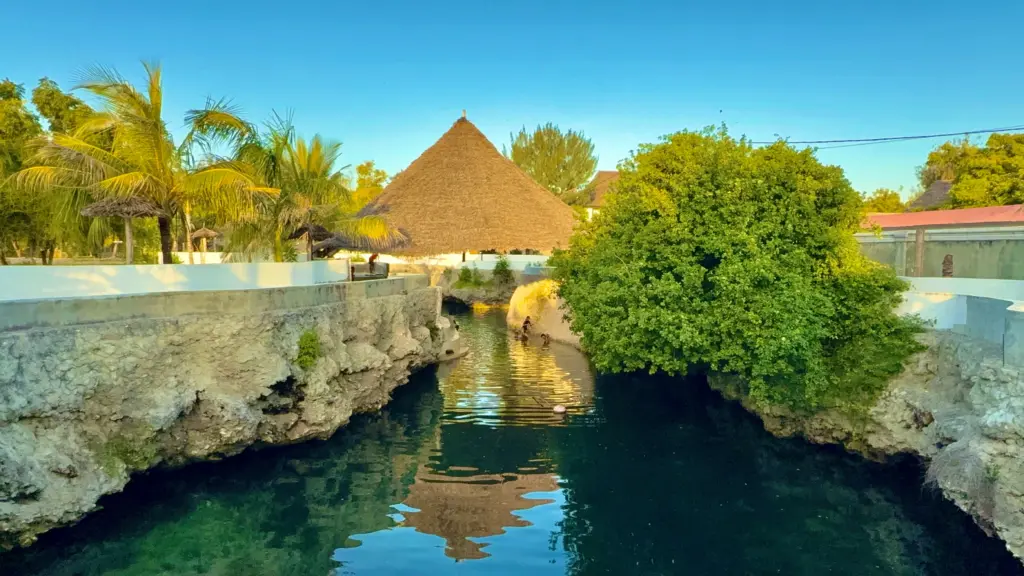
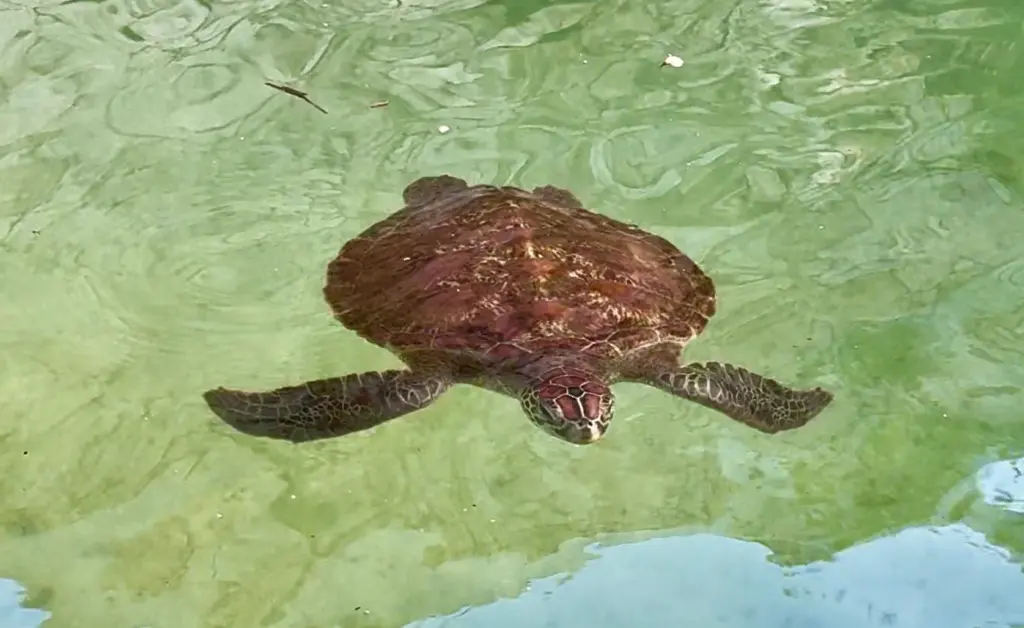
Mnarani is best known as an aquarium and sea turtle conservation centre. It has been around since 1993 and sits near the lighthouse in Nungwi. The pool is natural, open, wide and bright. Call it a collapsed cave, an open cave pool, or an enclosed lagoon. The label is less interesting than the place. It fits in the cave pool category, and swimming is definitely allowed – under certain conditions.
The Mnarani lighthouse and the turtle conservation centre were far away from the village when they were built. Back in 2002, when I first visited Nungwi, the aquarium was a known attraction, but felt so far from the village and main tourist zone that some of the others started worrying that the long walk along the vast, empty beach might be dangerous. To anyone visiting Nungwi today, that just sounds absurd.
Nungwi has grown massively, and what was far outside the village in 2002, now sits firmly on the visitor map.
Unguja, a cave-pool island
Unguja, the main island of the Zanzibar Archipelago, is largely coral rag and limestone. Over time, that geology formed natural holes, basins, sinkholes, and cave pools across the island.
The pools have always been there. Most were known mainly by locals, and some had cultural or sacred meaning long before they became tourist attractions.
A cool local pool gets stairs, a fence, and a ticket counter. Sometimes lockers, signs, guides, cafés, night swims, and the inevitable “hidden gem” label in brochures and websites. By then, it is no longer hidden.
Unguja has the most accessible cave-pool experiences in the Zanzibar Archipelago. Pemba has limestone and cave features too. Mafia Island has similar coastal geology, but far fewer of these places are set up for tourists.
Salaam Cave in Kizimkazi is part of the trend, with a smaller, more cenote-like cave and tortoises.
Paje Cave pushes further into the enclosed experience, including night swimming with bats flying overhead. Guaranteed to thrill some, while others keep their distance.
More caves will enter the tourist circuit. Some will stay simple. Some will be overbuilt. Some will become crowded. My guess: cave swimming will increasingly be one of Zanzibar’s signature experiences.
Kenya went for dinner instead
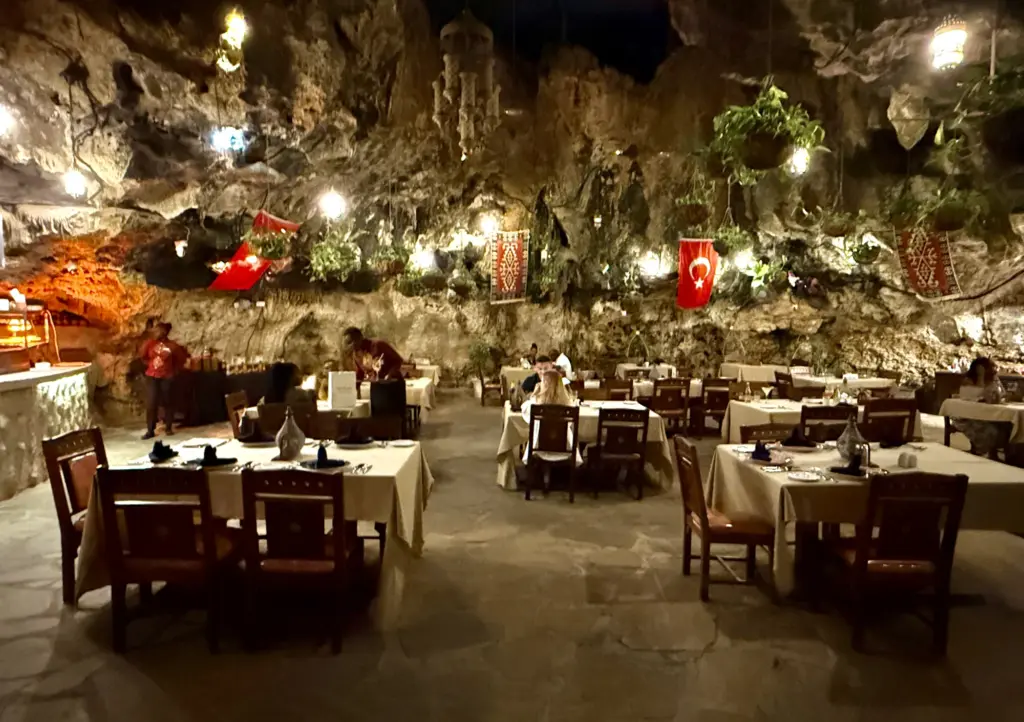
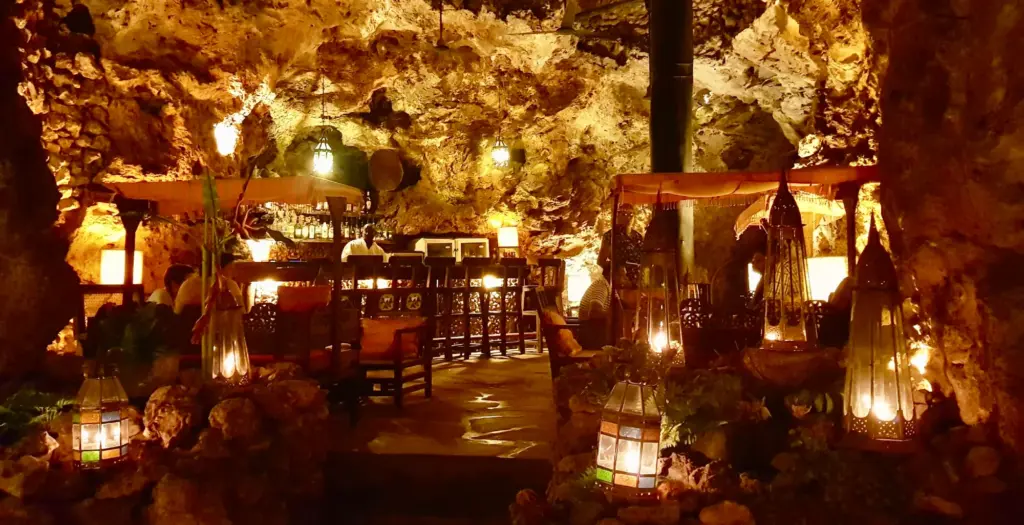
The Kenya Coast has similar coral and limestone formations, but so far, the trend has gone more toward cave restaurants.
Ali Barbour’s Cave Restaurant in Diani is the grand old one. Around since 1983, it sits inside a natural coral cave. Dinner underground. Open sky above. Seafood on the table.
More cave restaurants have been appearing along the Kenya Coast recently. Istanbul, a Turkish restaurant in Shanzu, opened in a beach cave in Mombasa in 2024. The setting is excellent, the food is good, and the pricing is clearly aimed at the international segment.
A new cave restaurant has also opened in Watamu, which is reason enough for me to go back soon. The research burden upon a travel blogger can be brutal at times. 😉