
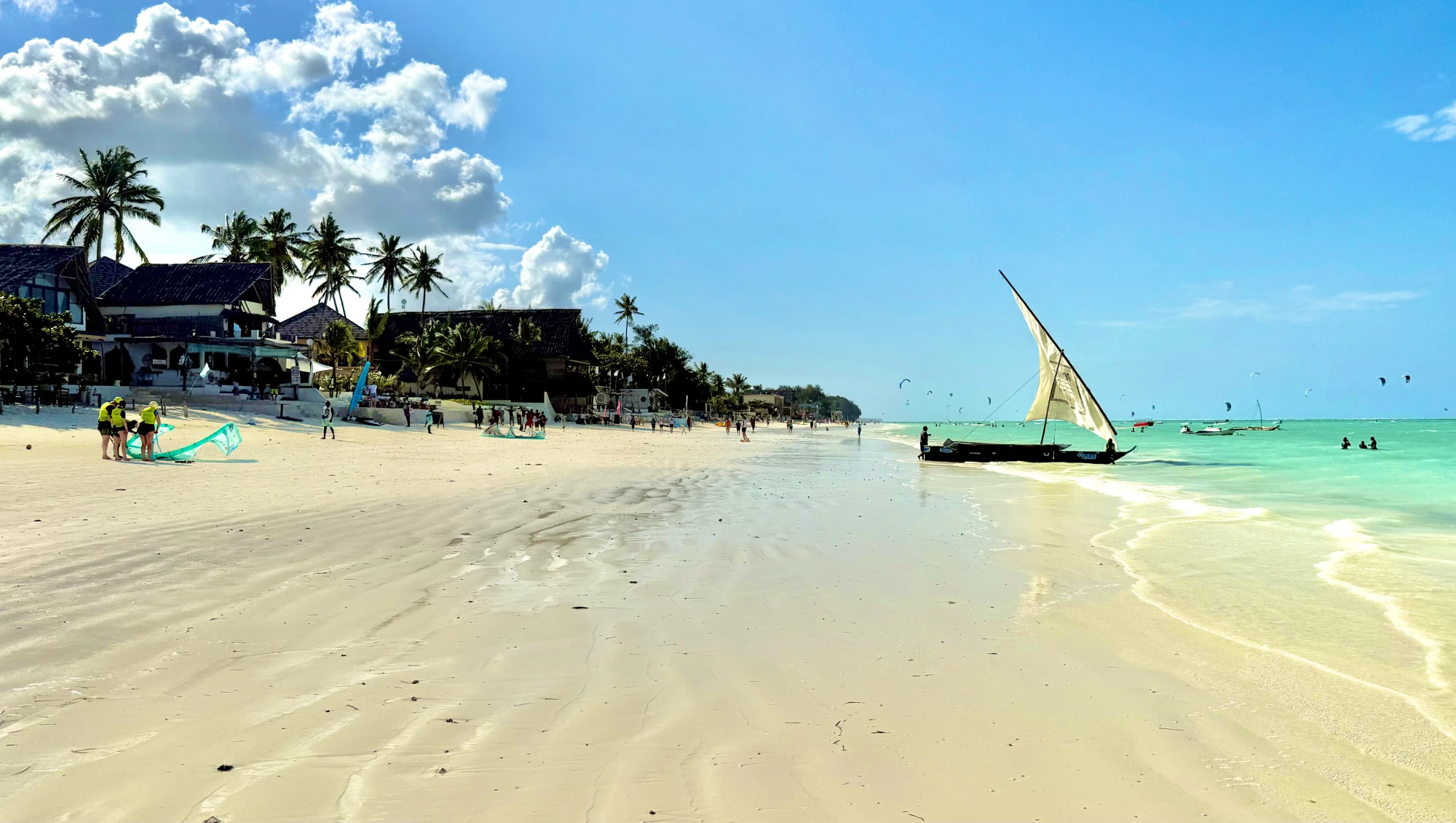

If you’re looking for an excuse to visit Zanzibar, start with Paje.
This is the kind of place where your inner explorer quietly wonders whether the beach photos online are real, filtered, or generated by some overexcited AI trained on honeymoon brochures. Then you arrive, and there it is: wide white beach, fine powdery sand, warm shallow water stretching out forever at low tide, kites in the sky, palm trees behind you, dhows on the horizon, and bare feet instantly declared the correct footwear.
How spoilt are we in East Africa?
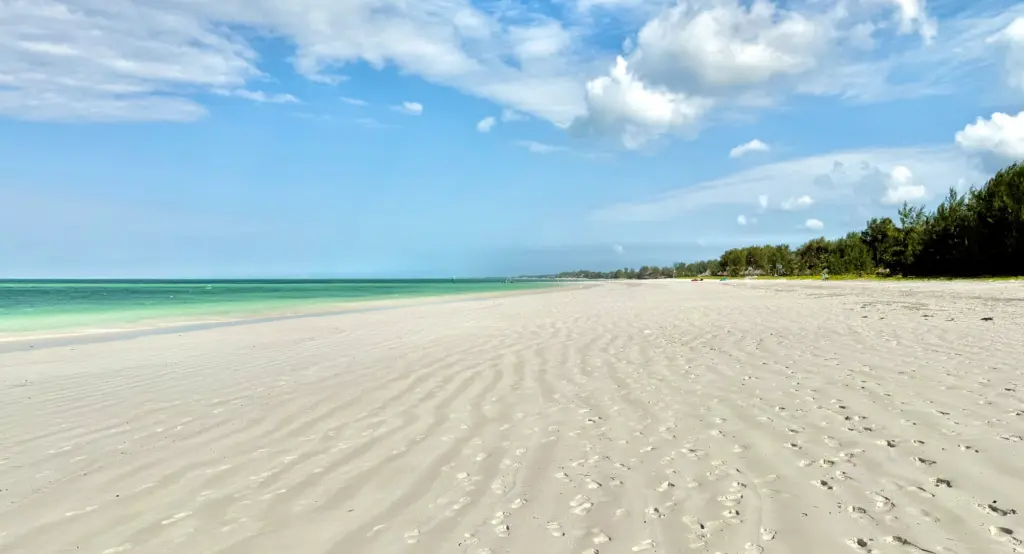
Paje looks like one of those glossy “paradise found” spreads in an in-flight magazine. Except this one is real, and you can walk into it before breakfast. The water is clear, shallow, and warm enough to make you lose track of time. You could easily spend a whole afternoon splashing around in it. Your dermatologist may not approve. You will.
Sandals quickly become an annoying thing you should have left at the hotel. It’s hot, yes, but the constant wind makes it bearable.
Paje faces east, so the sun rises over the ocean and sets behind the palm trees. Two Kodak moments. One for early risers and die-hard party animals. The other for everyone else.
Kites, tides, and village life
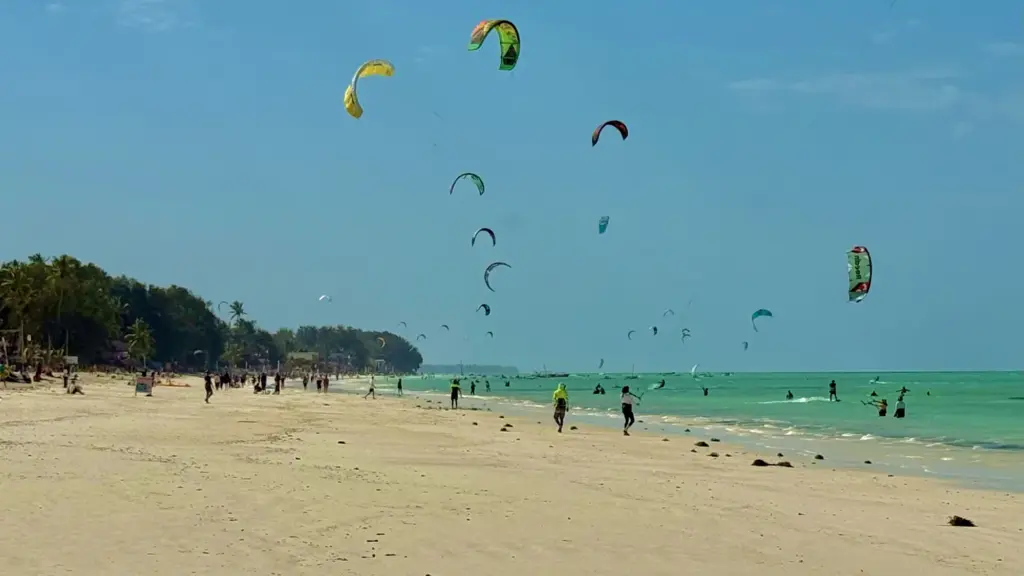
Paje has most of the ingredients of a perfect beach destination: powder sand, shallow turquoise water, big skies, and a steady breeze more reliable than my New Year’s resolutions.
It’s also Zanzibar’s kitesurfing capital. Want to learn? Instructors are everywhere. Already know what you’re doing? Here’s your chance to impress a beach full of spectators. At least, that’s how it looks to me. Kitesurfing is well outside my field of expertise, so don’t expect to see me commentating the GKA Kite World Tour anytime soon.
Beyond the beach, the kites, and the dangerously tempting beach restaurants, Paje has a hard-working side. At sunrise, fishermen heading out to sea take over the beach, largely ignoring the occasional party animal making the slow walk back to the hotel. By lunchtime, charcoal smoke signals that the morning’s catch is on the grill.
Walk south at low tide and you’ll find the seaweed farms. Women in brightly coloured kangas move through the shallow water, filling baskets and sacks. The harvest is sold to local buyers before continuing to processors supplying the cosmetics industry.
Eating in Paje
Paje has a near-endless supply of beach bars, and proper selection of places to eat. While some restaurants are already established classics, they keep getting pushed by the nearly constant addition of new and and very tempting places.
Basil does modern Asian in a leafy garden just off the beach. It may not sit directly on the sand, but the setting is lush and the food is seriously good.
Oxygen is right on the beach, with the seabreeze straight into your face, and some seriously nice seafood on the menu.
Mr. Kahawa is also beachfront, breezy, and built for lingering while sampling the cocktail selection. The problem is being able to leave before they close and you have no choice anyway.
Shanga brings a stylish beachfront setting, proper comfort, and elegant sophistication. My sampling of the food menu will have to wait until the next time, but with an acceptable wine selection, this is far from the worst place to enjoy a crisp pinot grigio in the evening breeze.
With an ever expanding selection, my recommended Paje strategy is simple: walk until something looks excellent, then sit down. In the unlikely event that you get disappointed, write it off to research.
Village buzz, street food, and practical things
The real taste of Paje is best sampled from the streets, though. While the restaurants and bars targeting Mr. and Mrs. Average Traveler wind down pretty early, the local restaurants and street food vendors keep it going for as long as their customers still stand on their feet. After dark, the village lanes begin to smell incredible: grilled seafood, meat smoke, spices, charcoal, and that dangerous scent that makes you follow your nose without asking sensible questions.
This is where you catch the local flavour of Paje. Lively, informal, unpolished, and worth your time. For late-night basics, Village Market is the round-the-clock lifesaver. Snacks, drinks, groceries, random essentials, and many of the other things you may crave at the weirdest hours.
After dark in Paje
Golden hour in Paje is dangerous. As the kites come down, the playlists get more confident, and the beach slips into that soft warm light that makes you swear you’ll only have one drink.
Most beachfront places keep things fairly chilled, and many close at an hour you can still mention to your grandmother. For proper late-night momentum, take a few steps inland. That’s where the energy checks in after it clocks out on the beach.
There’s another layer too: local pubs where you walk in as a foreigner and instantly become part of the evening’s entertainment. You won’t find them on polished “must visit” lists. The music is loud, the vibe is high, and you get the version of Paje that locals actually recognise.
Zanzibar isn’t the wildest late-night destination in the Indian Ocean. Kendwa Rocks and its Full Moon Party is the obvious exception. But if the party bug bites in Paje, you’re not out of options. Follow the sound a little further from the shoreline and accept that “one more stop” is rarely a binding statement.
Caves and quick escapes
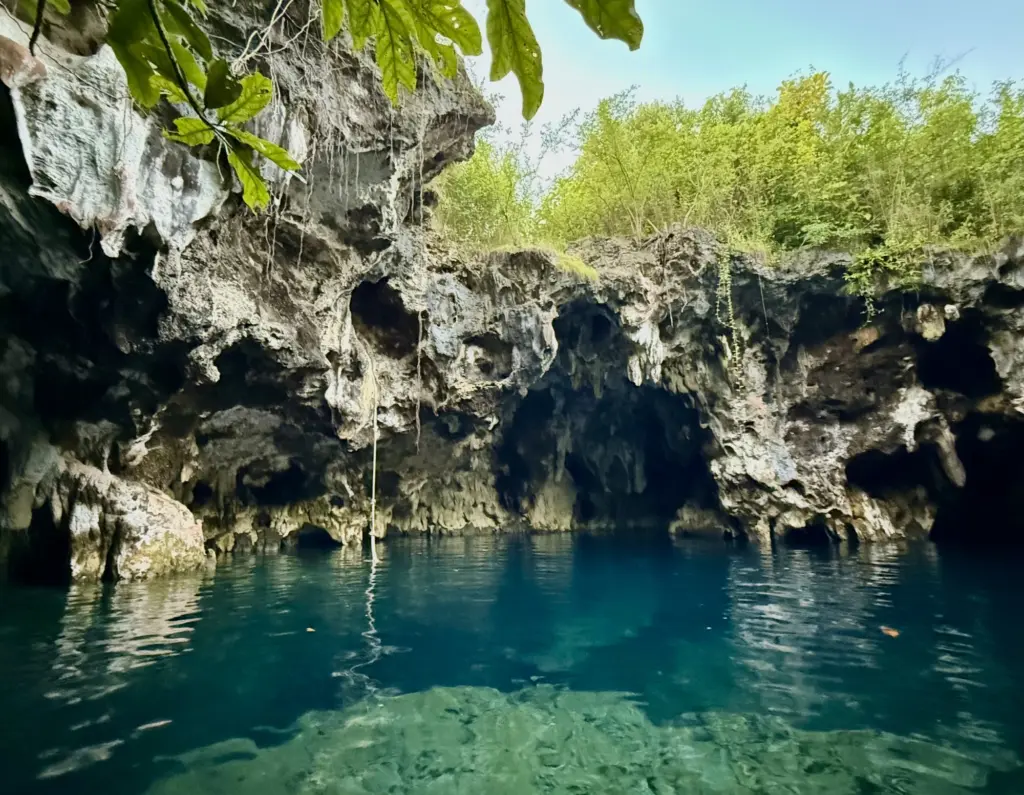
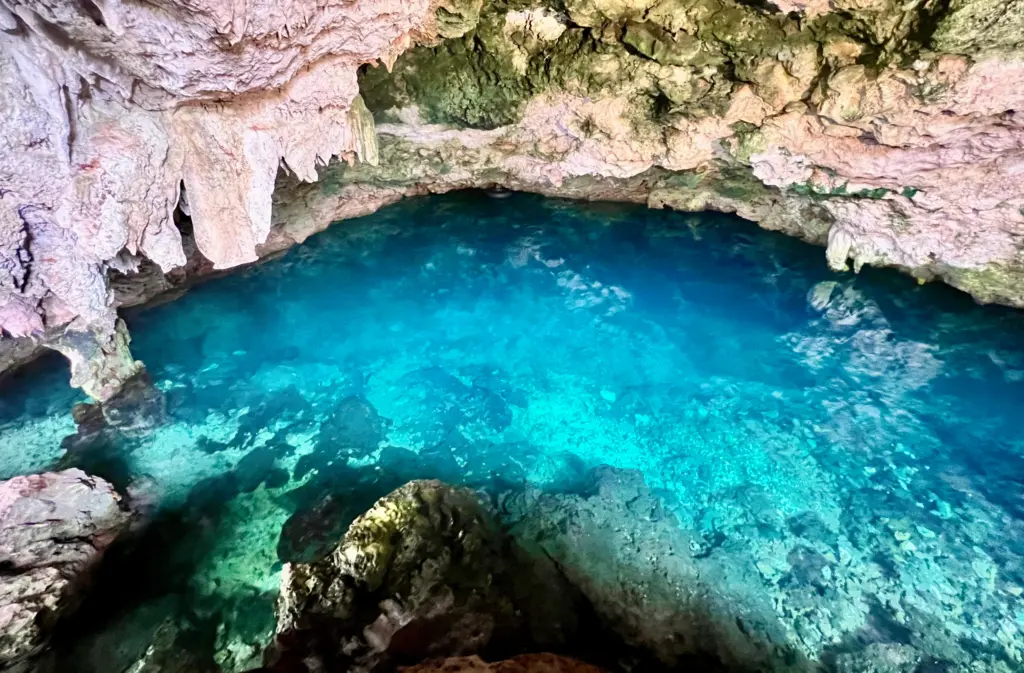
Zanzibar has some impressive limestone freshwater caves with cool, clear water in natural sinkholes. Two are easy to reach from Paje.
Maalum Cave is right in Paje, with clear water, echo-friendly rock walls, and a calm, spa-like setup. Polished, but still dramatic. At least to some extent. Kuza Cave near Jambiani is more raw and basic, with an emerald pool under slanting light and slightly cooler water, which is still perfect after a day in the scorching Zanzibar sun.
A newer addition is Paje Cave, which I’m yet to check out. No worries, I’ll report back on that one soon.
Bring a towel. Keep your curiosity. Save the sunscreen for when you climb back into the sun.
The neighbors: Jambiani, and Bwejuu
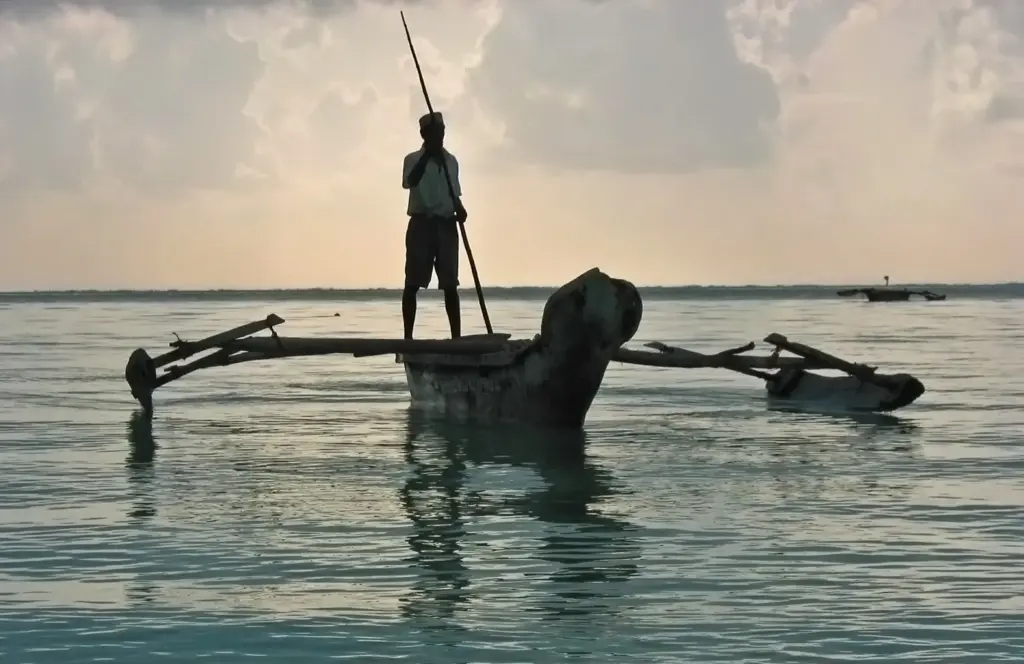
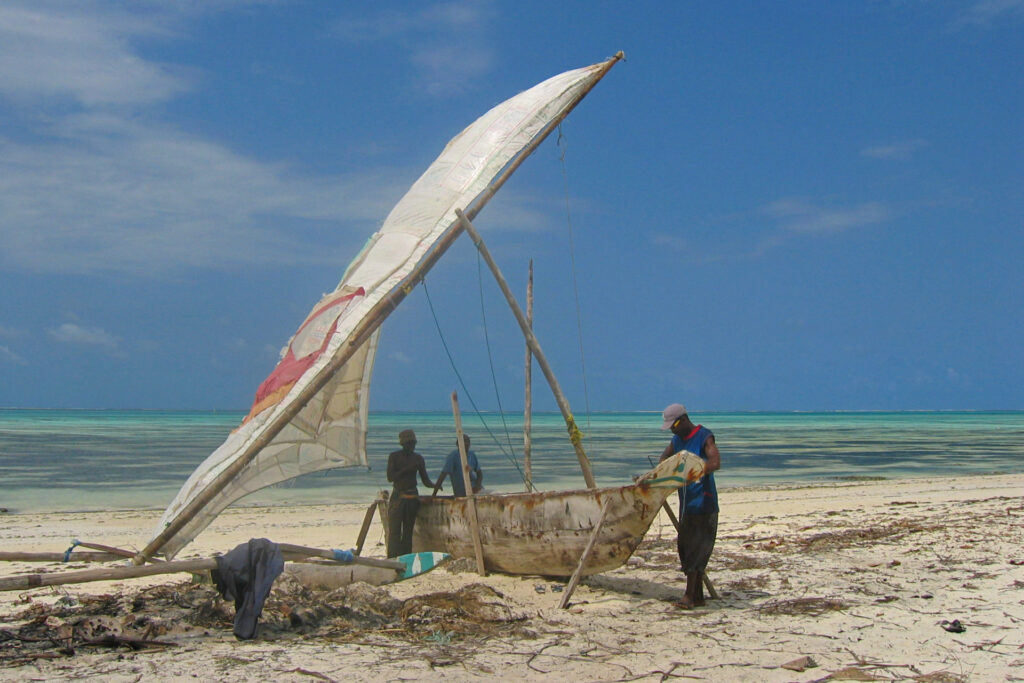
South of Paje, Jambiani keeps a gentler pulse. I first wandered in there in 2005, when the place was a sleepy, remote village with a handful of hotels and beach villas. There was exactly one local restaurant not tied to a hotel, where you booked lunch three hours in advance while someone ran to the market. Today it is still mellow and a bit artsy, more options, same gentle pulse, and a much more sophisticated dining scene along the beach. It’s good for slow mornings, long walks, and dinners where conversation outlasts the candles.
North of Paje, Bwejuu is where I go for fewer people and more horizon. Long beach walks, a book finally finished, a two-hour coffee I cannot justify anywhere else. When I feel peopled-out, Bwejuu is the place.
Wander north towards Dongwe and you still find vast stretches of empty land that have not yet surrendered to hotel developments. A rare sight in Zanzibar today, at least where the palm trees face near-perfect beaches.
Not overcrowded – yet
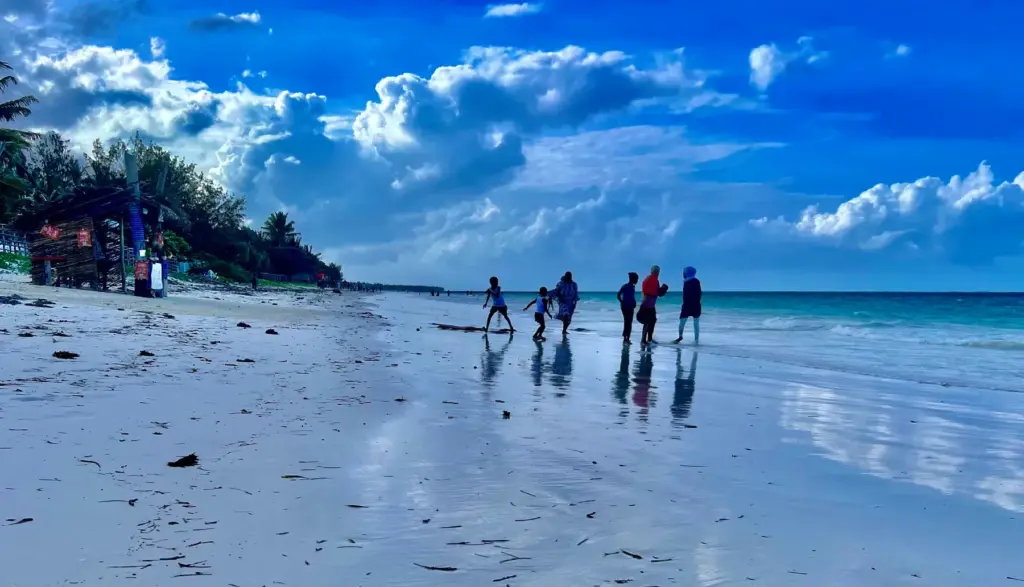
Paje has mostly avoided the mega-resort circus. No giant hotel walls swallowing the coastline. No beach experience designed by an international landscaping architect. Small hotels, human scale, and still a lot of space. Good energy without all the noise.
It is gradually getting more crowded, though, and some parts of the beachfront feel almost like the corniche of a tourist town. The upside: a good choice of places to eat, drink, and linger. The downside: a few stretches may be starting feel a little too glossy.
Paje is now the touristic center of gravity on the southeast coast, but it feels far more polished than Nungwi up north. Nungwi was already a beach favourite in the early 2000s, back when development seemed to be running with fewer adult supervisors in the room. Today, calling Nungwi dense and crowded would be diplomatic. It’s still fun, but subtle it is not. I’m crossing my fingers Paje evades the same fate.