
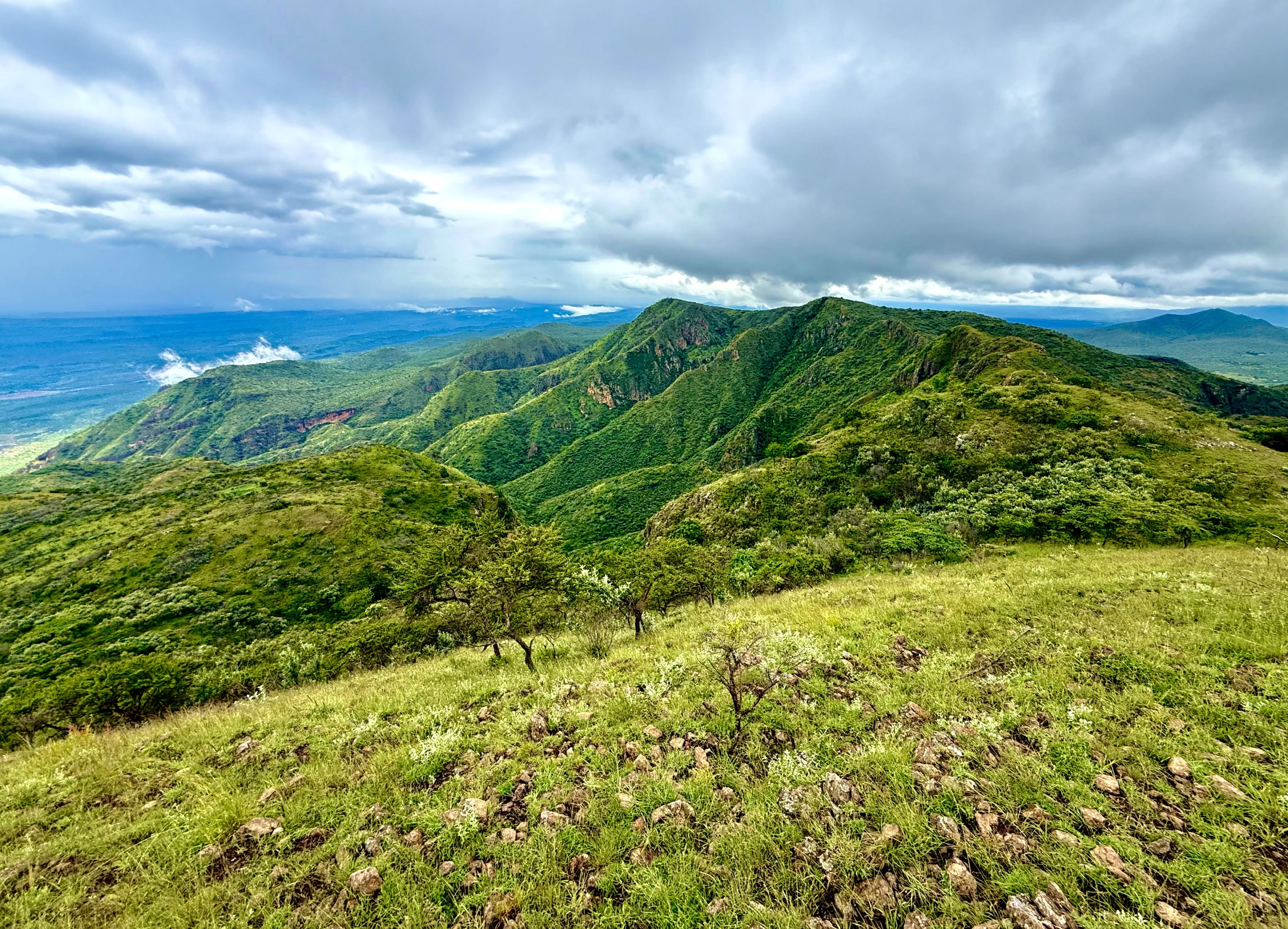

Mount Olorruka is deep inside Maasai land, but still within a fairly short driving distance of Nairobi.
In about 1.5 hours from the city, you can be on rough dirt roads in the Nairobi outskirts, heading towards a wild mountain with huge views over the Rift Valley. A morning drive well spent.
Mount Olorruka, or Ol Donyo Olorruka in Maa, rises to 2,085 metres above sea level. From the upper slopes and the summit, you get views of the Rift Valley, Olorgesailie, Ngong Hills, Mount Suswa, and Mount Longonot.
The hike is considered medium to challenging. Contrary to more well-known hiking sites like Ngong Hills or Mount Longonot, Olorruka is pure wilderness. No Kenya Forest Service. No Kenya Wildlife Service. No gate, no office, no signs, no formal trail system. Just Maasai community land, and any engagement is with the local community.
There is absolutely no signage, nor any realistic chance of guessing your way through the dirt roads that take you to the foot of the mountain. We had our guide waiting for us by the road, giving us directions by phone until we found him.
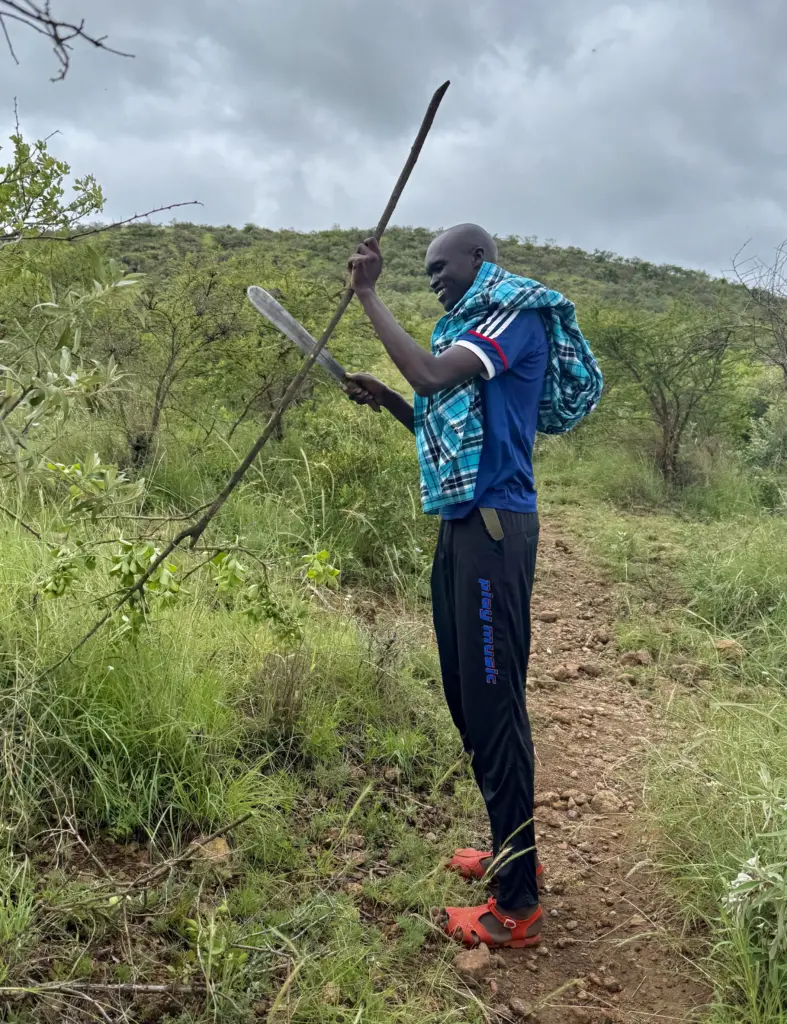
John, our local guide, was wearing a classic checkered Maasai cape and a sword by his side. One of the actual Maasai swords from the village, made according to centuries-old traditions. Not the Chinese version sold in markets.
“Which country are you from?” was one of his first questions after the normal greetings and salutations.
From his enthusiastic reaction when I said “Norway”, I was expecting a comment about Haaland or Solskjær.
No.
“Henrik Ibsen. An enemy of the People,” he exclaimed.
It turned out that the young gentleman was a big fan of Norway’s most famous playwright and his renowned 1883 theatre play. A long conversation on societal comparisons between present-day Kenya and late-19th-century Norway followed.
Some people might consider that situation slightly surreal. I just see it as another sign of how far Kenya has come, and the extent to which the country stands out from most of its neighbouring countries.
Getting to the Foot of Mount Olorruka
The final road towards Mount Olorruka is a dirt road you shouldn’t even think of doing without a 4WD.
Eventually, it became too tough even for my X-Trail, but by then we were close enough. We parked and continued on foot, walking past a few small villages.
This is really far off the normal Nairobi day-trip circuit. Tiny hamlets, open land, and local community life in motion. Low melanin levels stand out here and attract some attention.
Every two or three minutes, John entered a conversation, either from a distance or with people on the road. Every brief exchange seemed to end with “Ol Donyo” – the mountain in Maa.
Our small group was clearly attracting some curiosity.
The first part of the hike sloped gently past more hamlets. There were trails in some parts. In others, just terrain. Then the climb turned steeper, and the next hour became intense.
We occasionally ran into locals along the way, from the youngest to the eldermost. No other hikers, though. Just the wilderness and the views.
The Climb and the Views
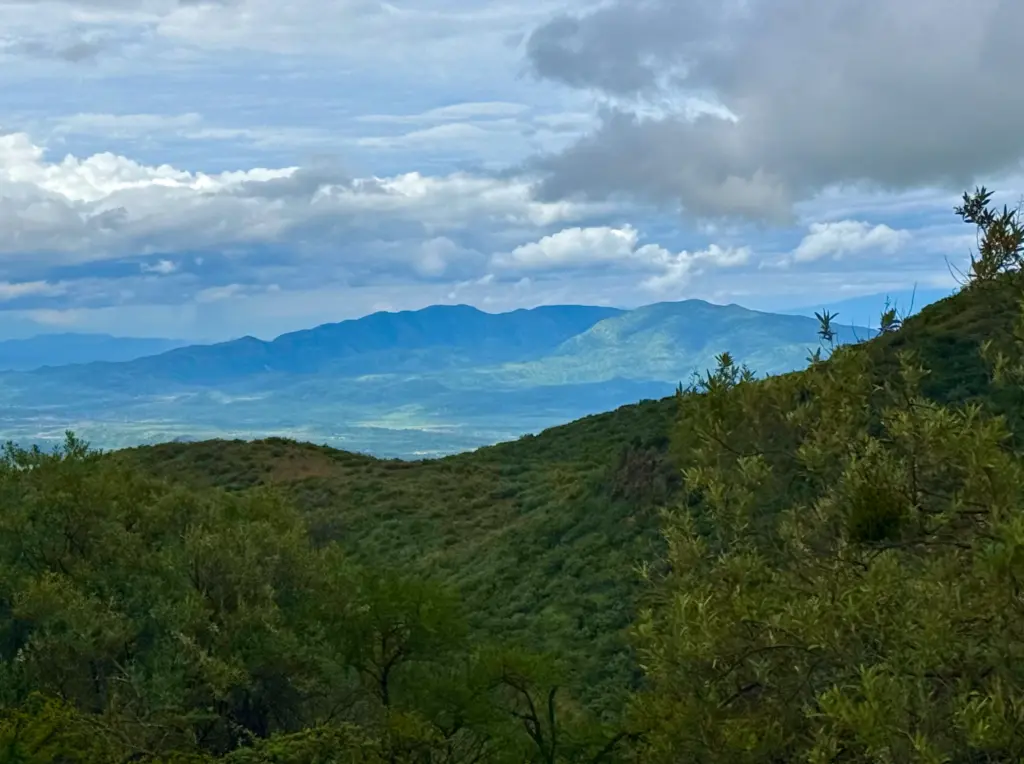
And the views just kept getting better through the ascent.
Behind us were Kajiado and Champagne Ridge, an escarpment overlooking the Rift Valley, cleverly named by the developers building large villas there. Before reaching the summit, we already had ever better views of the Ngong Hills, the Champagne Ridge, and the Great Rift Valley, although the best views were still ahead.
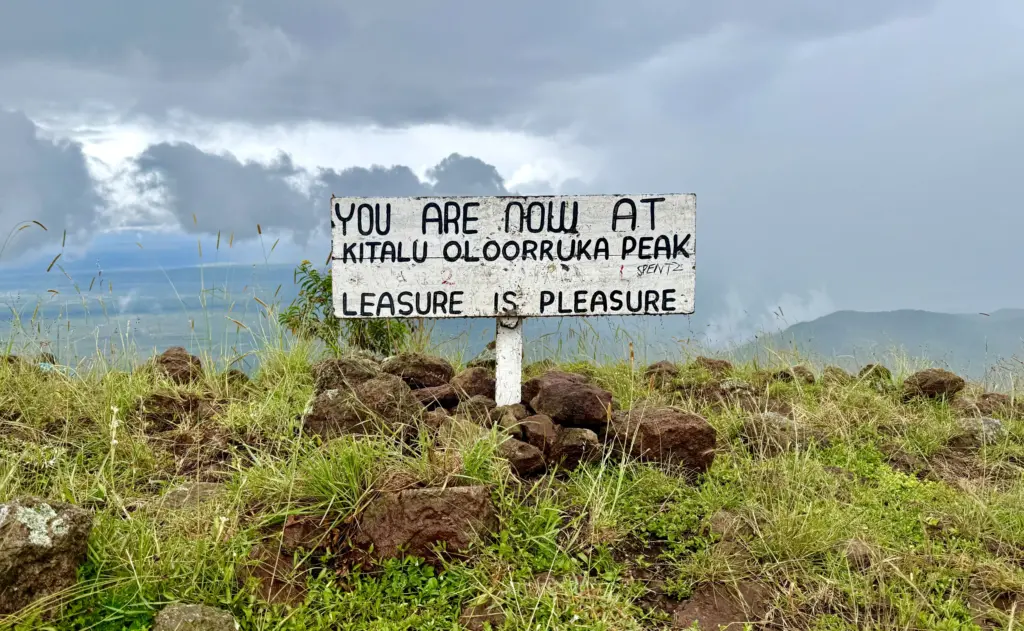
We reached the peak around 10:30.
From there, the Rift Valley opened properly below us, with unhindered views. The plains at the bottom of the valley, Mount Suswa, Olorgesailie, and the broader Rift landscape were all in view.
Olorgesailie may not be a household name, but nonetheless a one of East Africa’s major prehistoric sites, known for its long record of stone tool production. A stone axe factory operated from here for roughly 700,000 years, from about 1.2 million to 500,000 years ago.
On the timescale of modern civilization, a mere 15,000 years, that is mind-boggling. That factory has still been out of operation for a shorter time than it existed.
Plate Tectonics With a View
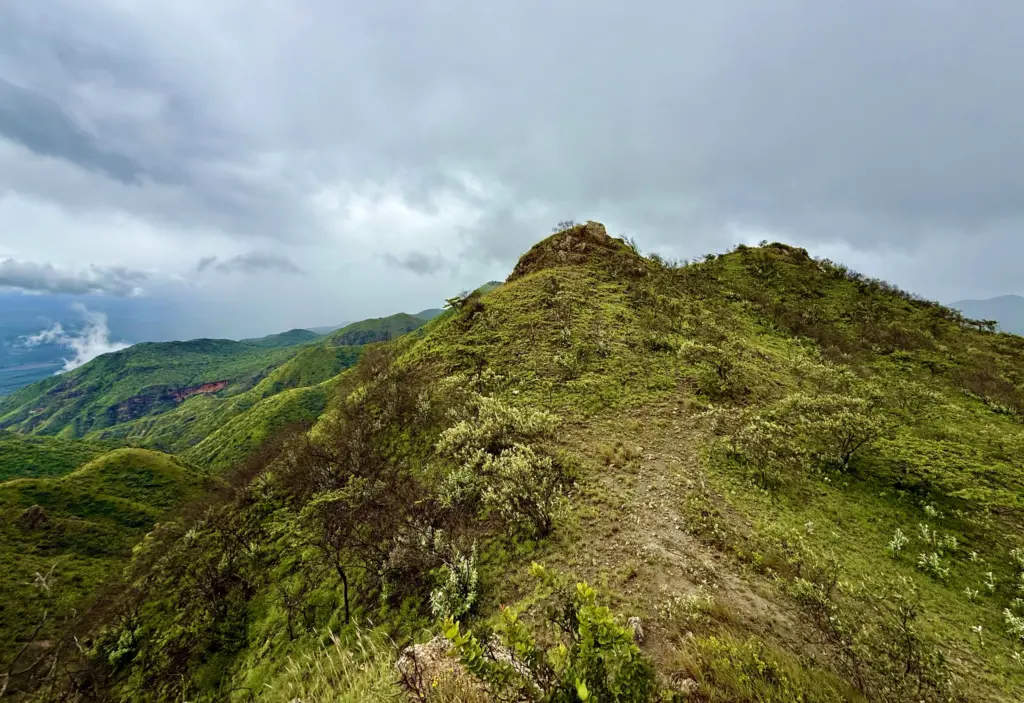
From the top of Mount Olorruka, the Rift Valley is a show of plate tectonics in action, right there in front of you: Ridges, layers, escarpments, volcanic forms, and plains. The visible result of the two sides of the rift slowly pulling apart.
The wider rift system runs from the Dead Sea to Mozambique, with the Red Sea forming part of the same geological break. On land, the East African Rift stretches from the Afar region down through eastern Africa.
At some point, probably millions of years from now, the Red Sea may extend down through the Rift Valley. Maybe Mount Olorruka will become an island. While only time can tell, it’s highly unlikely that I’ll be around by then, so I’m not investing in beach resorts in this area just yet.
Clouds Over the Rift Valley
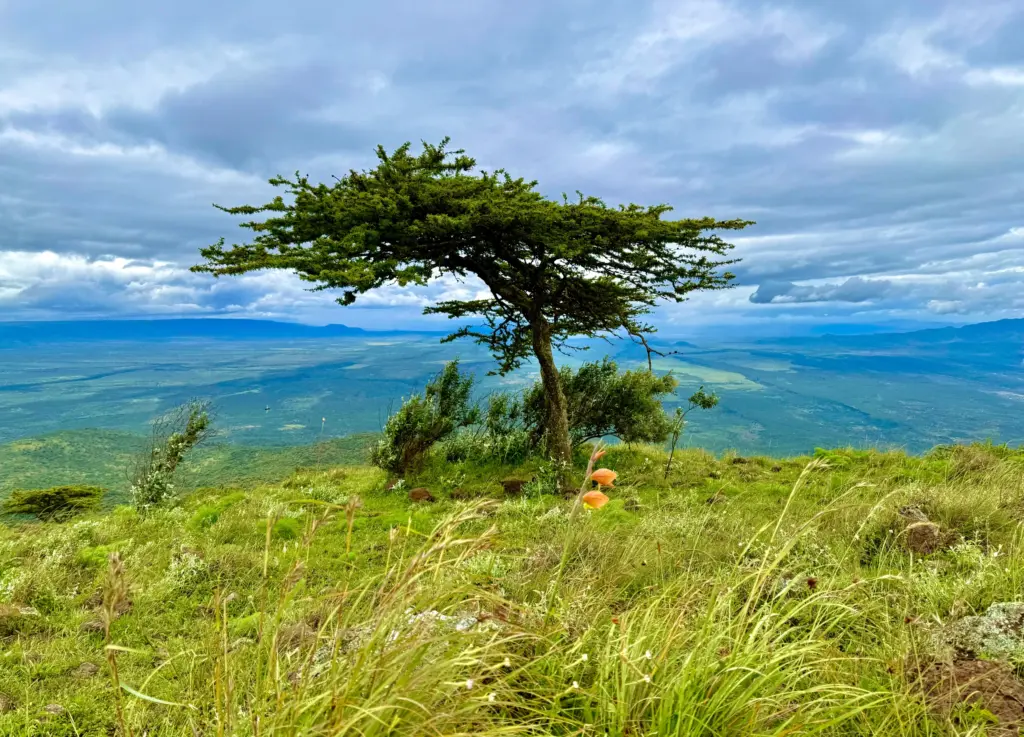
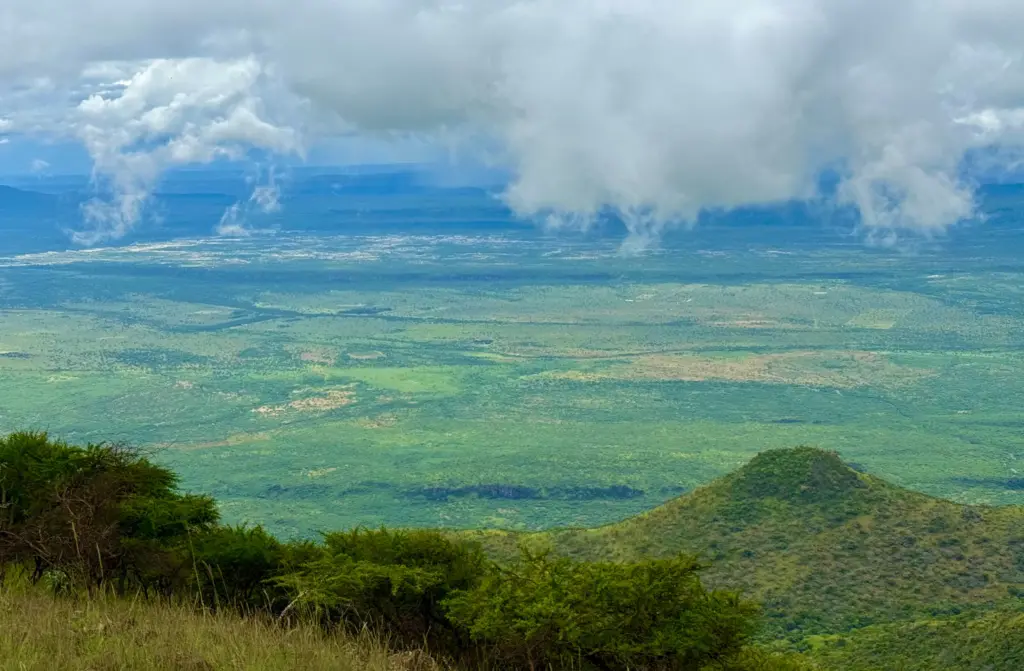
There was still some partial heavy cloud cover when we reached the summit, adding some extra drama to the views without blocking them completely.
Gradually, the clouds eased and the view across the Rift Valley cleared. Mount Suswa became more visible. The plains opened. The scenery was expanding by the minute.
Up there, Olorruka feels very different from the better-known hikes near Nairobi. Ngong Hills and Longonot are accessible, marked, managed, and busy. Olorruka is more wild and rugged, and completely off the beaten track. It is rough, local, quiet, and still far from becoming a tourist destination.
The Descent and the Goats
As we started the descent, we met one other group of people. At least we were not the only visitors on Mount Olorruka that day.
The way down was faster, but still steep enough to keep things interesting. Towards the end of the descent, we passed through John’s farm, with plenty of goats running around. He was happy to confirm that they were available for sale, should I need one.
This is Maasai land, after all, and great mbuzi choma (roasted goat) is never far from the conversation. The goats here walk around freely and eat bushes and shrubs. The taste and tenderness are insane.
I won’t need to look elsewhere the day I need one.
Mount Olorruka as a Nairobi Day Hike
Mount Olorruka is community land. No gate, no ranger station, no signs, no formal trails.
You need a local guide. You need a serious vehicle just to get there. Don’t expect toilets, route markers, picnic tables, or anyone selling you a branded “Olorruka Experience” package.
What you do get is a proper wilderness hike within reach of Nairobi, and a good chance to interact with the local Maasai community on their home turf. You also get some of the best Rift Valley views anywhere near the city.
You also get the possibility of discussing Henrik Ibsen with a Maasai guide carrying a traditional sword.
That was not on my expected itinerary, but definitely one of those things that make a hike even slightly more memorable.