
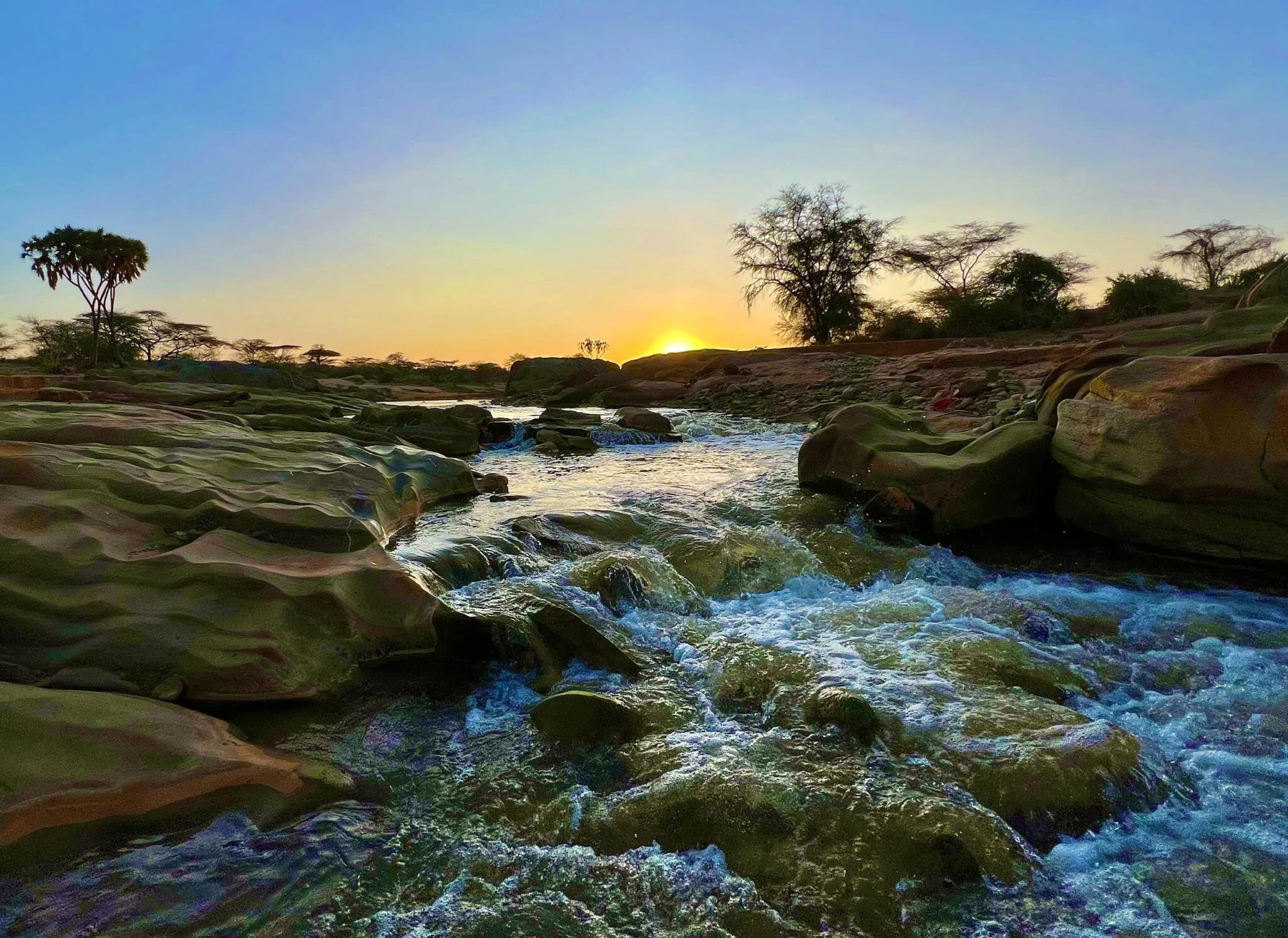

Going off the Beaten Track in Shaba National Reserve
Shaba National Reserve is rarely on the itinerary of a first-time visitor to Kenya. Then again, I avoid the beaten track, so it sounded exactly right.
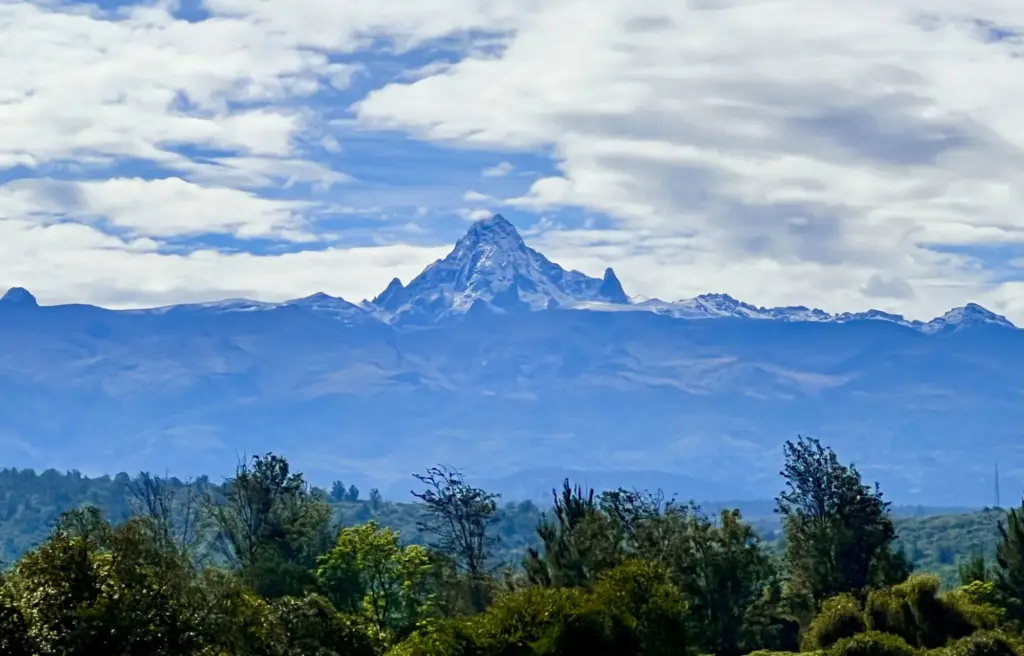
Shaba sits on the north side of Mount Kenya and can be reached by road from Nairobi either via Meru to the east or Nanyuki to the west. Along the western route and across the northern side of the mountain, you get some splendid views of the peaks of the Mountain of Ostriches, or Kirima Kĩrĩ Nyaga in Gĩkũyũ. Some British settlers in the early 20th century, presumably after too many gin tonics while trying to pronounce Kĩrĩ Nyaga, simplified it to “Kenya”. That, in turn, became the name of the whole colony.
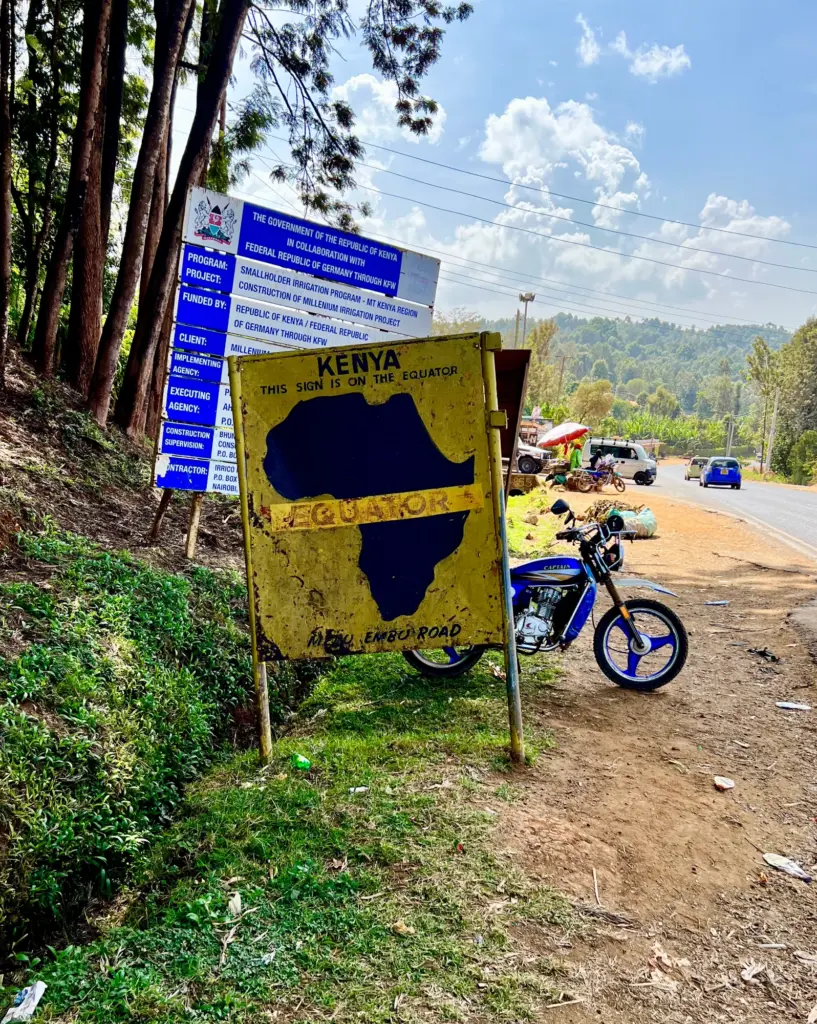
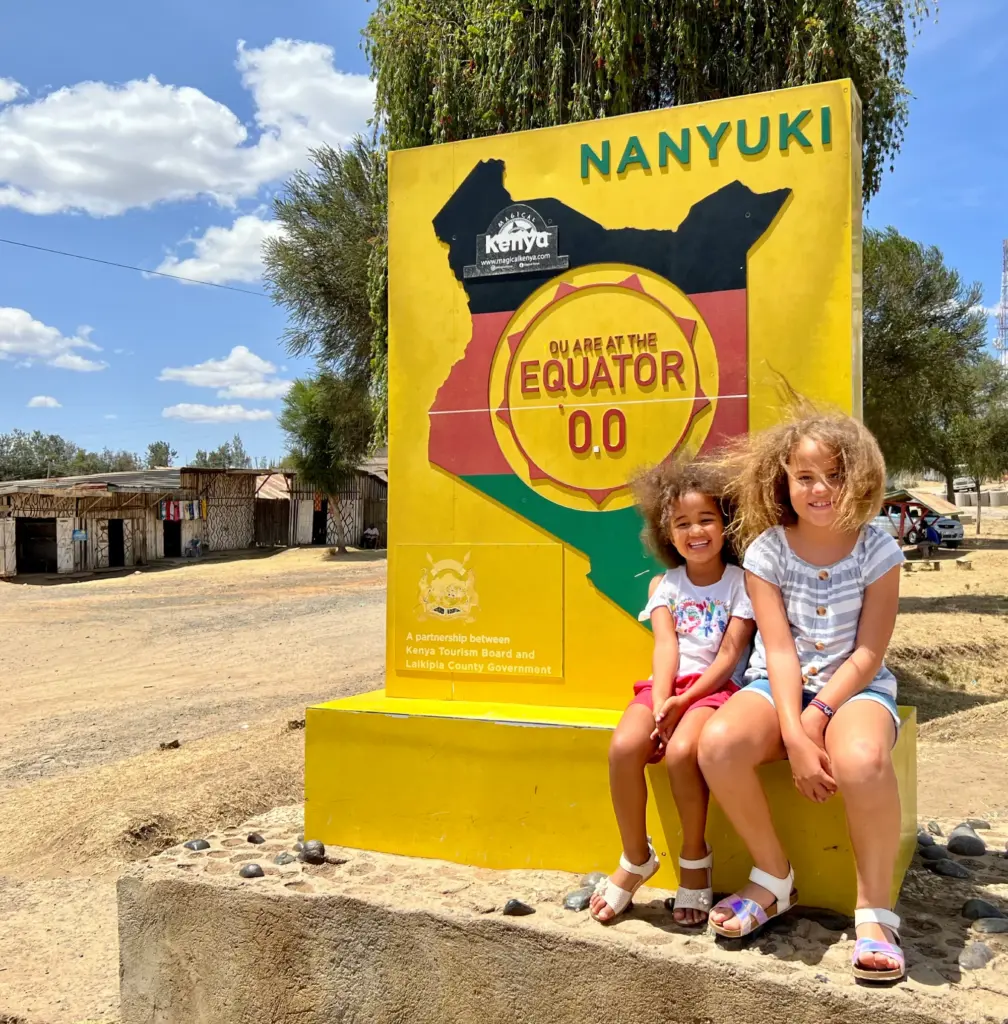
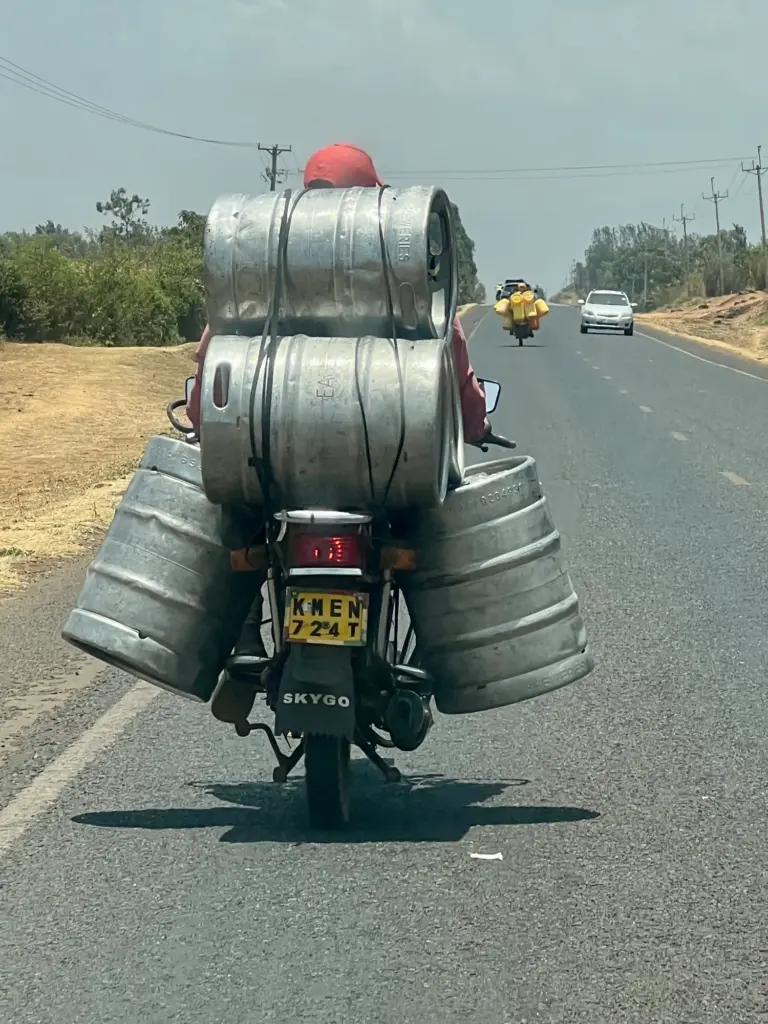
Isiolo, on the north side of the mountain, is the headquarters of Isiolo County and is widely seen as the gateway to Northern Kenya. It’s also turning into a major infrastructure junction, as the planned roads and railway of the LAPSSET corridor are meant to link Ethiopia and South Sudan with the port of Lamu.
The scenery along the road stays lush and green, with farmland and forest, all the way to Isiolo. Beyond that, it dries out quickly. The landscape turns barren and arid as you move into Northern Kenya. Once you reach the Ewaso Ngiro River, you realise you’ve gone a bit too far, but that’s ok. I’ve done that too. Turn back, and shortly after you’ll find a dirt road heading east. That’s the one that takes you into Shaba National Reserve.
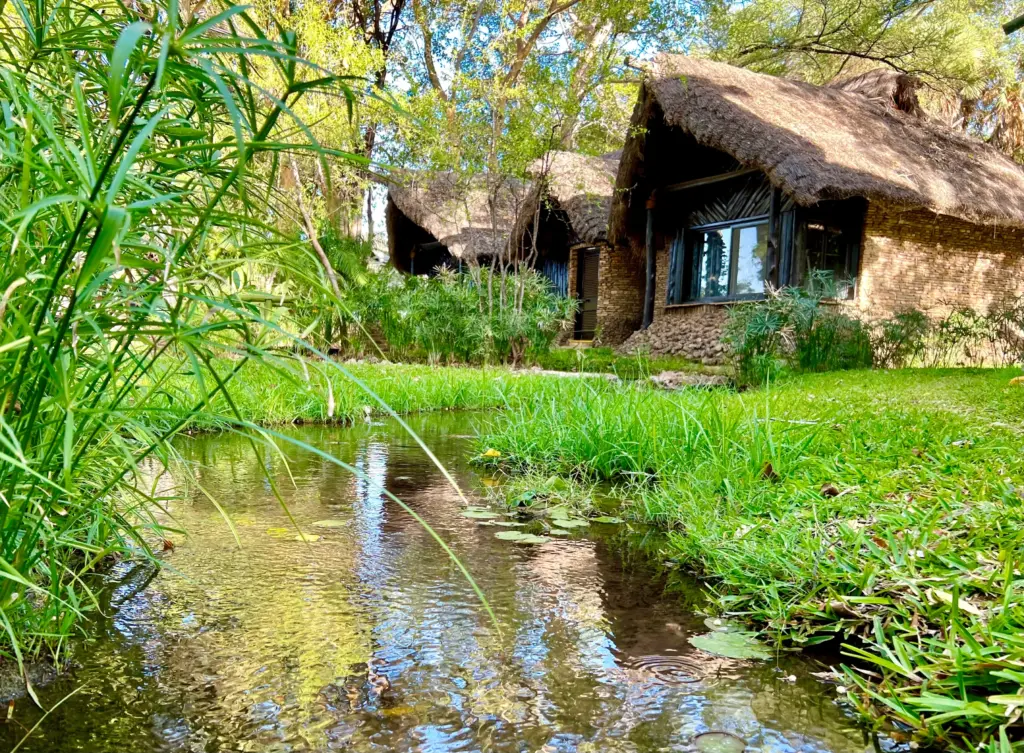
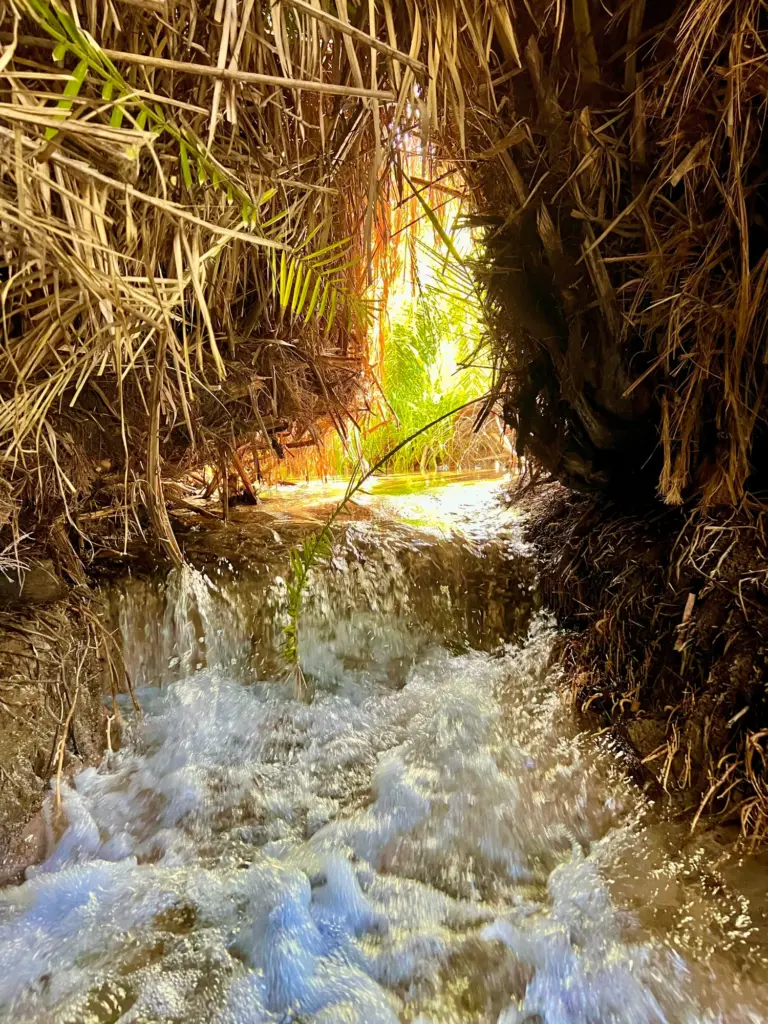
Shaba is dotted with natural springs, fed by underground rivers from Mount Kenya. The doum palms here produce allegedly tasty fruit that the local Samburu enjoy, while everyone else seems to give it a wide berth. Since none of the people we asked in the tourism industry were locals, our attempts to find out where we could taste the fruit ourselves were met with smiles, shrugs, and no real answers.
When travelling in Kenya, you don’t waste a good chance to go on a game drive. This was one of those chances, so we knew the drill. Shaba National Reserve itself didn’t offer much wildlife in the dry season apart from Camelus dromedarius, the one-humped camel, and that one hardly counts. The neighbouring reserves were a different story, though.


Samburu National Reserve
Shaba is separated from Buffalo Springs National Reserve by the A2 highway, part of Trans-African Highway 4. On the northern side of the Ewaso Ngiro River lies the much better-known Samburu National Reserve. The iconic Samburu Gate stands just outside Archer’s Post, a nondescript little village named after former colonial administrator Geoffrey Archer. Drive through it, and you are suddenly in what is arguably Northern Kenya’s most famous park.
Samburu has a strong lineup of wildlife, including lions, leopards, elephants, and buffalos. It also has some relatively rare species, such as Grévy’s zebra and the Beisa oryx. The animals were fairly shy and not especially easy to get close to, though. According to our guide, the dry conditions were at least partly to blame.
While Shaba has few lodgings beyond the Sarova, Samburu is lined with upscale boutique lodges along the river. Then again, it also gets far more tourists than its less famous neighbour.
Sundowners by the Ewaso Ngiro River
We wrapped up the game drive just in time for one more excellent excuse to stay out: sundowners in the riverbed. The Ewaso Ngiro can be a serious river in wetter periods, but during long droughts it shrinks to a trickle and leaves large stretches of the riverbed dry. That was the case during our visit, so having drinks out there made perfect sense. Some bubbly, a bonfire, live guitar music, and the sun going down over the reserve. Hard to argue with that.


Sarova Shaba Lodge
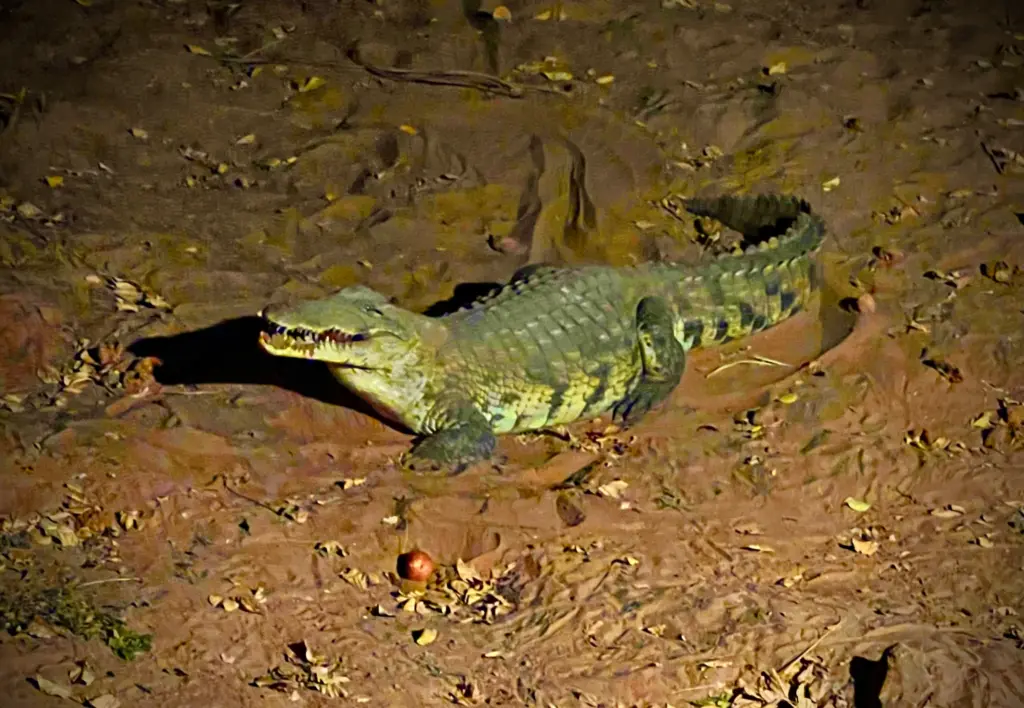
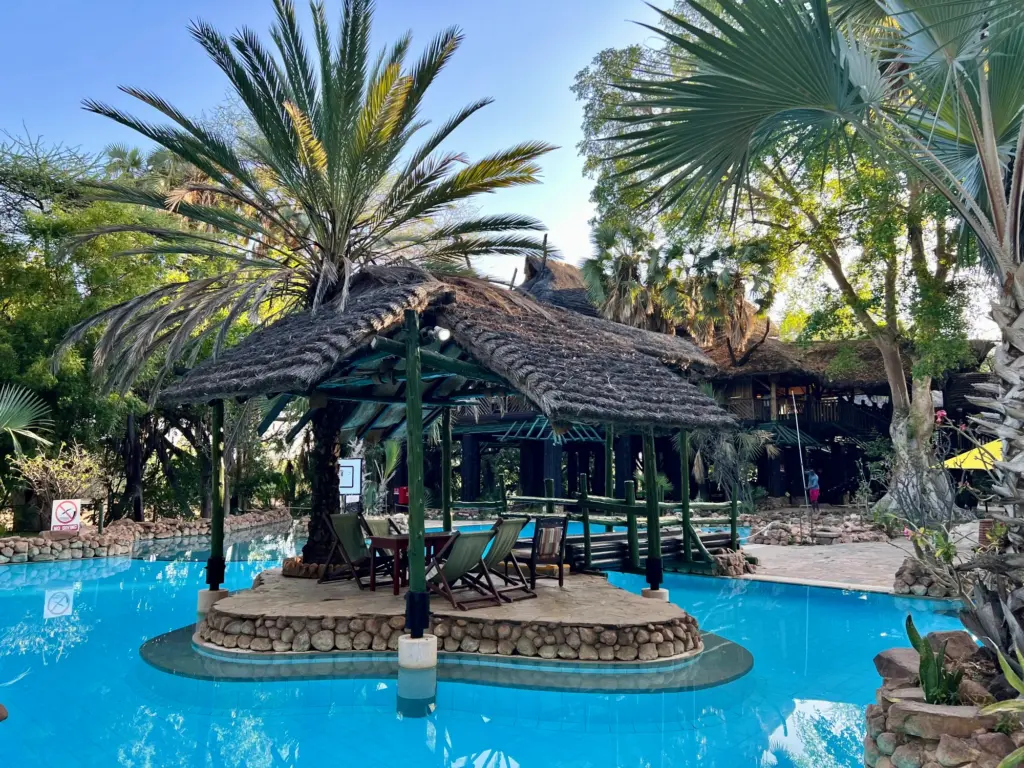
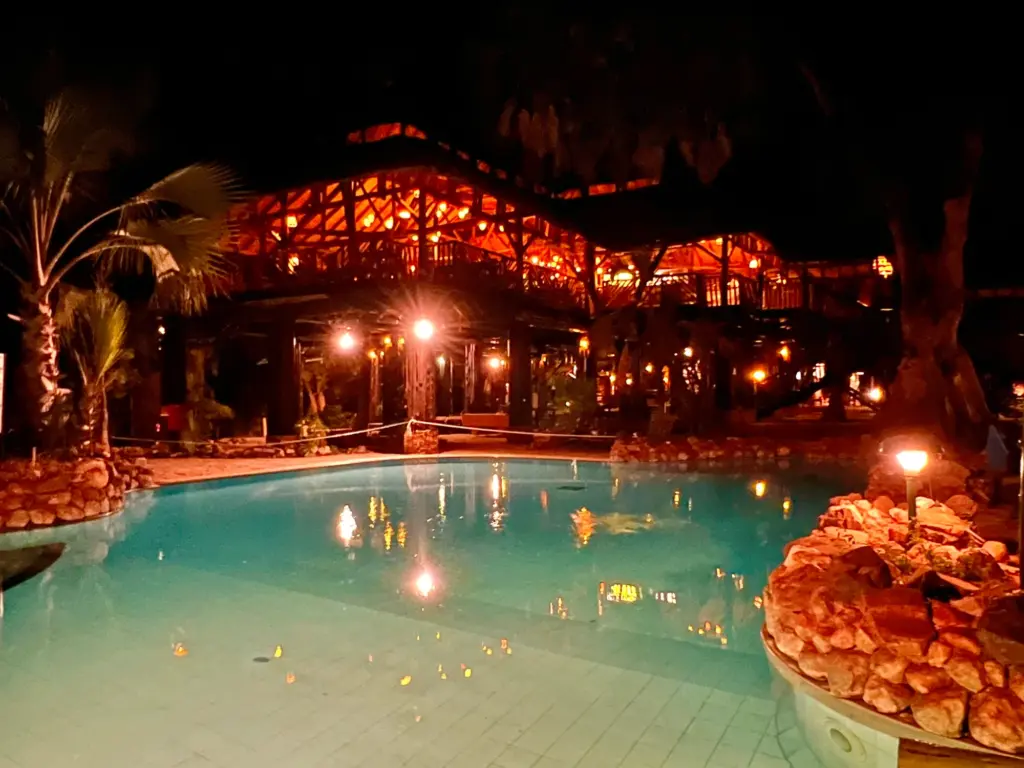
A place like Sarova Shaba Game Lodge obviously comes with a spa, massage services, a good restaurant, and staff that leave very little to complain about. The lodge sits by the river, with crocodiles just outside the fence. The herders bringing their camels down to the water, however, seemed entirely unbothered by the large reptiles.
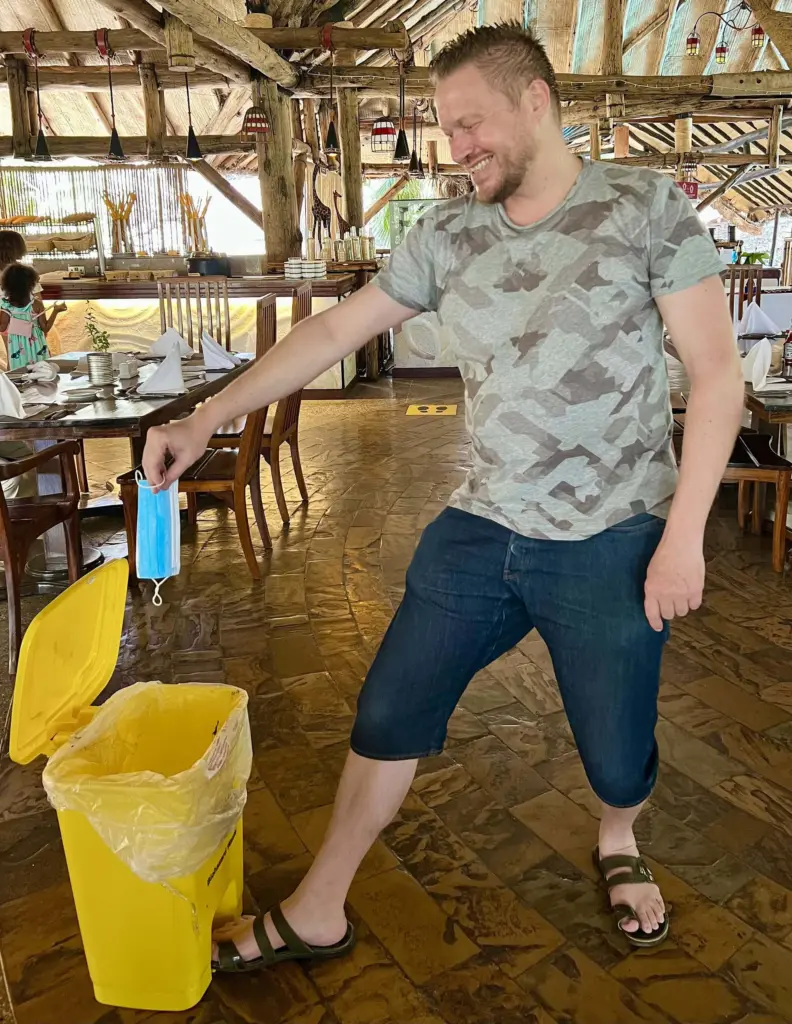
On our second day at Sarova Shaba, the Kenyan government finally lifted the mask mandate after two years of Covid restrictions. That was a small moment of joy, because Sarova Shaba was one of the places actually still taking the mask mandate seriously, which was getting kinda tiresome. I couldn’t help bue mark the occasion with a picture of myself throwing my mask into the dustbin. Some Twitter fashionistas immediately started debating whether I should swap my Giuseppe Zanotti sandals for Dr. Martens, but to each their own.
The road between Nyeri and Thika has been a hellhole of traffic jams in recent years. With the ongoing expansion into a four-lane dual carriage highway, some stretches have already improved quite a bit. For a more scenic drive, there is also the Mau Mau Road. That name must still have some old Brits fuming. It winds through endless bends along the hills between Nyeri and Thika, and if you are not rushing back to Nairobi, it is easily the better option.
Oh, and by the way, if you are driving between Nairobi and Shaba via the western Nanyuki side, don’t miss the Trout Tree restaurant. It’s a must-visit. Built into a fig tree, this unusual dining stop serves river trout prepared in about a dozen different ways. Whether you stop there at the start of the trip or on the way back, it’s the kind of place you remember.


The trouts come from the ponds right beneath the tree. A section of the river is actually channelled through these ponds, ensuring the trouts always have fresh water. Environmentalists may have something to say about the effects on the water, but that’s another story.
The surrounding area is also home to a small colony of black-and-white colobus monkeys, also known as the Abyssinian black-and-white colobus, or Colobus guereza. Curious and only slightly shy, these primates usually keep a distance of a few metres, but are more than happy to wait for you to get some good shots.
Not every road trip ends in a restaurant built into a tree, but if you ever need a reminder that excursions in Kenya are never boring, this is one good option!
Shaba was the destination, but like so many other places in Kenya, getting there and back was half the experience: green giving way to dust, wrong turns, and stops nobody planned.