
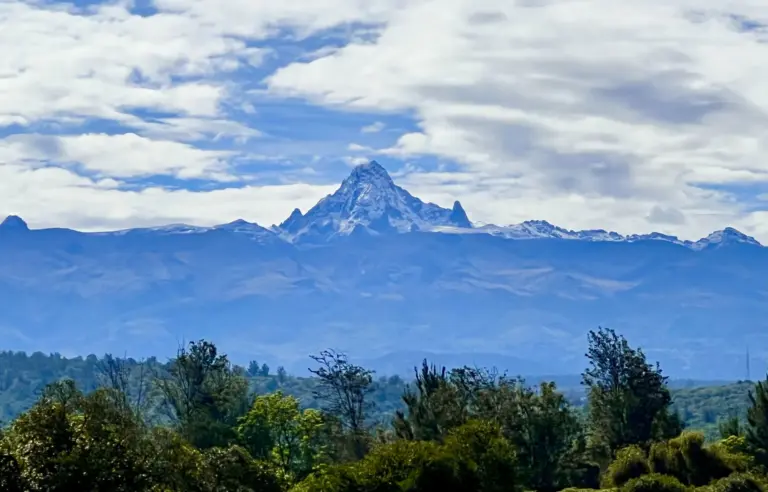
Mount Kenya is one of Kenya’s great geographic landmarks. With the Point Lenana peak at 0.935S, it is one of only five major mountain peaks in the world set almost exactly at the equator. Alpine air, cold nights, and some patches of snow at latitude 0 are part of the unique allure of Kĩrĩma Kĩrĩ Nyaga.
Highland farms, montane forests, buffaloes and mountain elephants that you wouldn’t want to encounter on a hike – but might – are all part of the combination that makes Mount kenya more than a quick photo stop. Oh, and the river trout!
Both Nanyuki and Meru make a point of the Equator with big crossing signs and the usual one-foot-in-each-hemisphere routine. Tourist cliché? Slightly. Still worth a stop? Yes. Some clichés survive and even grow because people keep enjoying them.


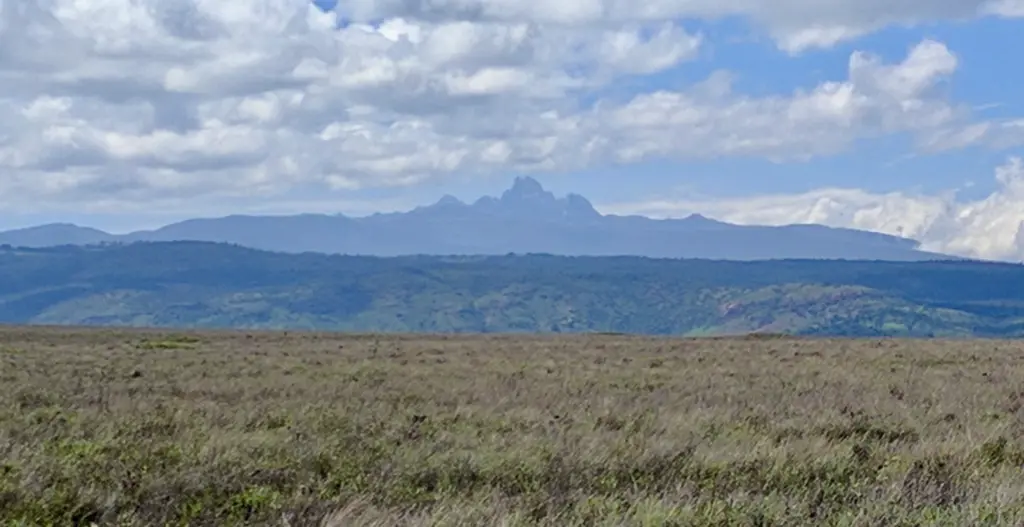
The Mount Kenya peak can be fully visible one minute and shrouded in clouds the next. When it is clear, the jagged summit is hard to miss: sharp, tall, and imposing with occasional patches of snow
At 5,199 metres, Mount Kenya is the second-highest mountain in Africa after Kilimanjaro. It is also an ancient volcano. Long-extinct, though, so no need to worry about the thing waking up halfway through your climb. When it was active, it was far taller than today, possibly around 7,000 metres. The dramatic peaks left now are the hard volcanic core of the old mountain. Basically, the mountain’s tougher inner parts stayed behind after the rest was worn down by erosion – nature’s slow, long-term demolition work.
The Mount Kenya region is much more than just a mountain peak on the equator, though. While the hard core go for the most-prized asset, most visitors are there to enjoy the slopes, forests, conservancies, and cold evenings that require something warmer than a beach shirt. And oh, don’t forget the mountain river trout!
Nanyuki is the classic starting point. A cute, quiet little mountain town, but far more cosmopolitan than its size and location suggest. Popular since the colonial era, it has a large population of European descent, while many expats and Nairobians have second homes here, often with a small farm attached. And honestly, growing vegetables in the foothills of Mount Kenya and using that as an excuse to escape Nairobi on weekends? I’ve heard worse ideas.
With splendid views, scenic hikes, amazing steaks, mountain river trout, and old lodges with a rich history, the Mount Kenya region has a richer variety of experiences than most of East Africa. It may not be as well marketed as Diani or Maasai Mara, That just means more to discover of the curious explorer.
Hiking, Forest Walks, and Waterfalls


The Mount Kenya region has some of Kenya’s best and most famous hiking trails. The summit itself being the most famous, but the slopes of the mountain and adjacent areas have a lot more to offer too.
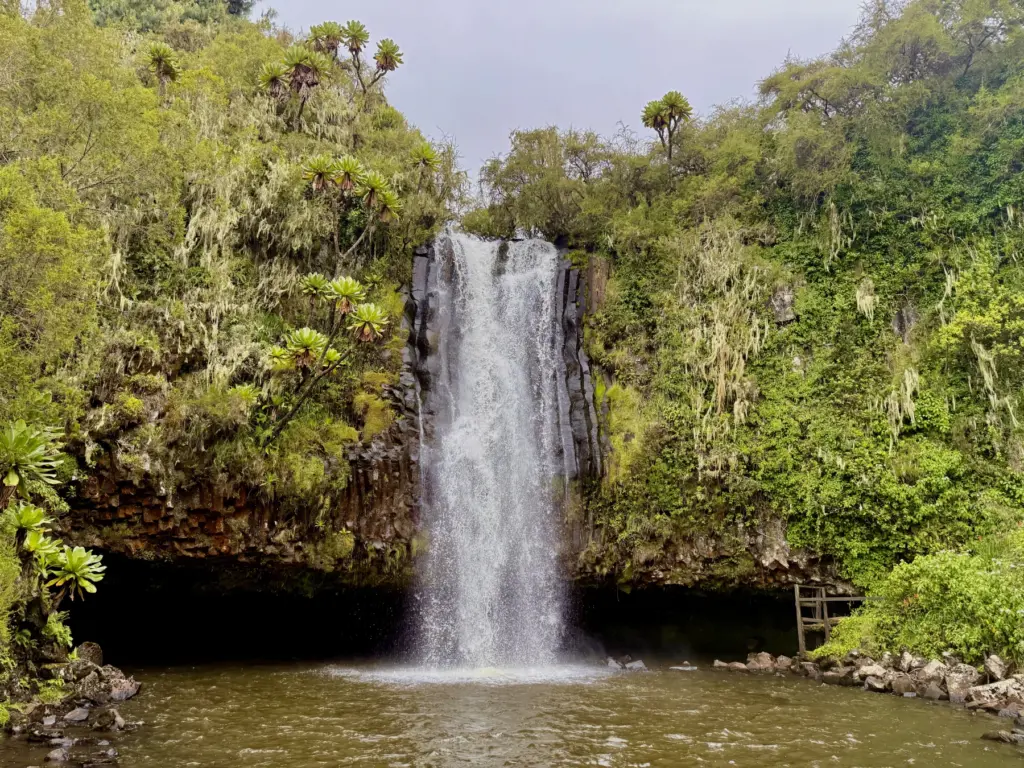
Ngare Ndare, near Timau, is one of the most scenic forest experiences in the wider region. It’s a pleasant walk through indigenous forest, with waterfalls and crystal clear water pools unless you go there in the rainy season. If you do, brace yourself for some slippery exercises and balancing acts as well.
As a bonus experience, they also have Africa’s longest treetop canopy walkway, where you walk for 500 meters above a jungle of treetops. Mention to Nigerians at your own peril that this is Africa’s longest, as many are still nostalgic about the days when the one on Lekki held that throne. At half a kilometer, it is no match for hikers who just did the 7 kilometers Ngare Ndare hike in much tougher terrain, though.
When done, and you realise you still have the whole afternoon left, you can move on to the other, more urbane things that Timau and Nanyuki have to offer. Hint: Nanyuki has a nice variety of restaurants. Some quaint, some classy, but you’re not out of options. Remember that the best steaks in Kenya come from neighbouring Ol Pejeta. Bon apétit!
Montane Rainforest in the Aberdares
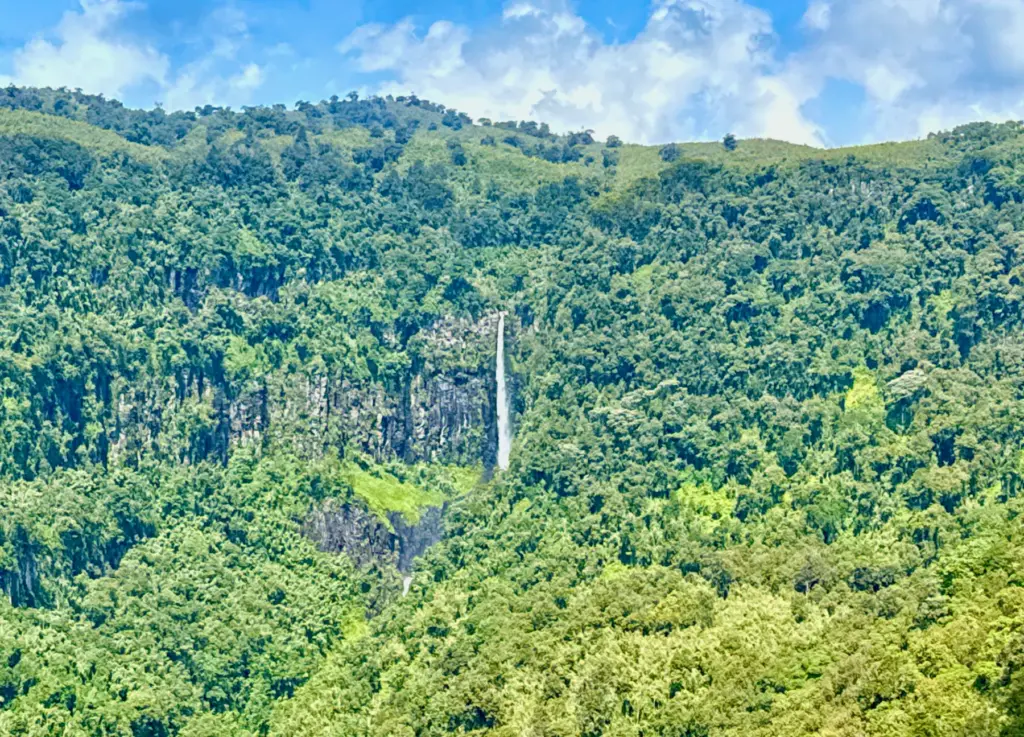
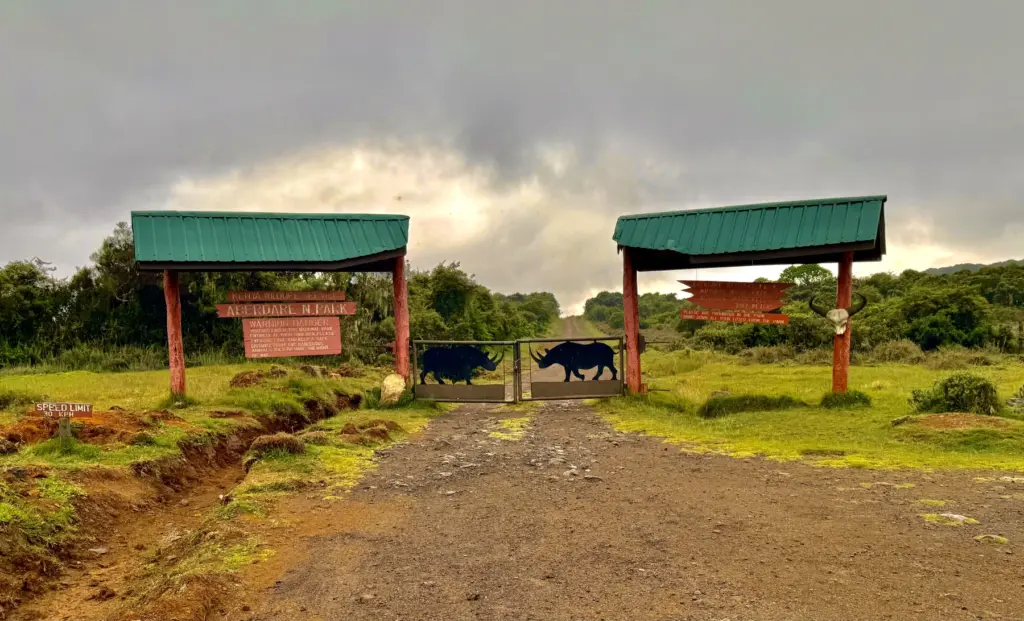
The Aberdares, a separate but adjacent mountain range, sit close enough to be considered part of the wider Mount Kenya region, also known as the Central Highlands. They are part of the same broad ecosystem, but with slightly different terrain.
At the core of the Aberdares is a mist-shrouded equatorial montane rainforest ecosystem, the kind you only find in a few places in the world. The scenery is dramatic in its own right, and the wildlife includes some truly rare species, including black leopards.
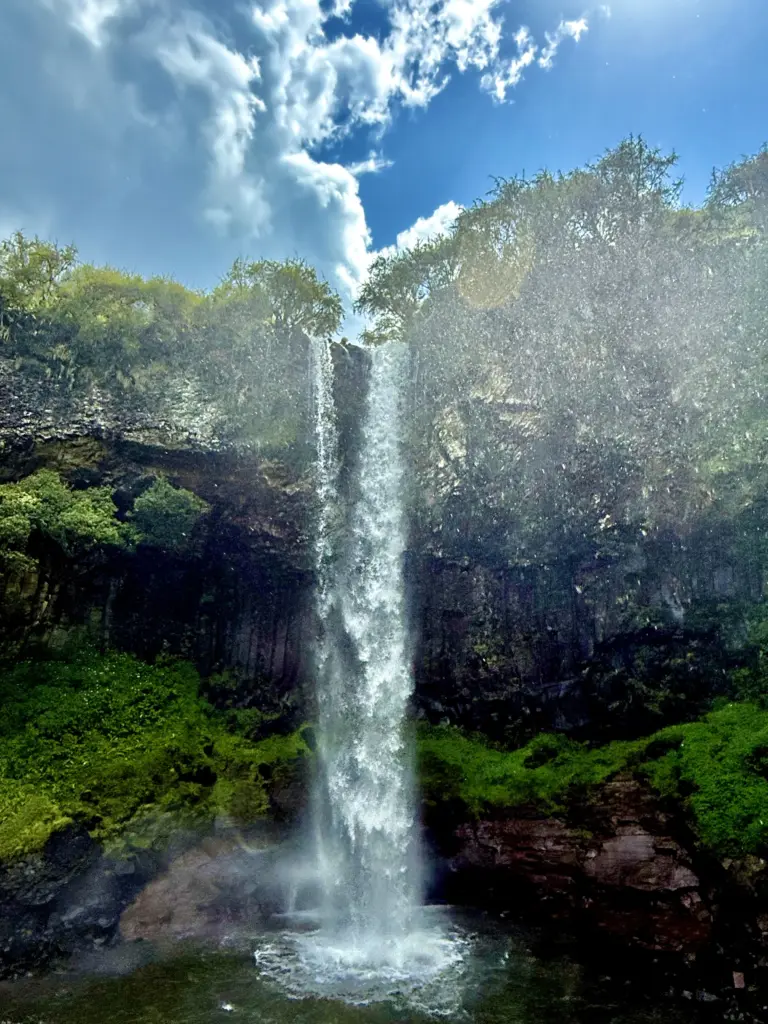
The waterfall trail is beautiful, but access has become more complicated. Due to increased wildlife activity, the original hiking trails have been closed, so this section of the Aberdares can now only be explored by car.
Karuru Falls, the tallest waterfall in Kenya, is a spectacular view from any angle. With the hiking trails closed, getting a viewpoint from below is challenging, and with no ranger available to guide me, I couldn’t find one. Even the view from the top was worth the detour.
Even with some trails closed, the Aberdares remain the hiking destination par excellence. Elephant Hill, reputed as Kenya’s toughest hike, if not East Africa’s, is often mentioned with a certain level of dread. Other scenic hikes pass the bamboo belt and enter the Afro-alpine ecosystem, including Mount Satima, Kenya’s third-highest peak, and Table Mountain, famous for its views across the Great Rift Valley.
Northwards: Ol Pejeta, Lewa, Samburu, and Shaba
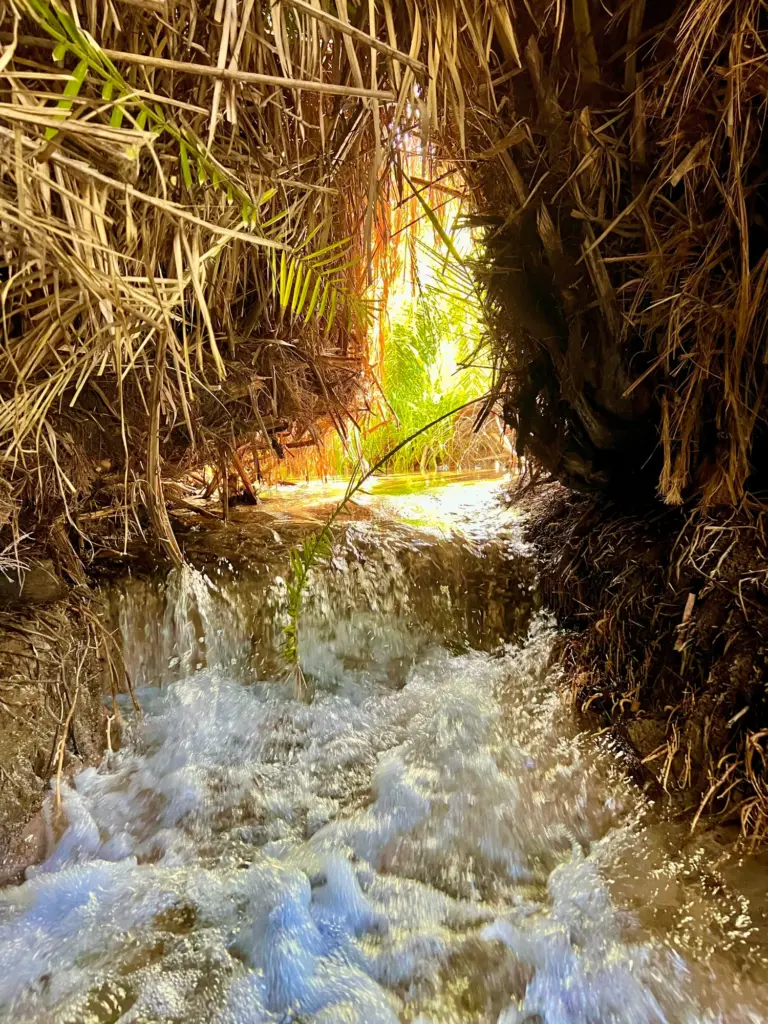
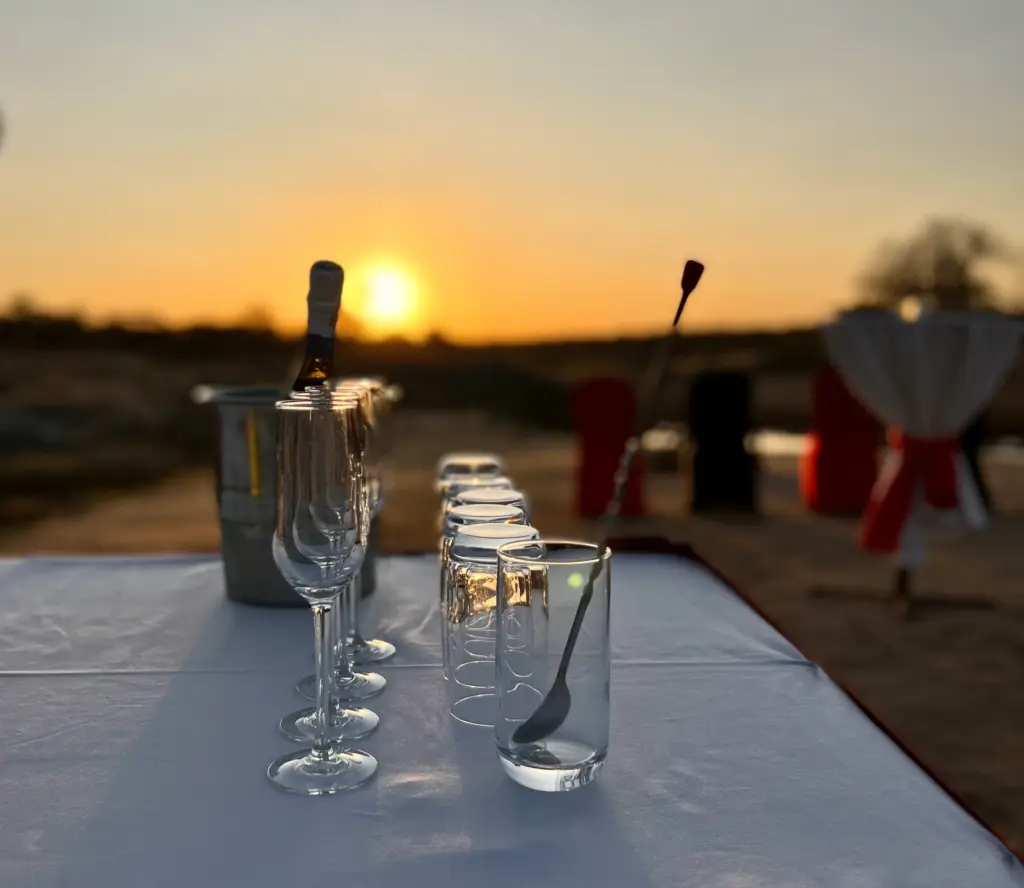
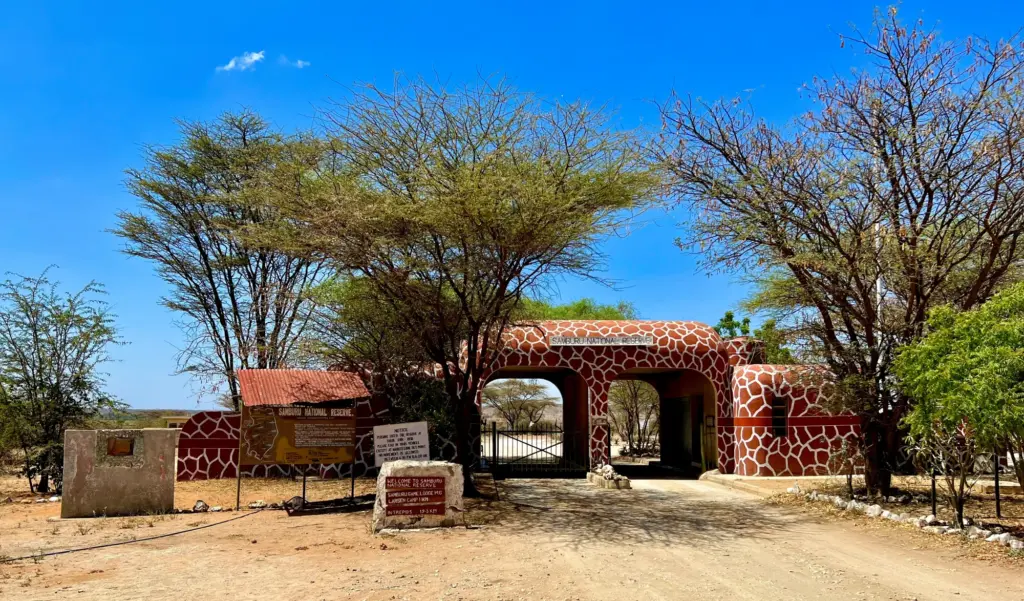
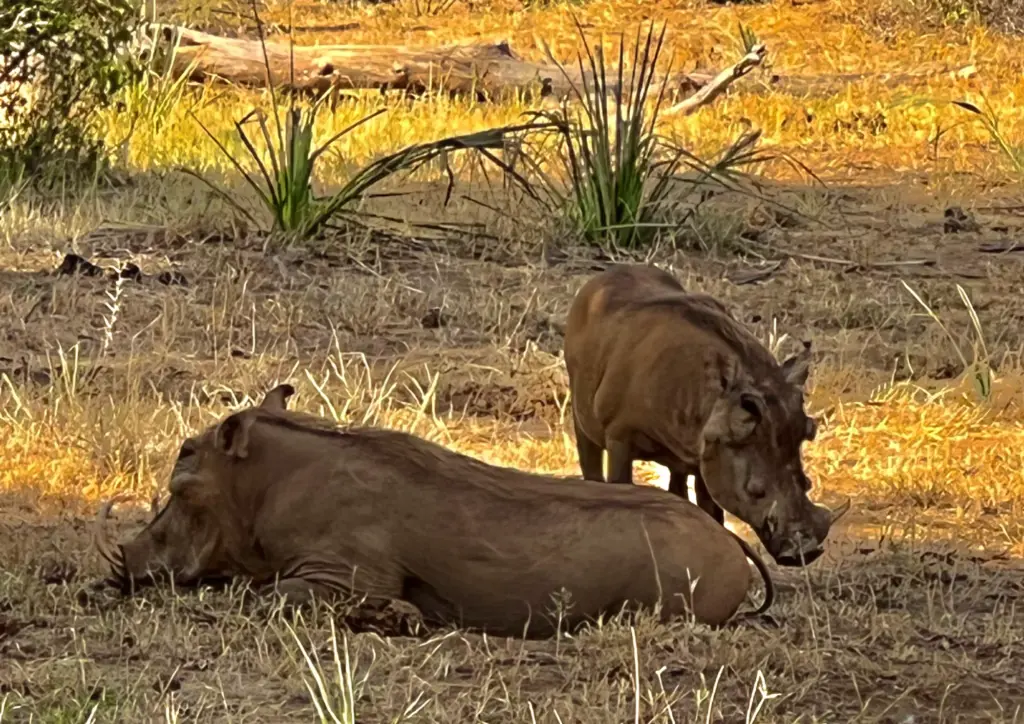
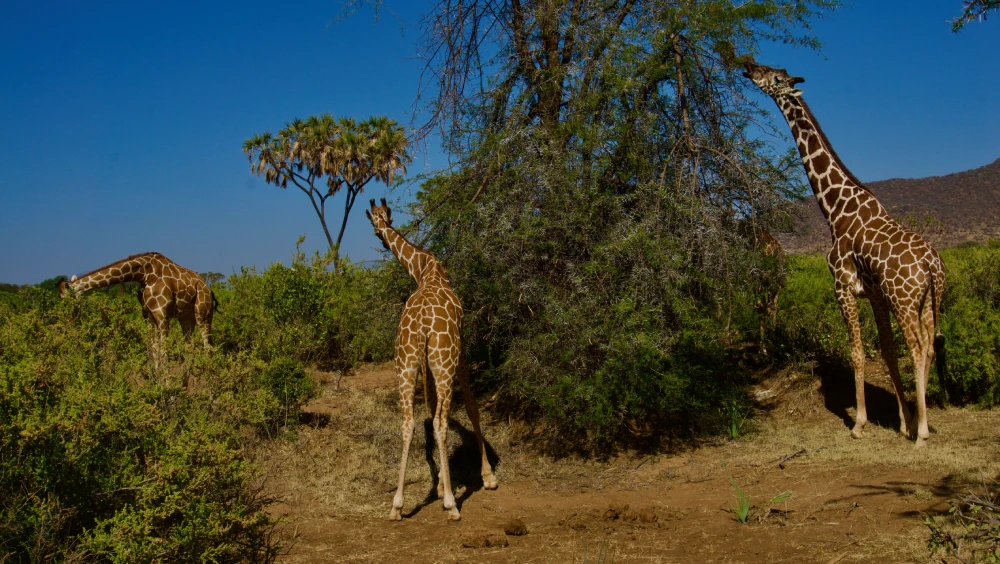
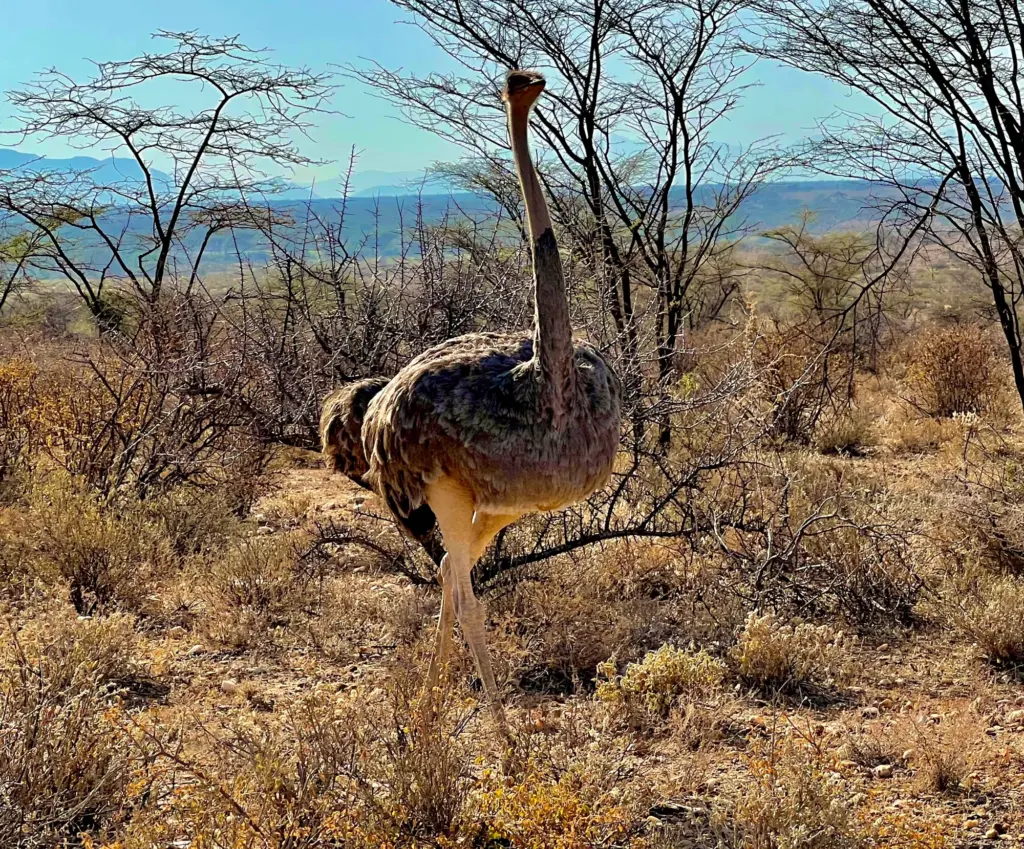
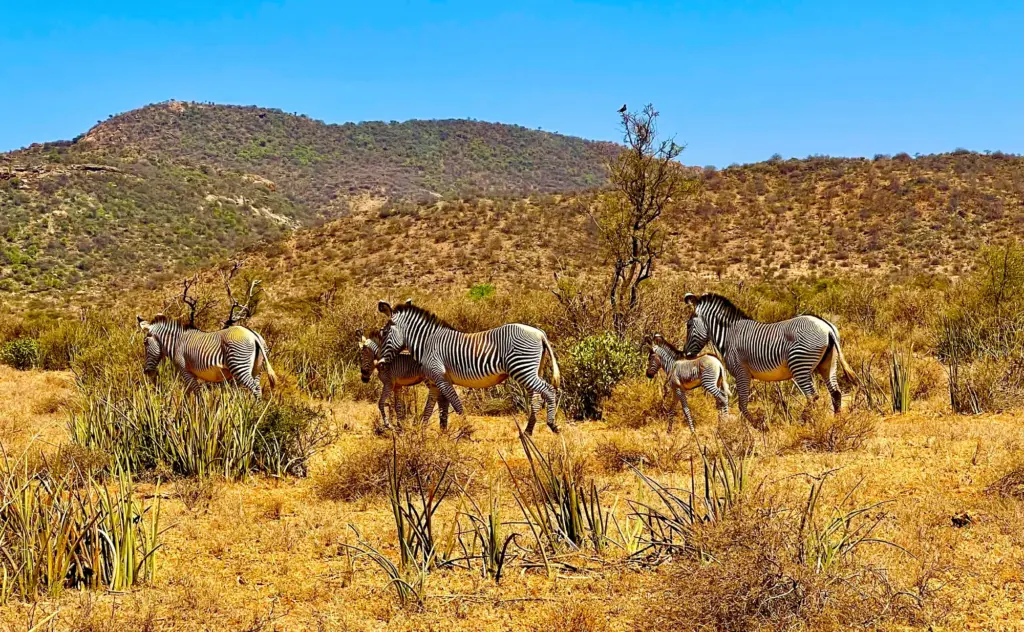
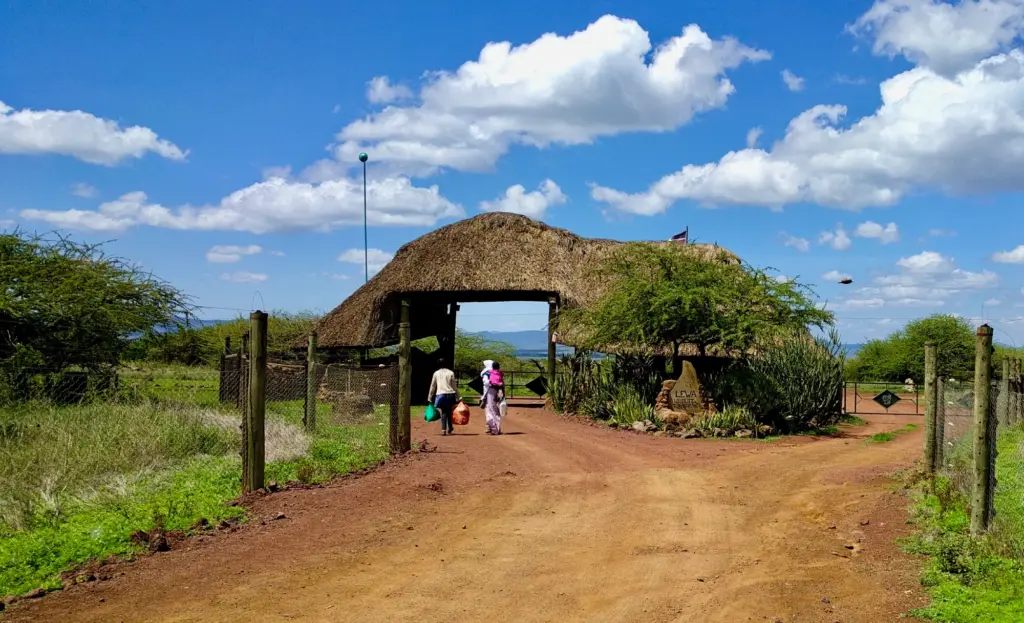
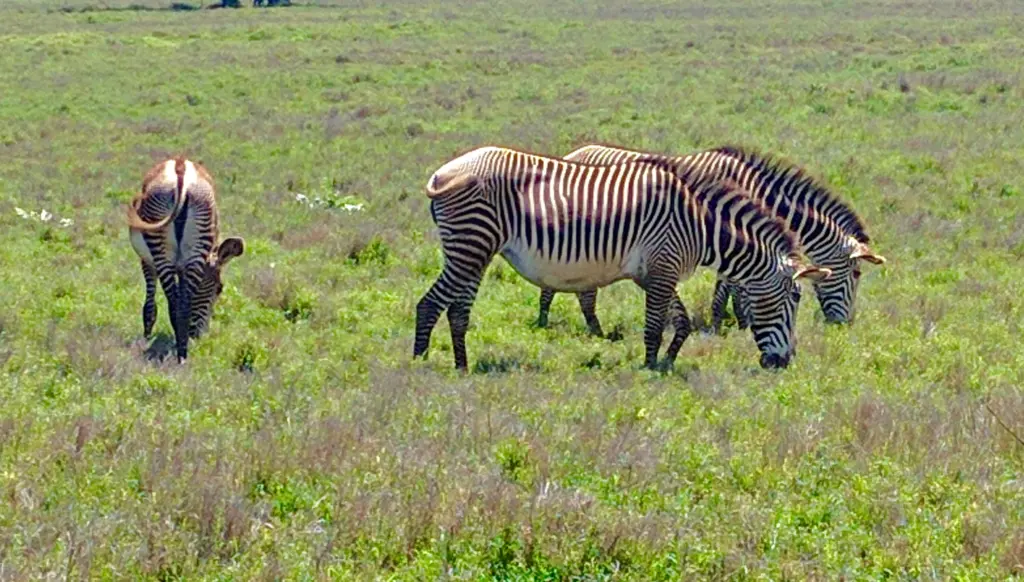
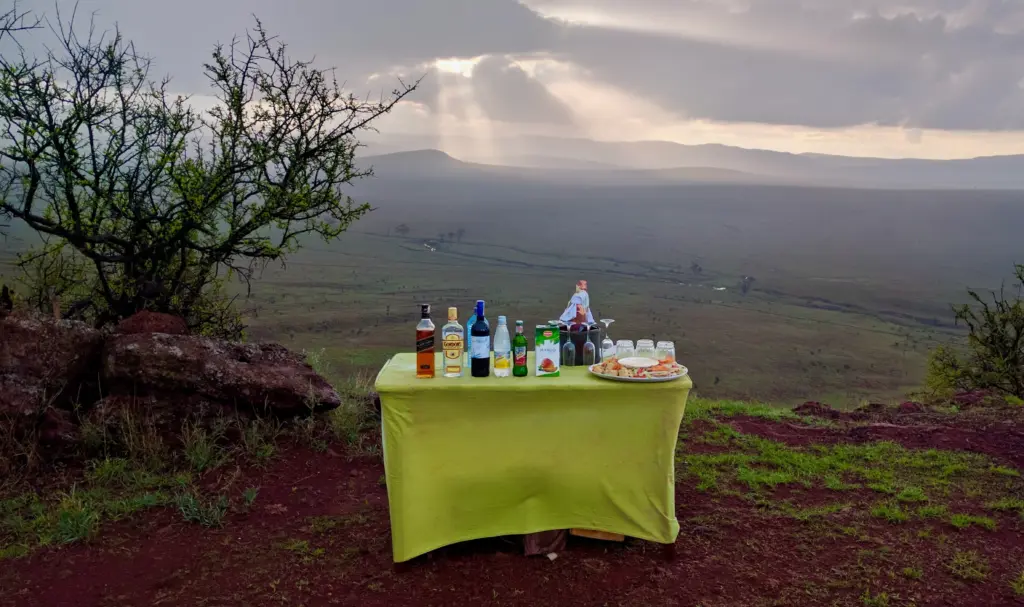
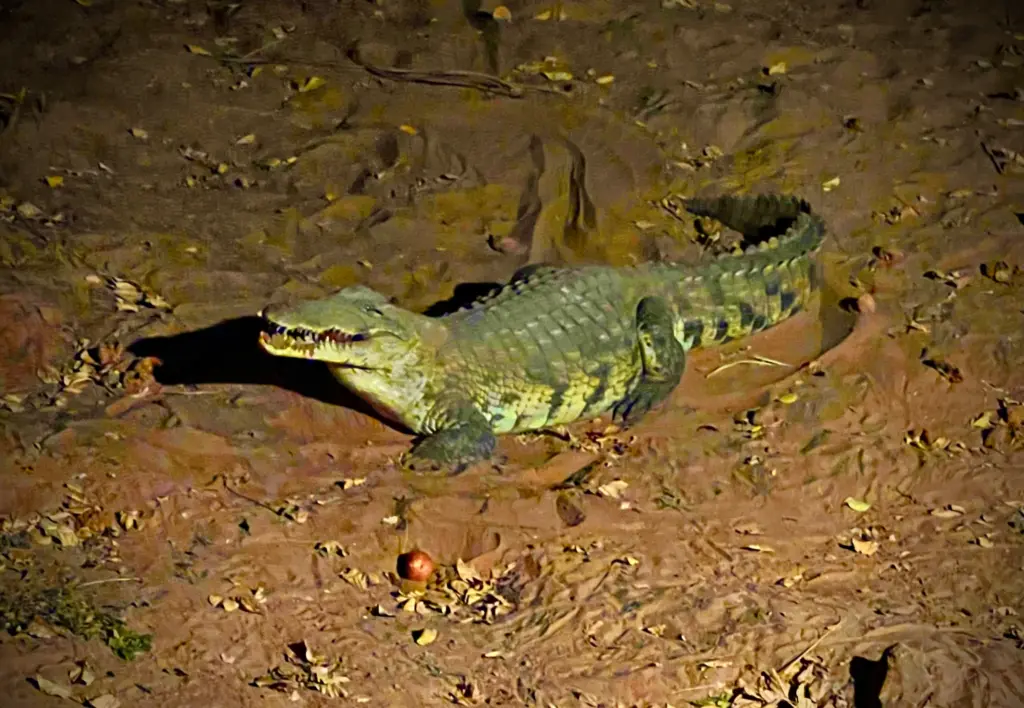
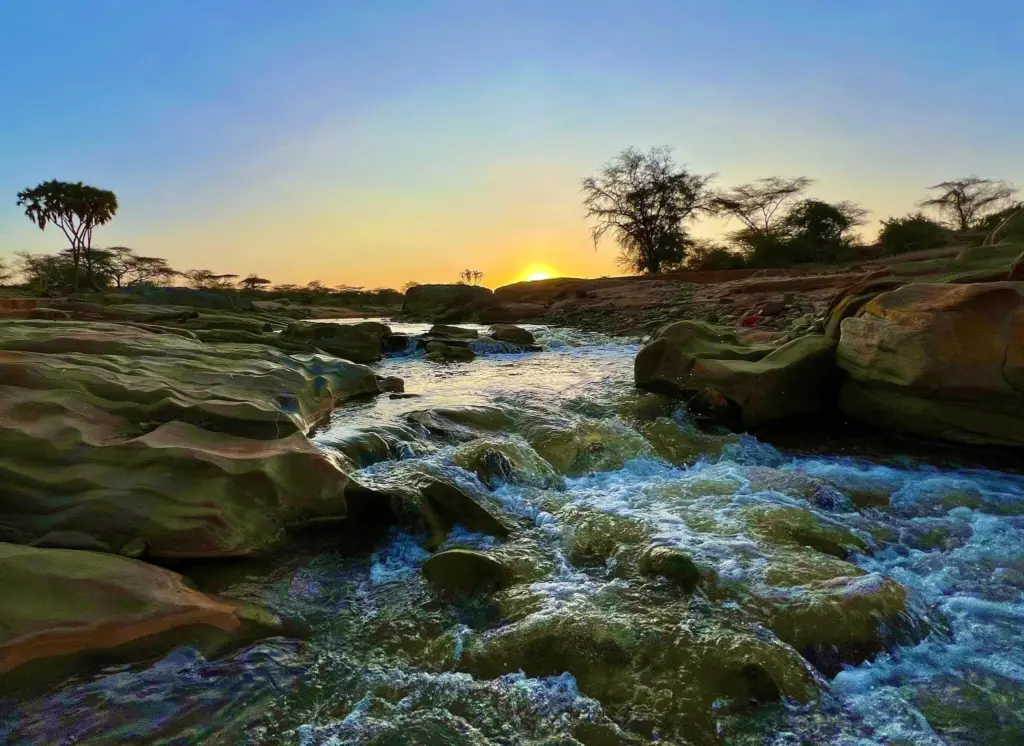
Northwards from Mount Kenya, the scenery shifts from mountain slopes to wildlife country.
Ol Pejeta Conservancy, near Nanyuki, is one of Kenya’s most accessible and famous conservancies. It has rich wildlife, open plains, strong rhino conservation, lions, leopards, cheetahs, buffalo, migratory elephants, and plenty of plains game. With all those animals packed into a small conservancy, the game drives become rewarding pretty quickly, without a lot of road time.
Lewa sits north of Mount Kenya and is one of Kenya’s best-known private conservancies. The Big Five are present, but Lewa is especially strong for rhinos, elephants, buffalo, Grevy’s zebras, reticulated giraffes, beisa oryx, and gerenuks. Black rhino conservation is a major part of its reputation, and the northern species make this region different. The landscape is open, beautiful, and dry in parts, with Mount Kenya as a backdrop when the skies are clear. Lewa is also home to the annual Lewa Safari Marathon, a trail race through the conservancy and one of Kenya’s most scenic running events.
Further out, the scenery changes as the climate gets drier. Towards Shaba and Samburu, there is more scrub, more palms, more heat, and more dust. The lush greenery disappears except around springs, rivers, and wetter pockets. The wildlife mix changes too, with northern species becoming a major part of the experience.
Nanyuki: Small Town, Big Appetite
Almost by default, Nanyuki is the base for Mount Kenya, Ol Pejeta, Lewa, Ngare Ndare, Naro Moru, and the surrounding farms and conservancies, all within a short driving distance. The town is worth some exploring in its own right too.
Nanyuki has changed a lot in recent years. It was always a little more cosmopolitan and refined than the other Mount Kenya towns, but that character is stronger now, with chic cafés, good restaurants, boutique hotels, and a steady flow of people passing through for climbing, safari, conservation work, or a weekend escape.
In nearby Naro Moru, Trout Tree is an absolute must-visit. This trout farm and restaurant is built on top of an old fig tree, next to a small mountain river partially diverted into fish ponds. The menu is all trout: grilled, smoked, pâté, sashimi, and much more. The trout mulligatawny is worth the visit in its own right, so make sure that one is included in your order.
Rustique is another of my personal favorites in Nanyuki. It started in Parklands in Nairobi, then moved up here and grew into both a restaurant and hotel. The design keeps that colonial-chic feel, with comfortable rooms and a restaurant that knows what it is doing. The steaks are succulent, tender, and incredibly rich in taste. Perhaps unsurprisingly, some of Kenya’s best meat comes from the farms around Ol Pejeta.
The Nook is also worth mentioning, with good pizzas and a pleasant setting. Nanyuki has no shortage of chic places to eat, and more keep coming up.
Where to Stay Around Mount Kenya


The wider Mount Kenya region has some serious old-school places, a few polished boutique options, and several scenic camps and lodges that make good use of the landscape.
Mount Kenya Safari Club is the grand old classic. Beautiful, decadent, and very much from another era. A colonial mansion, vast lawns, mountain views when the weather allows it, and that old-world lodge atmosphere. Polished, historic, and luxurious. Perfect for a lazy weekend.
Serena Mountain Lodge has always had a much rougher wilderness feel. Deep in the mountain forest, away from the town, with that sense of being tucked into the trees while animals move around the waterhole. It has been temporarily closed, and I hope to see it back properly.
Glamping Kenya near Naro Moru also deserves a mention. This luxury tented camp near Naro Moru offers perfect views of the Mount Kenya peak (I took the main picture for this page from there) in an outdoorsy setting. Another great escape for a weekend of fresh mountain air
Lewa Safari Camp is the kind of place that makes the conservancy experience feel personal. Boutique, luxury tents, a skilled chef, excellent service, and a proper wilderness setting. Wild and refined at the same time.
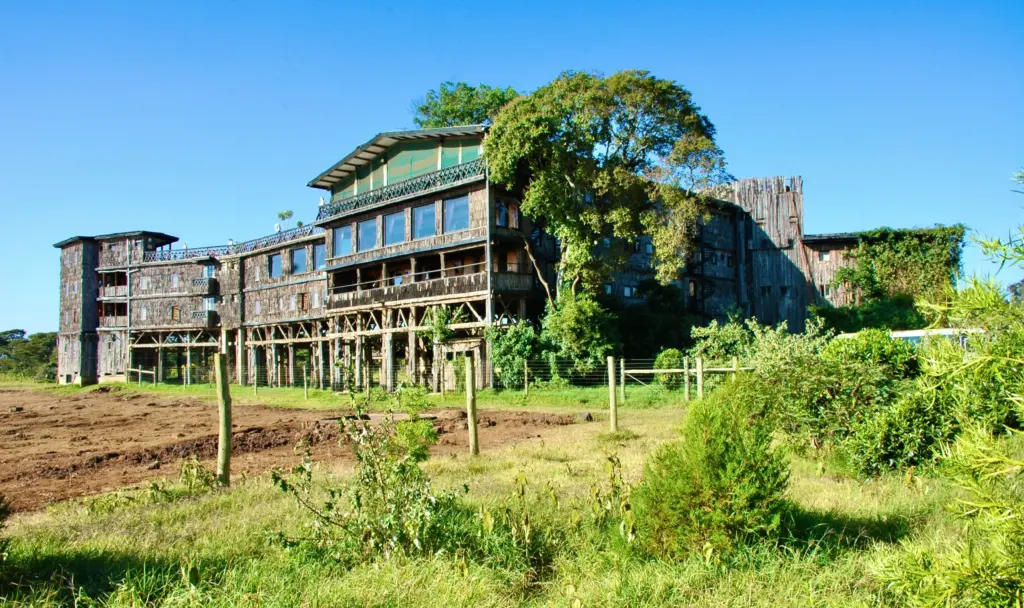
In the Aberdares, Treetops Lodge is impossible to ignore. This is the famous place where Princess Elizabeth went up as a princess and came down a queen after the death of King George VI. It is one of Kenya’s great lodge legends, and the story still carries weight. Beyond the royal history, the place has that forest-wilderness atmosphere that made the Aberdares famous in the first place.
Honourable mention also goes to Sarova Shaba, a bit further north. This is a great base for exploring Shaba, Samburu, and Buffalo Springs. Sitting at the banks of the Ewaso Ngiro river, Sarova Shaba is a green oasis in the dry, barren landscape of Isiolo.
More Than the Mountain
You can do a lot of trips to the Mount Kenya region and never do the same thing twice: Mountain slopes. Forest walks. Waterfalls. Equator stops. Trout farms. Cold nights. Conservancies. Rhinos. Northern species. Old lodges. Small-town restaurants. Big steaks. Dry-country extensions toward Samburu and Shaba.
The peak of Africa’s second-highest mountain may be the main allure, and a worthy one, but the region around it has a lot to offer.
Come for the peak views if the clouds allow it. Stay for the forests, the food, the wildlife, the conservancies, and the cold evening air that makes a fireplace feel like just the right thing. Pack some warm clothes, because this may be the equator, but if you think that mean scorching sun, you’re in for a surprise!