
Murchison Falls National Park – “Where is that?”
And the funny part is that a lot of people still skip it.
If you’re the kind of traveller who automatically says yes when someone offers “a bit of culture, some history, and a serious dose of nature”, then this place is basically your love language.
In 2022, Murchison Falls recorded 146,649 visitors. That makes it a growing destination by Uganda standards, but still nowhere near the “everyone and their cousin has been there” level. Yet once you are in it, it feels like one of those places that should be mentioned in the same breath as Maasai Mara. Different vibe, different geography, but no less impressive.
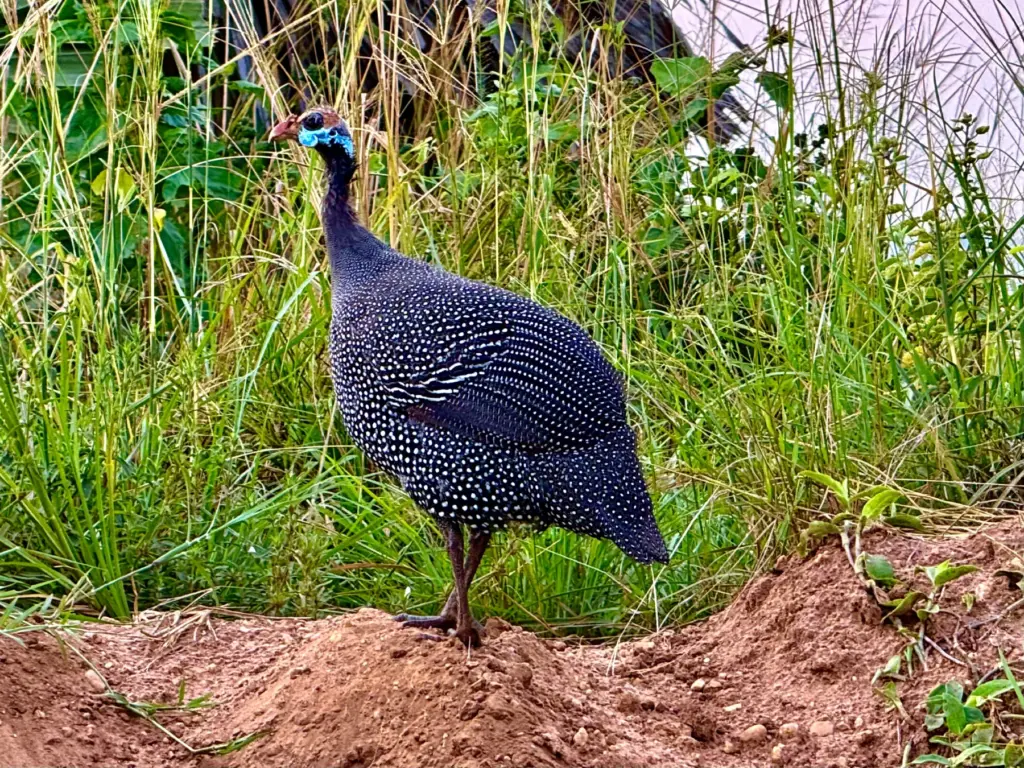
Murchison is not a one-habitat park. It is a full buffet: dense tropical forest, woodlands and thickets, tropical savannah, wetlands and papyrus swamps, plus that riverine ecosystem that comes with crocodiles, hippos, and birds in such numbers that you stop counting after the first few minutes.
The road north: Kampala, but make it brief
From Kampala it’s roughly a 4–5 hour drive, depending on traffic and how quickly you manage to escape the gravitational pull of the city. My general advice is simple: minimize road time in or near Kampala if you can. Your stress levels will thank you later.
Pro tip: I was driving from Jinja, and took the Kasangati-Matugga route, completely avoiding Kampala. Some 10-15 kilometers were on a dirt road, but that’s a price I’ll pay anytime to stay out of the Kampala traffic.
The classic stopover is Masindi, the gateway to the park and a good place to break the journey. It also comes with a surprising amount of history baked into the town itself, since it was the historic heart of the Bunyoro Kingdom (even if the royal palace later moved to Hoima).
The stopover with stories: Masindi Hotel
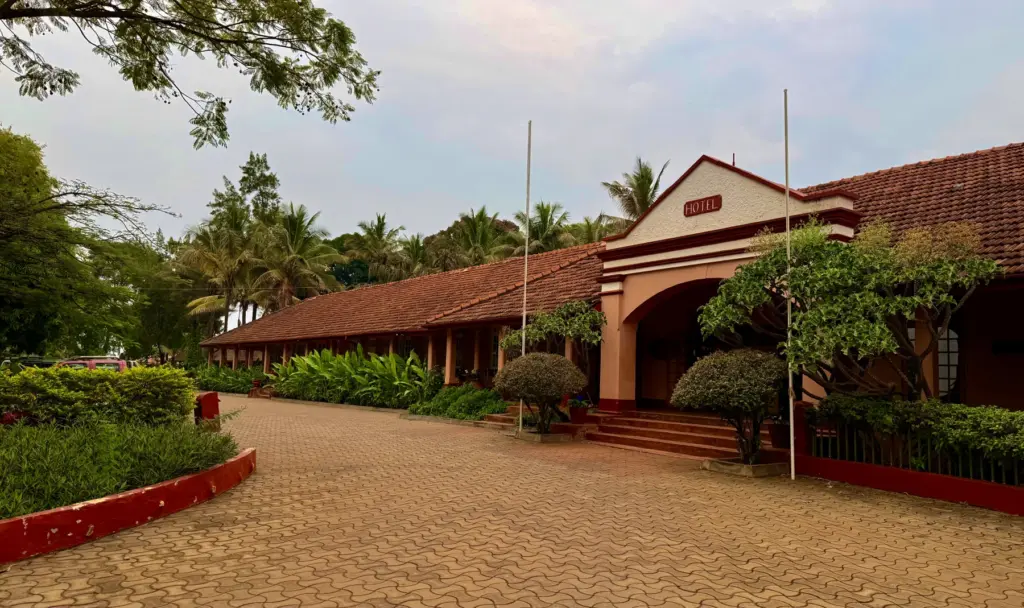
If you want a stop that feels like it comes with its own soundtrack, this is it.
The hotel dates back to 1923. Ancient history by East African standards.
It is famous for hosting Ernest Hemingway shortly after he survived two plane crashes in as many days while travelling in Uganda in 1954. There is also the long-running story that his arrival took a serious toll on the hotel’s gin supply. I cannot independently audit the gin inventory from 1954, but the legend is very much alive.
And then there is the 1951 film connection: Humphrey Bogart and Katharine Hepburn stayed here during the shooting of The African Queen. You don’t even have to be a classic-film nerd to notice. The walls basically tell you.
Today it’s mainly known as the default stopover on the way to Murchison Falls.
Welcome to the jungle
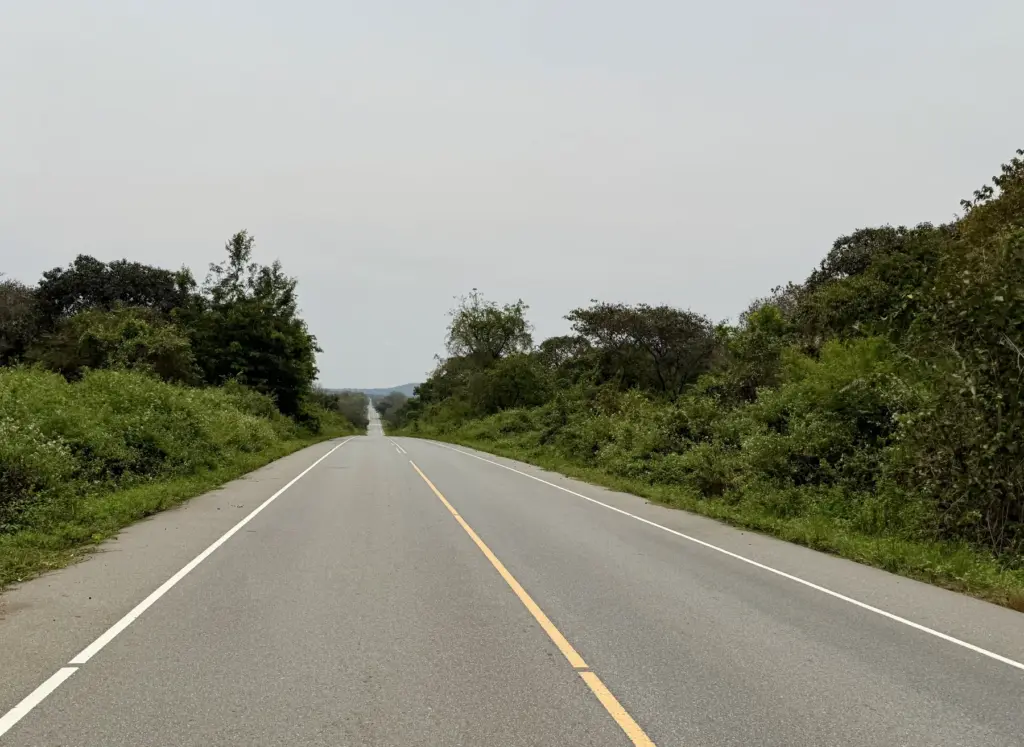
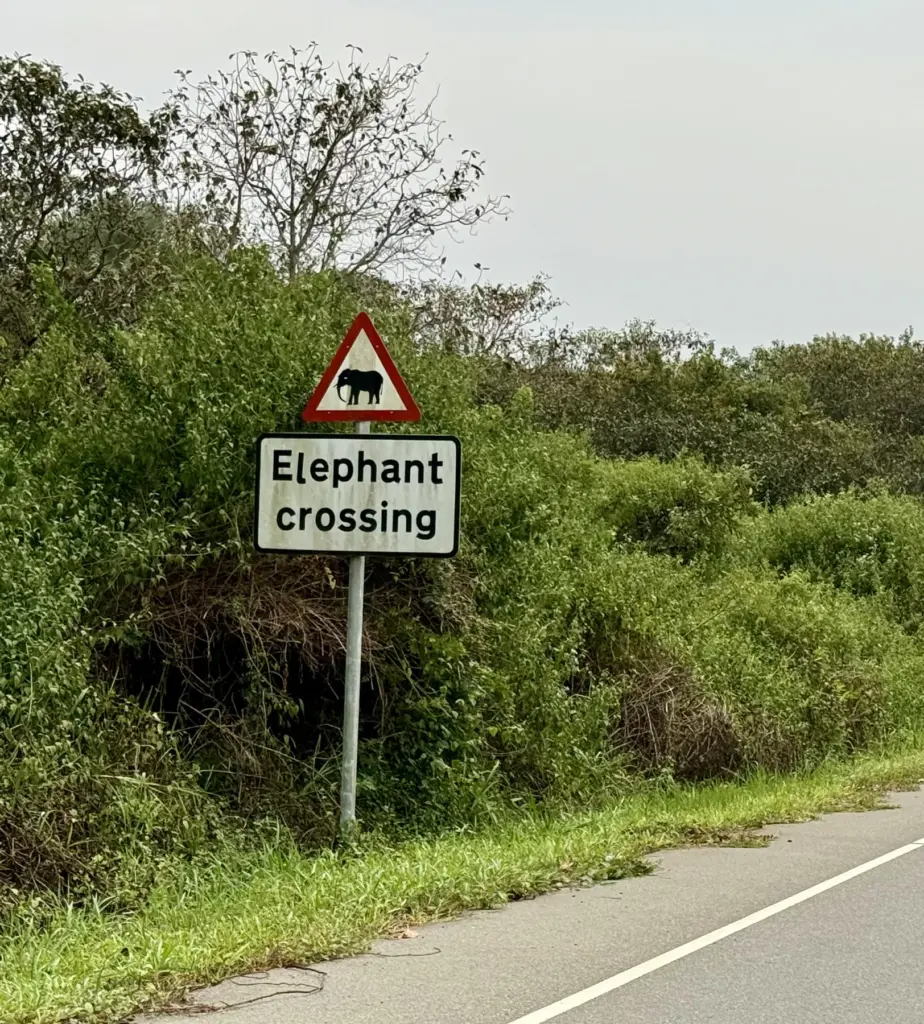
Enter Murchison Falls from the south and the first thing that hits you is the colour: dense, lush, green tropical forest.
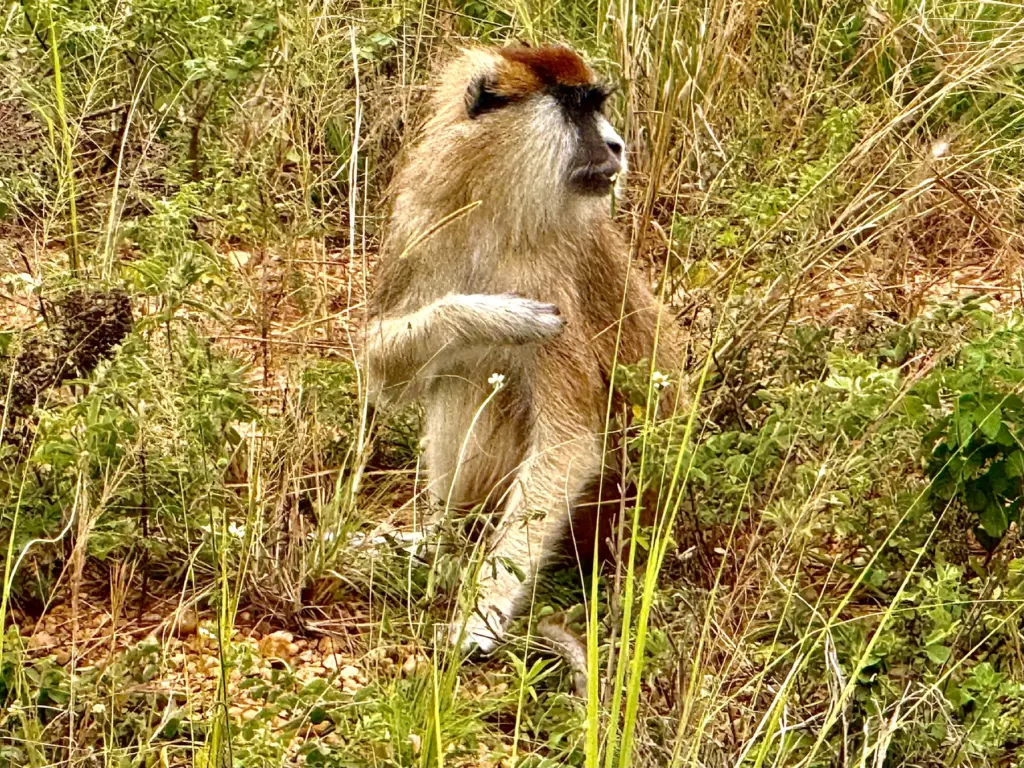
It has that “are we sure this is real life?” feeling. The south sits higher, so you also get those big views over what looks like never-ending canopy. And as you roll along, baboon families casually dot the roadside like they own the place (they do.)
Then, further north, the forest loosens into woodlands and thickets. Eventually you cross the Nile at Paraa, now by bridge rather than the old ferry. And after that: savannah.
It is an almost cinematic transition. From one dramatic scene to another.
Savannah mode: where the animal life goes from “nice” to “seriously?”
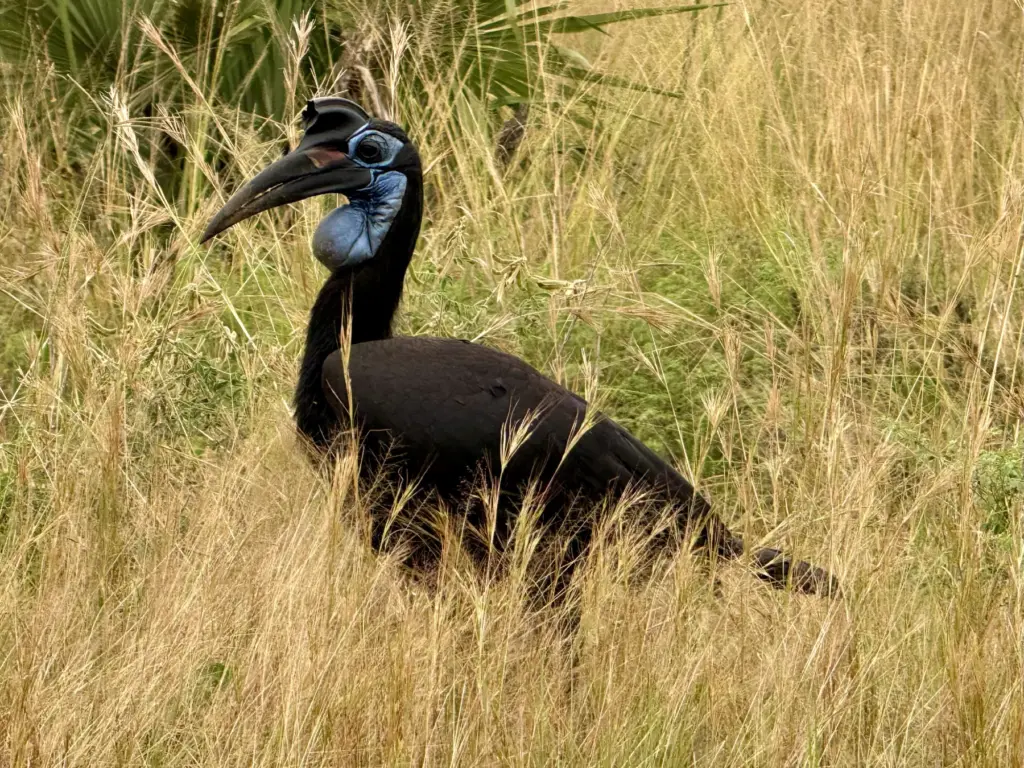
Once you are on the open side, the wildlife starts stacking up fast.
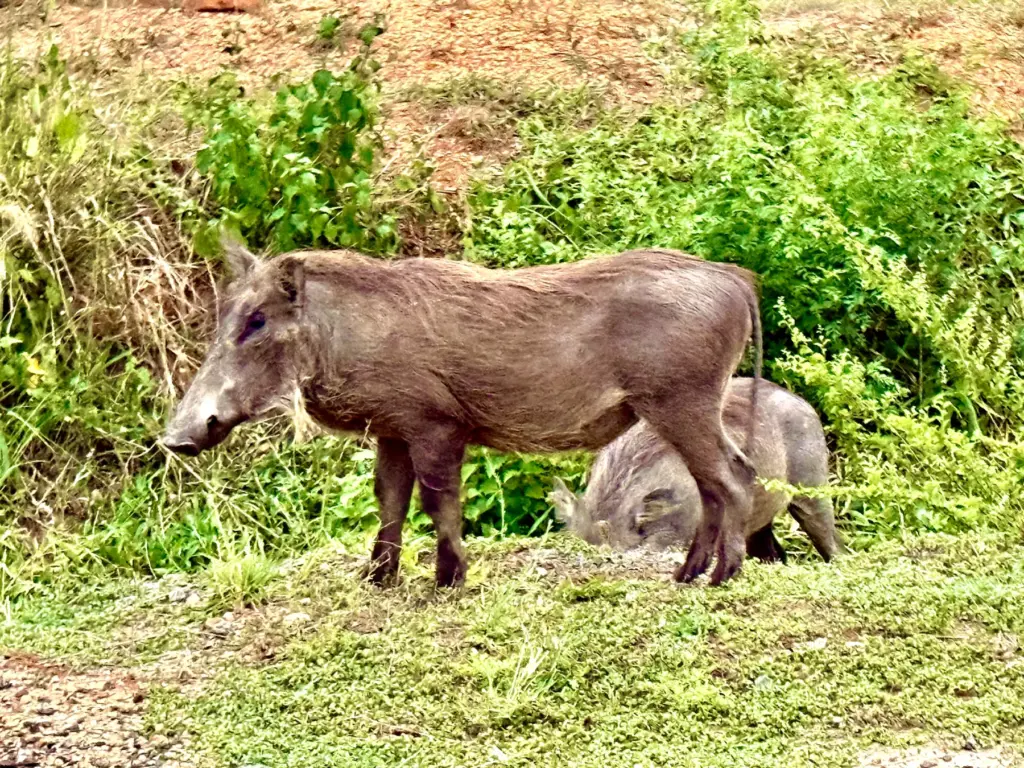
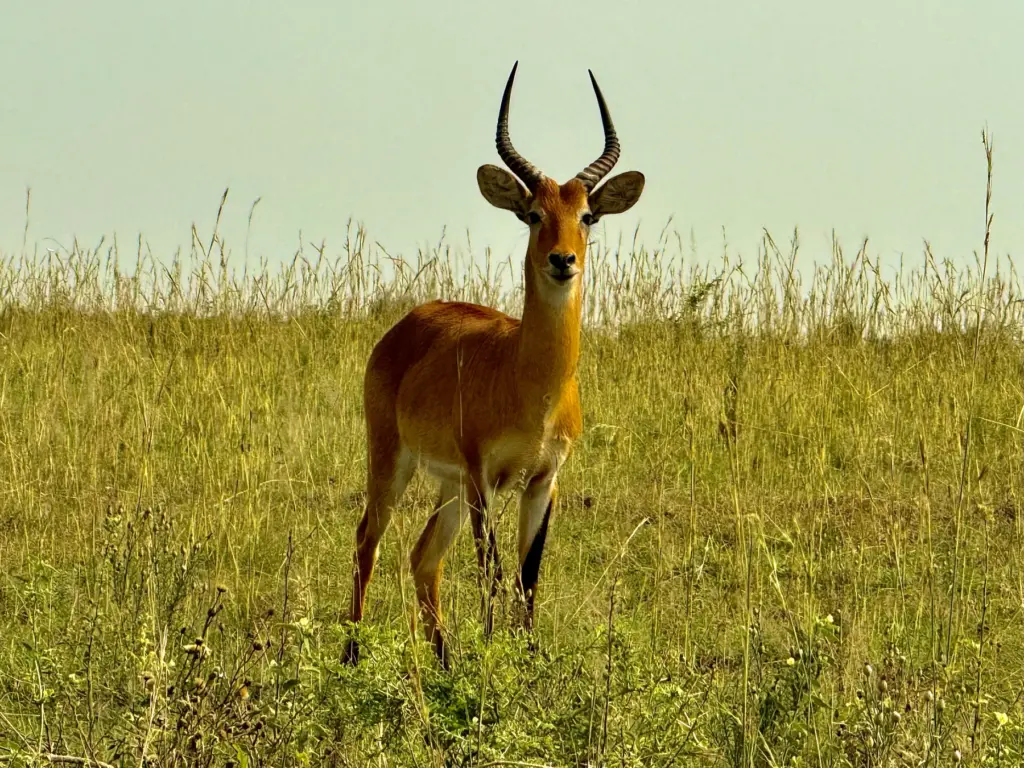
You get the classics: giraffes, gazelles, waterbucks, hartebeests, buffaloes, and the occasional lion if the timing is right.
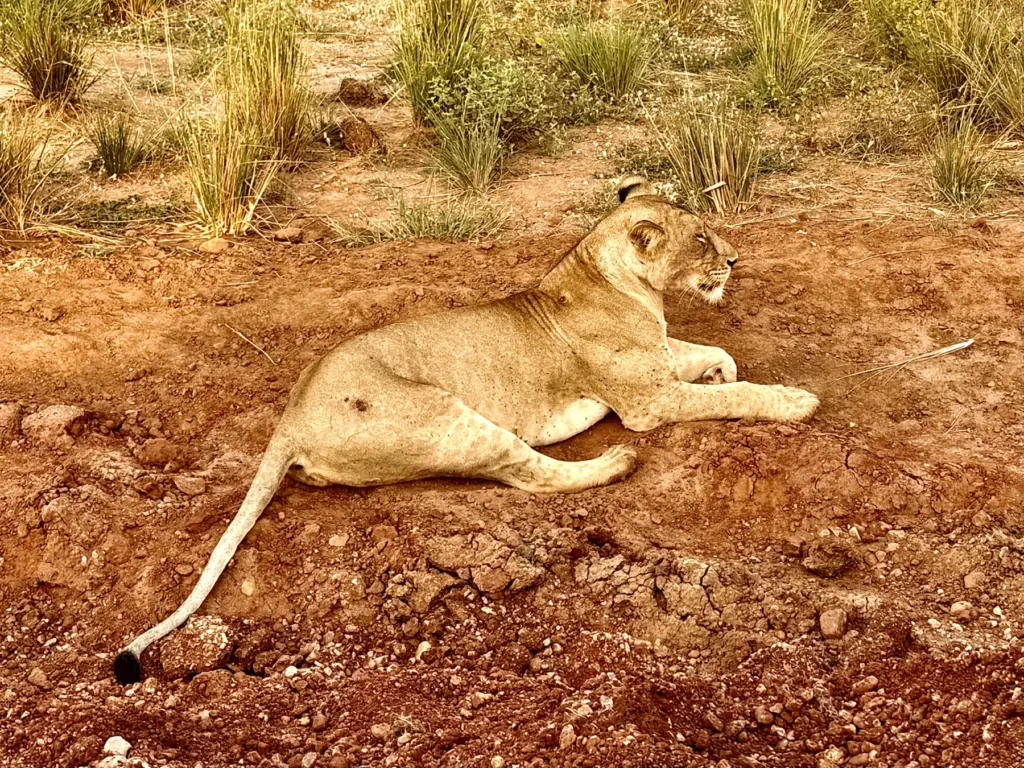
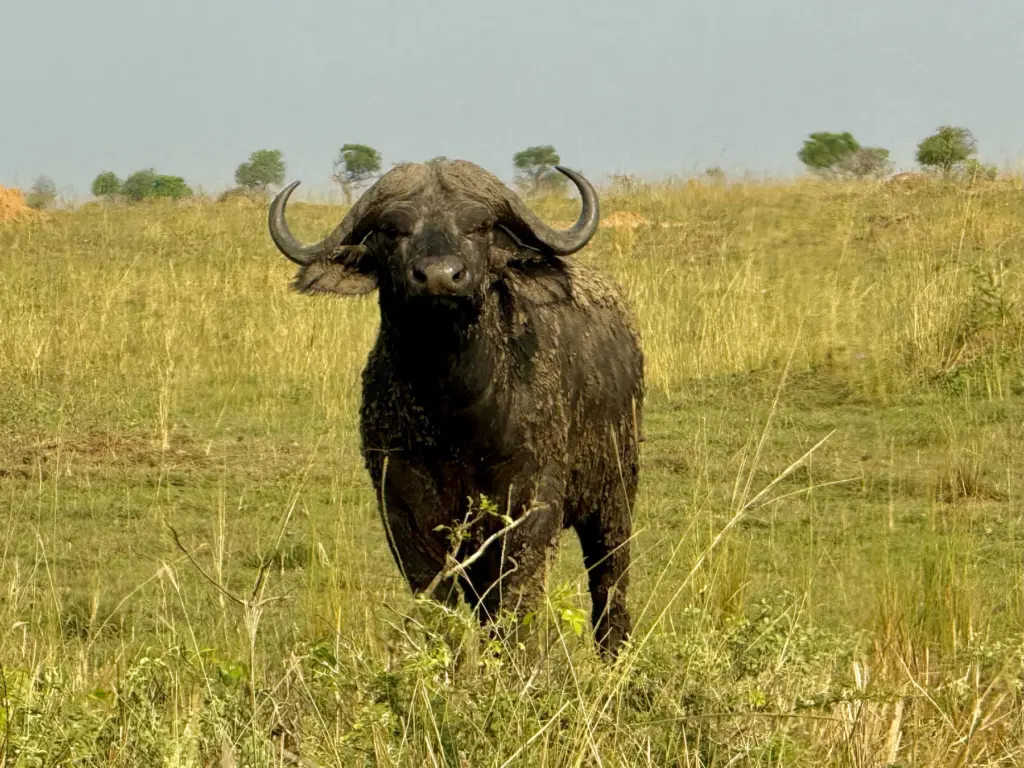
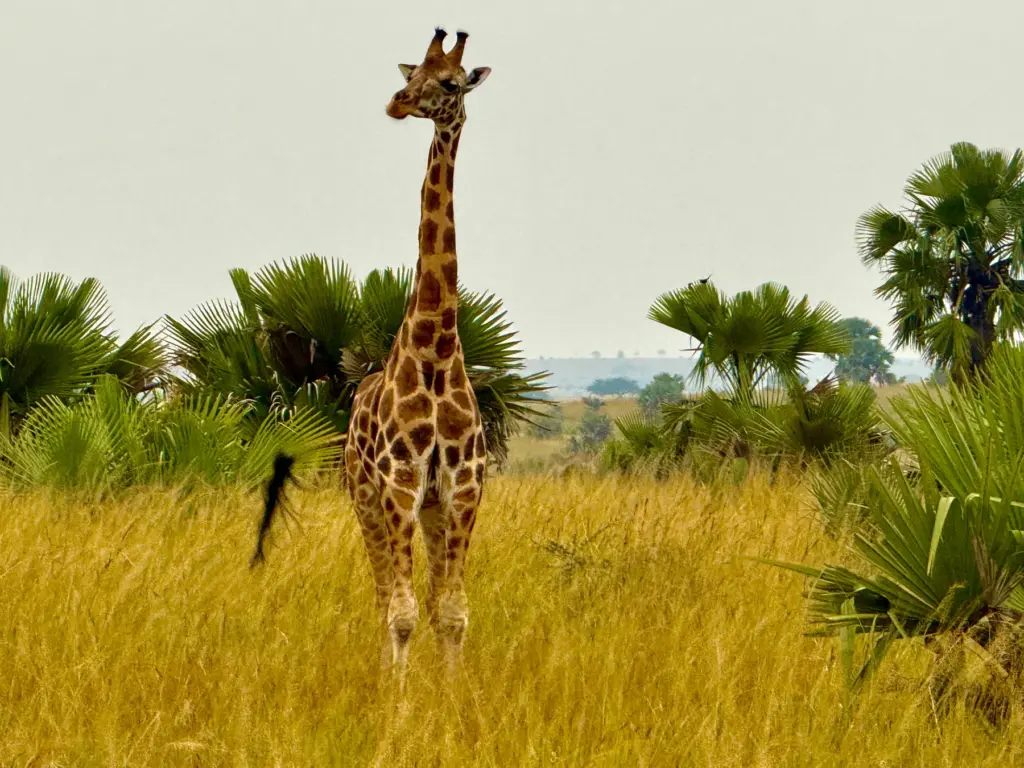
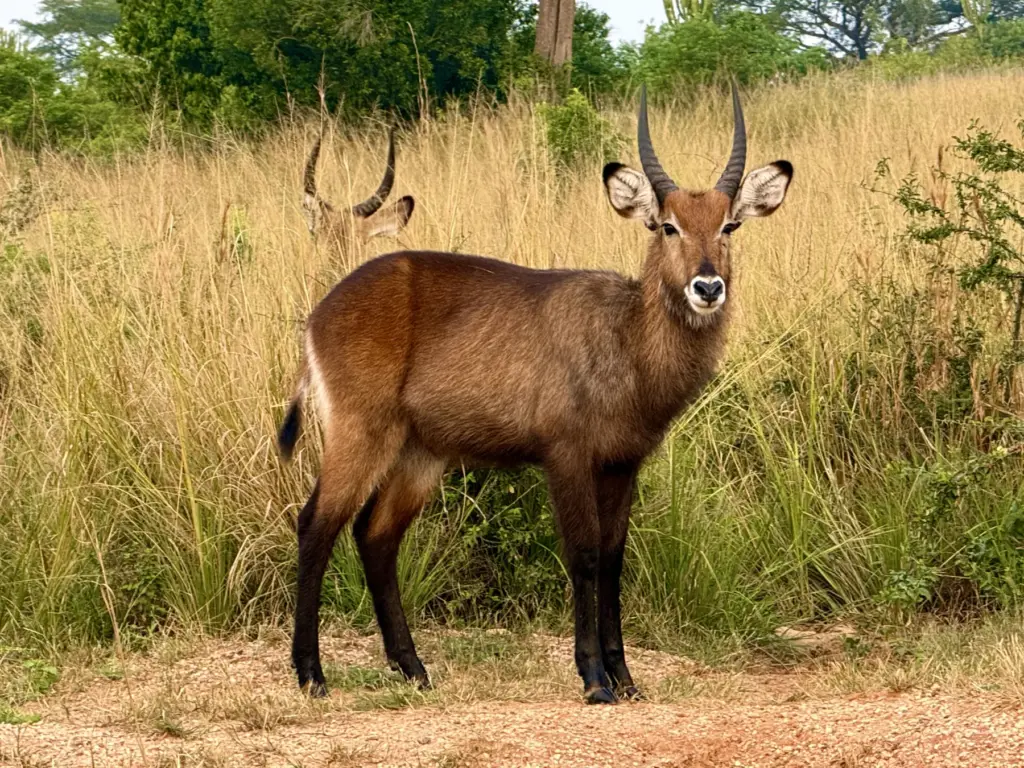
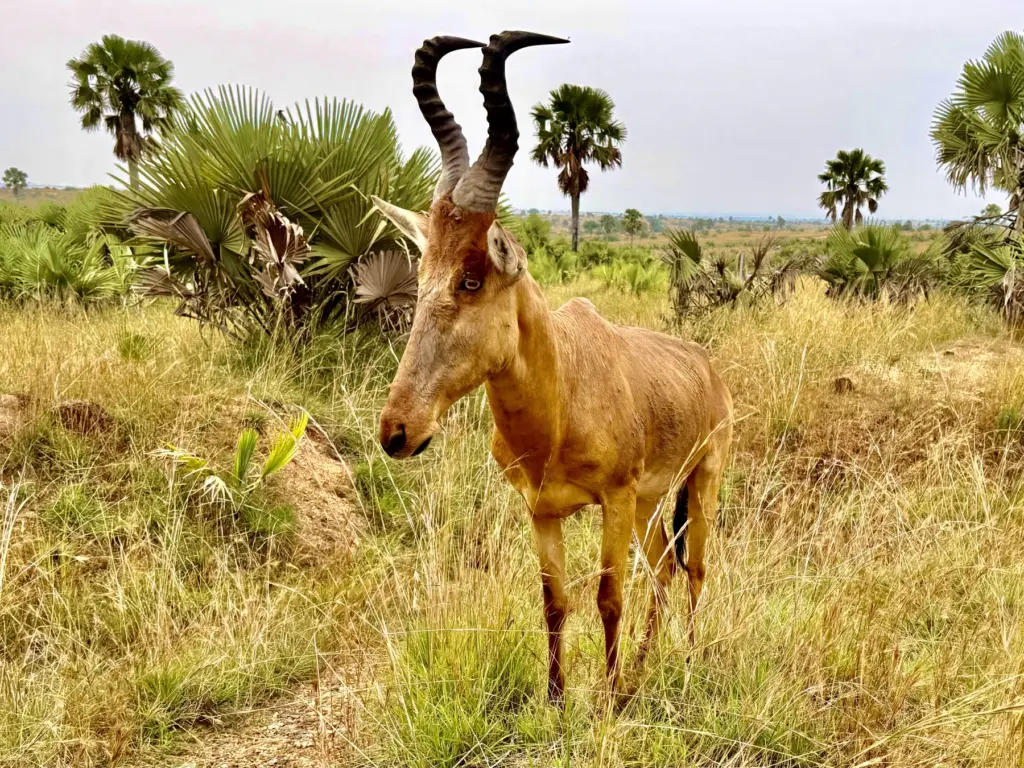
We didn’t see many elephants, but they are around. The only one we came across, however, was already showing us its big behind by the time I was ready to take a picture.
And then there are the small moments: tiny patas monkeys, more baboons, and birds that are just… too charismatic. The Ground Hornbill is a the one you can’t fail to notice, and in Murchison Falls, it’s everywhere!
The Nile, the rules, and a small public service announcement about speed
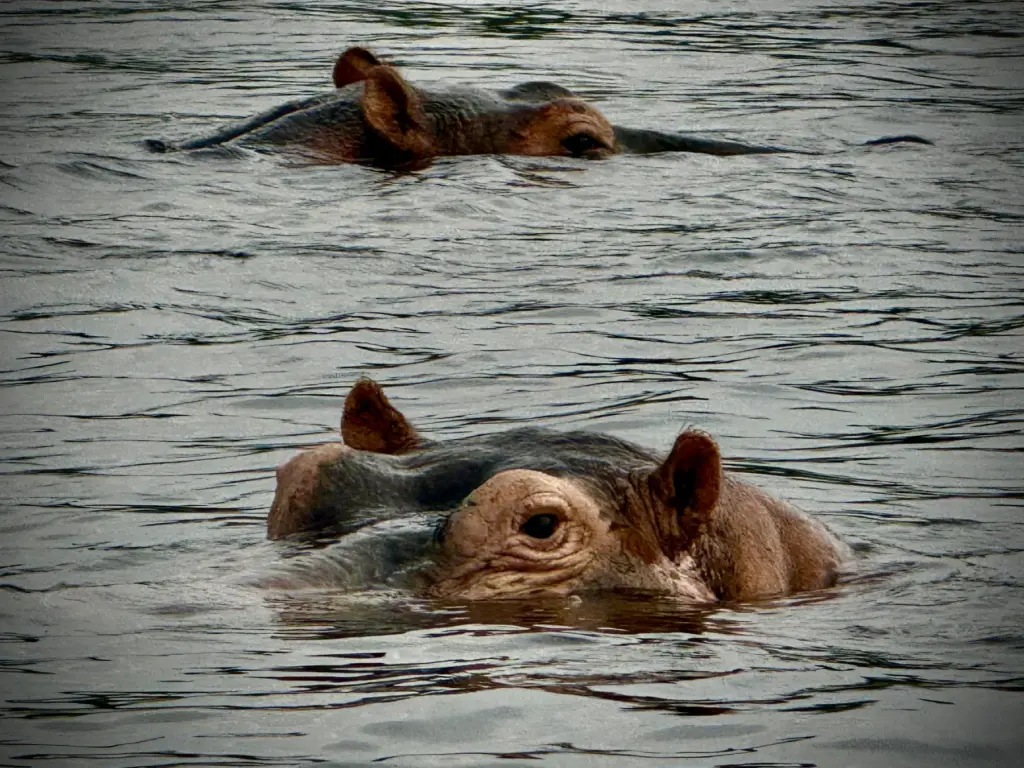
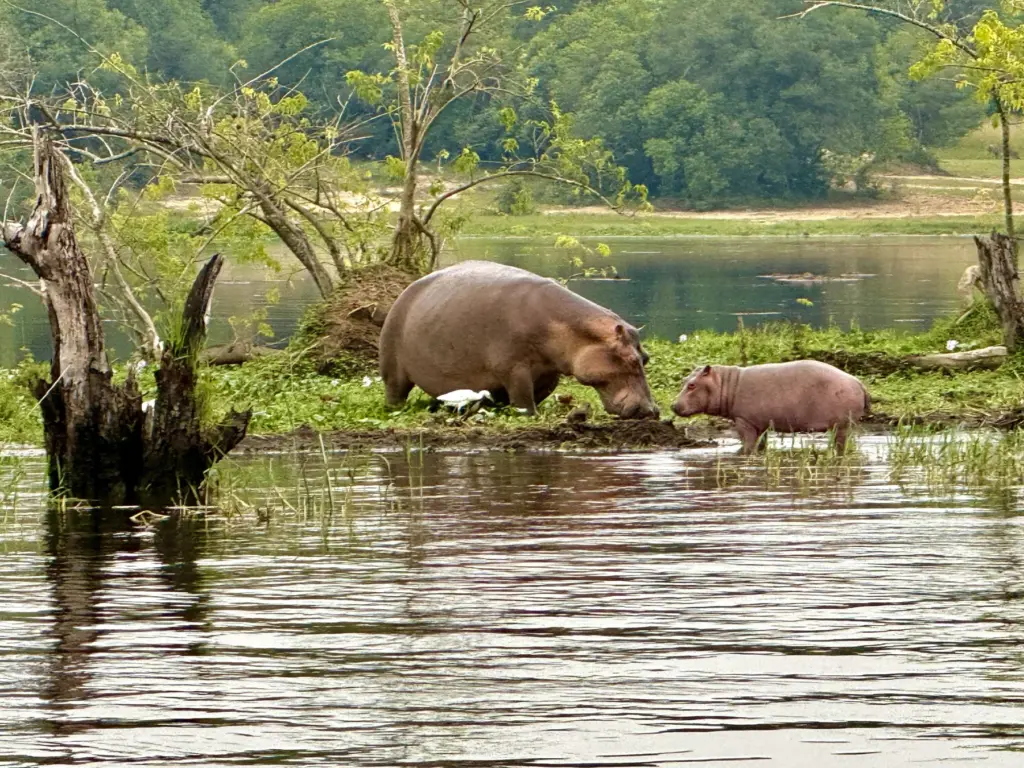
The river here is not just “a river”. It is an entire ecosystem. Crocodiles lurk along the edges, and there are more hippos than your brain is prepared to process in one day. Swimming is, how do we put this politely, not advised.
Driving, on the other hand, is very doable if you respect the rules and the conditions. One pleasant surprise is the smooth, tarmacked main road into the park. It is high-quality, feels fast, and it will absolutely tempt you to creep past the stipulated 60 km/h. Compared to the rough, bone-rattling tracks that define self-driving in many national parks across East Africa, Murchison’s road network makes the whole experience calmer, easier, and frankly more enjoyable.
Uganda Wildlife Authority puts the speed limit at 60 km/h and rangers with speed guns occasionally enforce it. Overspeeding is common, but attracts a UGX 100,000 fine when caught. Don’t ask me how I know this.
The Delta: Where Rivers, Lake, and Borders Meet
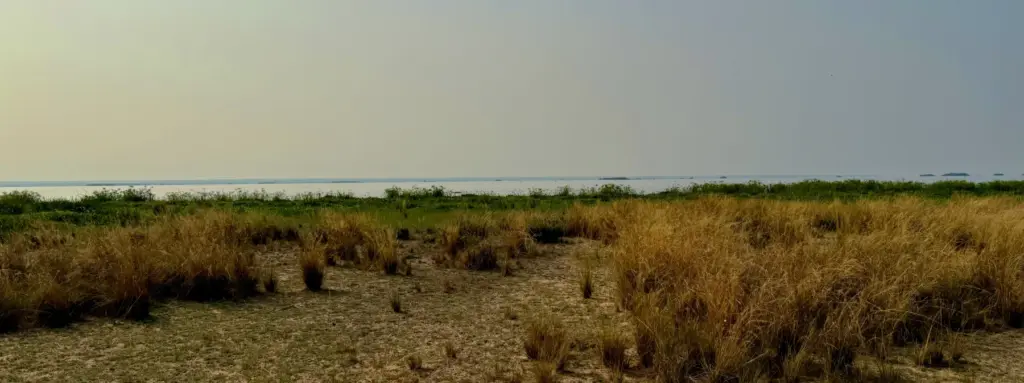
One of the coolest “big picture” moments in the park is the Delta, where the Victoria Nile finally slides into Lake Albert, before the whole system carries on north as the White Nile’s upstream story. Getting there is half the adventure: a long, bumpy, dusty haul on dirt roads that offer some serious contrast to the smooth, tarmacked main roads elsewhere in the park. But it pays you back in wildlife interest.
You see animals. Then more animals. Then more again, until the bumps and dust start to seem like a fair price after all. This was also the only place where we saw an elephant. A small reward in its own right.
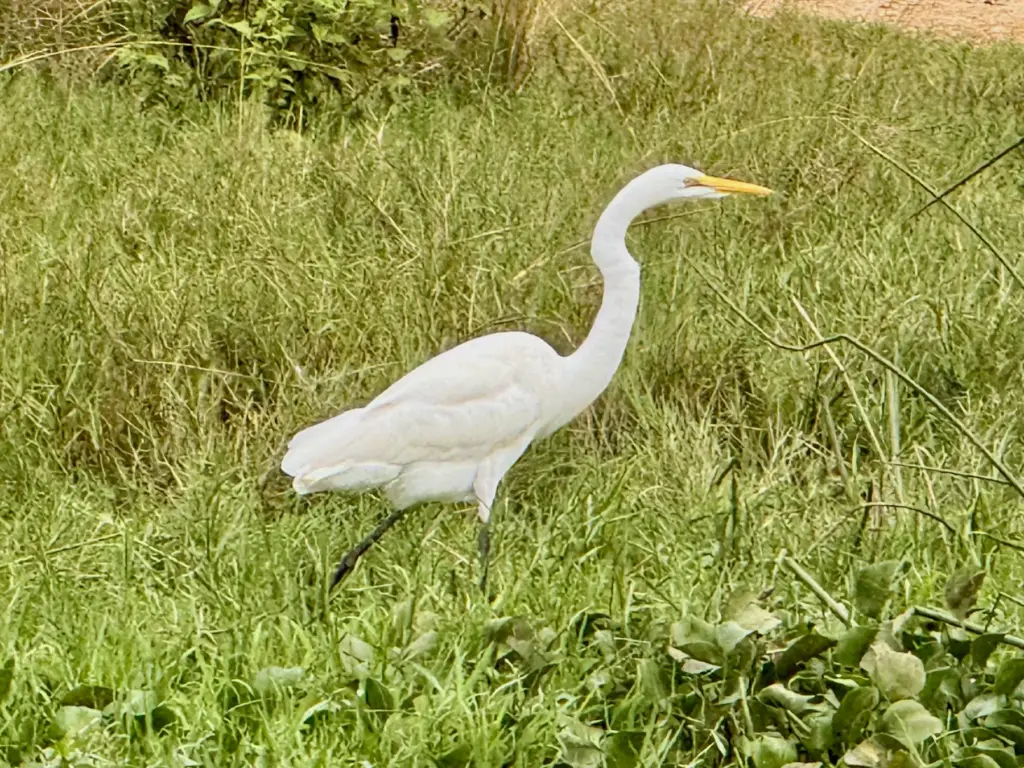
And then you arrive and everything changes. The landscape turns marshy and soft, papyrus swamps stretching out into calm water, the whole place sitting in this almost holy quiet. Silence… then a sudden burst of wings. An egret, a call, something rare and elegant with a name you absolutely knew five minutes ago and have now completely misplaced.
The Delta Point is a cherished place for any geography nerd: Lake Albert opening up in front of you, the Victoria Nile feeding in on one side, the White Nile system pulling water out the other, and across the lake the Democratic Republic of Congo sitting there like the next chapter you could drive into if you had a spare week and a very forgiving schedule.
Now for the main event: Murchison Falls
Let us be honest: you can come for the wildlife, the habitats, the Nile cruises, and the “I cannot believe this is still under the radar” factor…
…but the falls are the obvious reason people come.
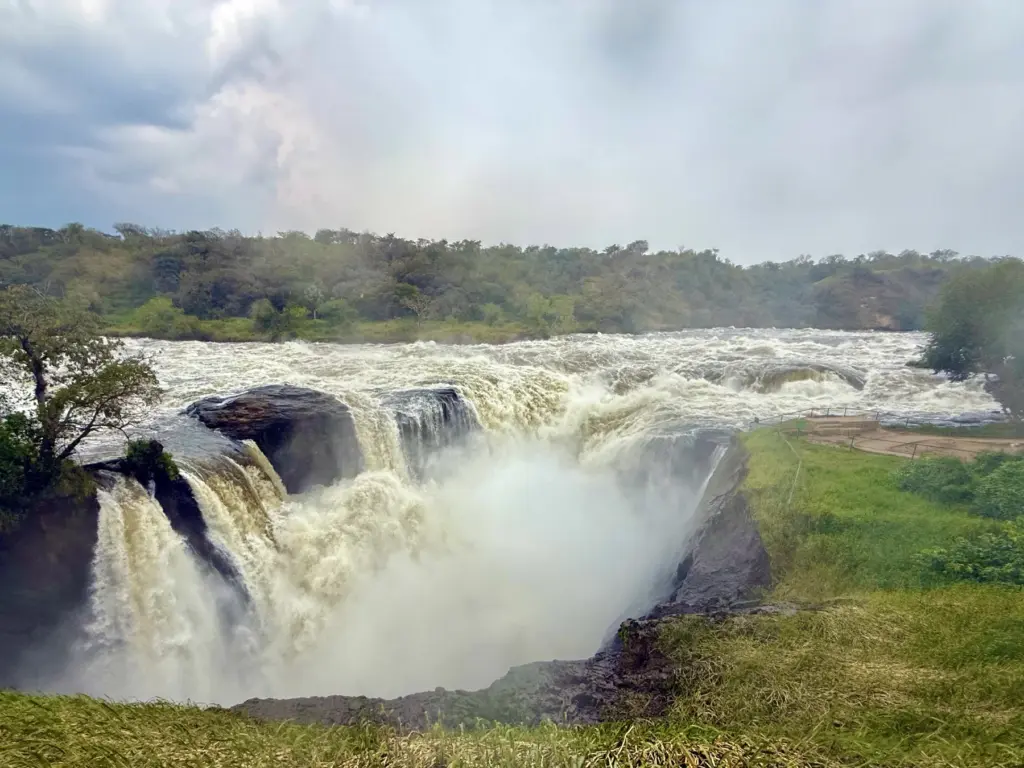
The focal point of Murchison Falls National Park is, unsurprisingly, Murchison Falls itself. This is where the Nile gets squeezed hard. One moment it is wide and deceptively calm. Then it is forced through a gorge barely 7 metres wide, under ridiculous pressure.
Around 300,000 litres of water crash through that gap every second. You hear it before you properly see it. A deep, continuous roar that hits your chest and wipes out almost every other sound around you.
It is not really “a waterfall.” It is a massive river compressed into a violent, narrow burst of force. Any idea of grace disappears under the sheer volume of water. And if you are wondering whether this is the ultimate white-water rafting experience, no. This is the section that ends that discussion immediately. Keep the paddle for calmer stretches and admire this one from solid ground, with both eyebrows raised and your survival instinct fully functional..
Top of the falls: a sensory overload (in a good way)
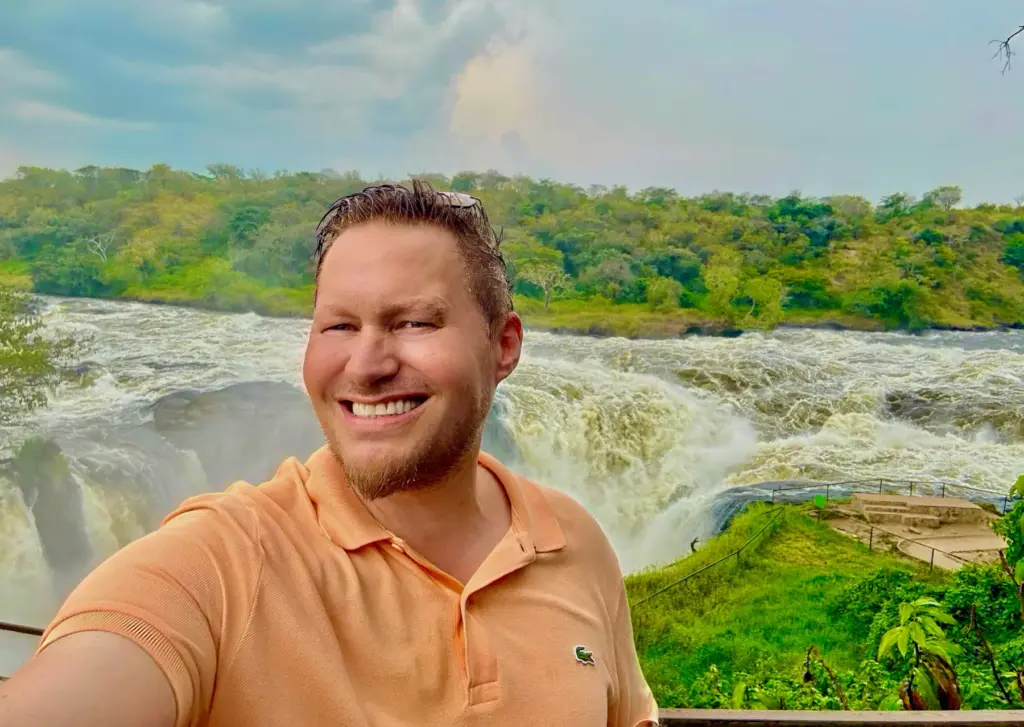
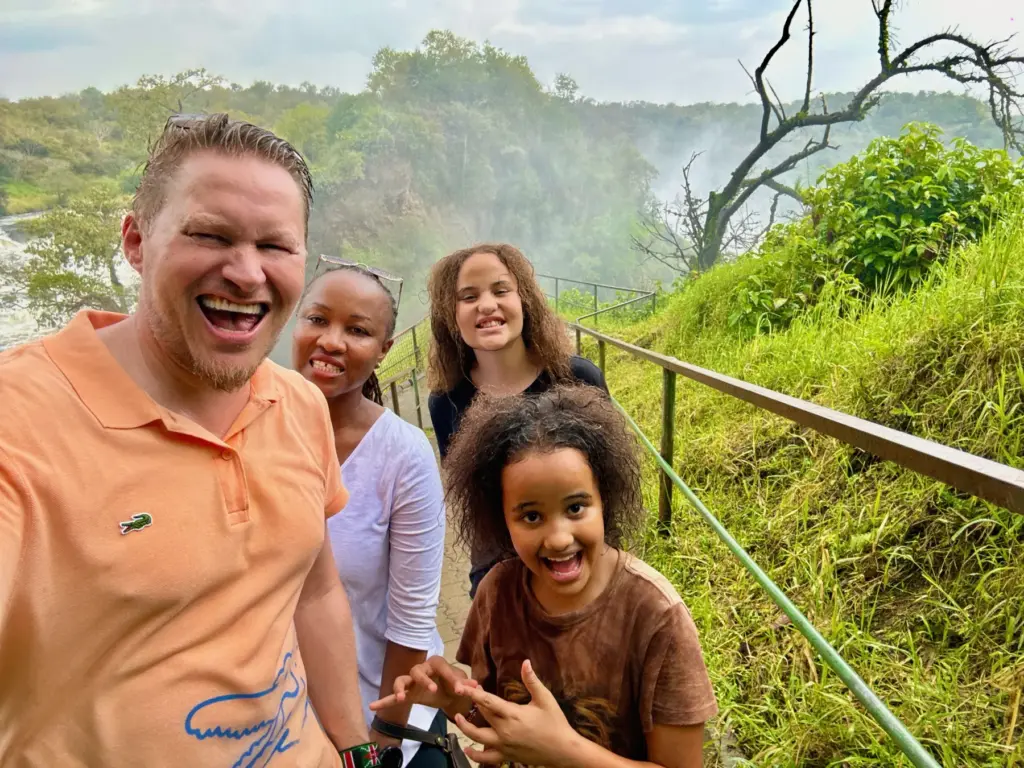
Up at the top it is sensory overload: sound, spray, and that constant, thundering roar. The air is thick with mist and attitude. Hang around for more than a minute and your hair, your shirt, and any illusion of staying dry gets absolutely humbled. And you will love it. The ground vibrates, and your voice disappears into the noise of the Nile forcing its way through a seven-metre gorge. Selfies are not optional here. Your future self will demand proof!
Bottom of the falls: the prehistoric bird sanctuary
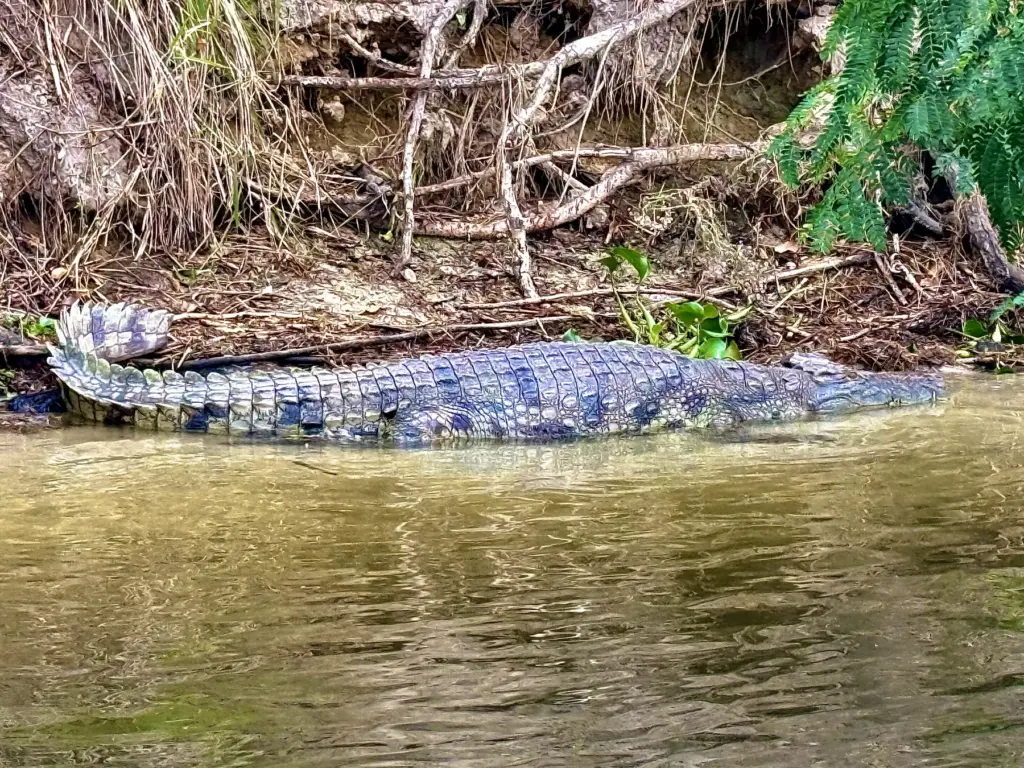
Down below, the ecosystem shifts again. If you’re scared of hippos or crocodiles, this may not be your cup of tea.
But if you like birds (even at amateur level), this is one of those places where you suddenly understand why people spend money on binoculars and get emotional about feathers.
You have the shoebill, the goliath heron, the African fish eagle, plus jacanas, kingfishers, spur-winged geese… and then a long list of names that make birders light up like someone just offered them a free safari.
The Nile cruise: mandatory
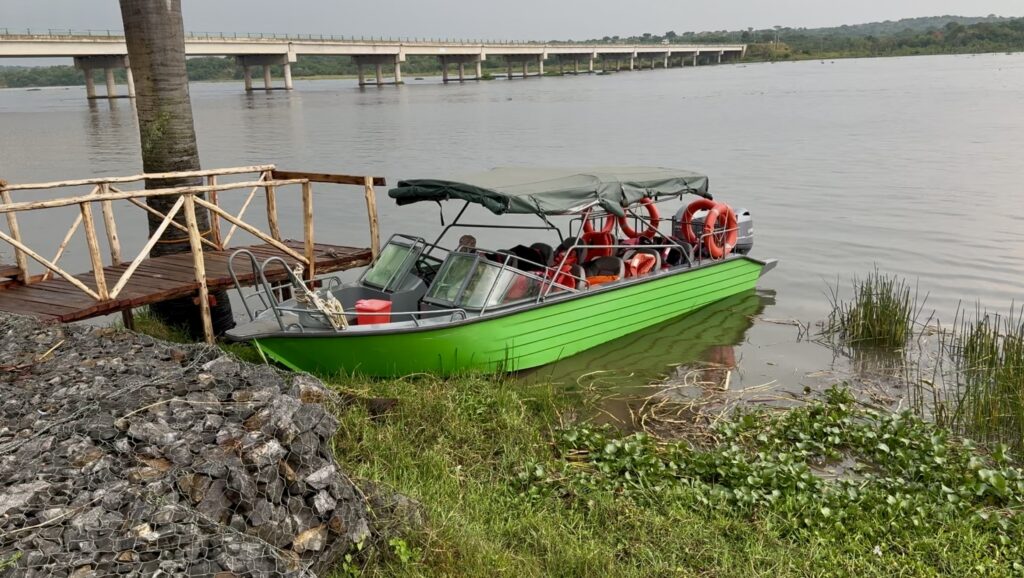
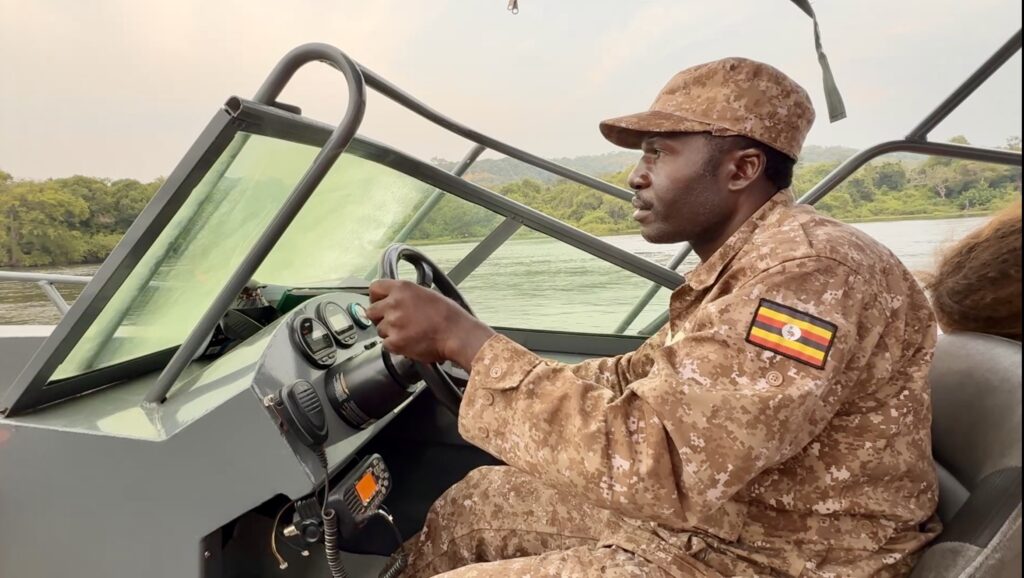
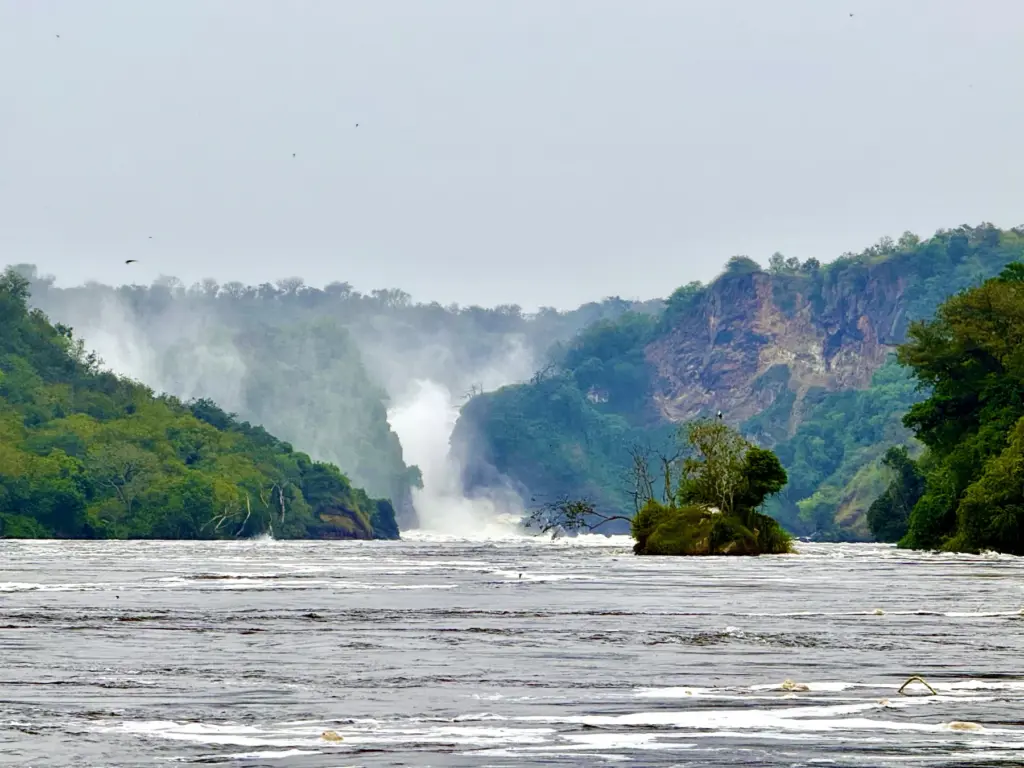
The boat trip to the bottom of the falls is a signature Murchison Falls experience. Not to be missed.
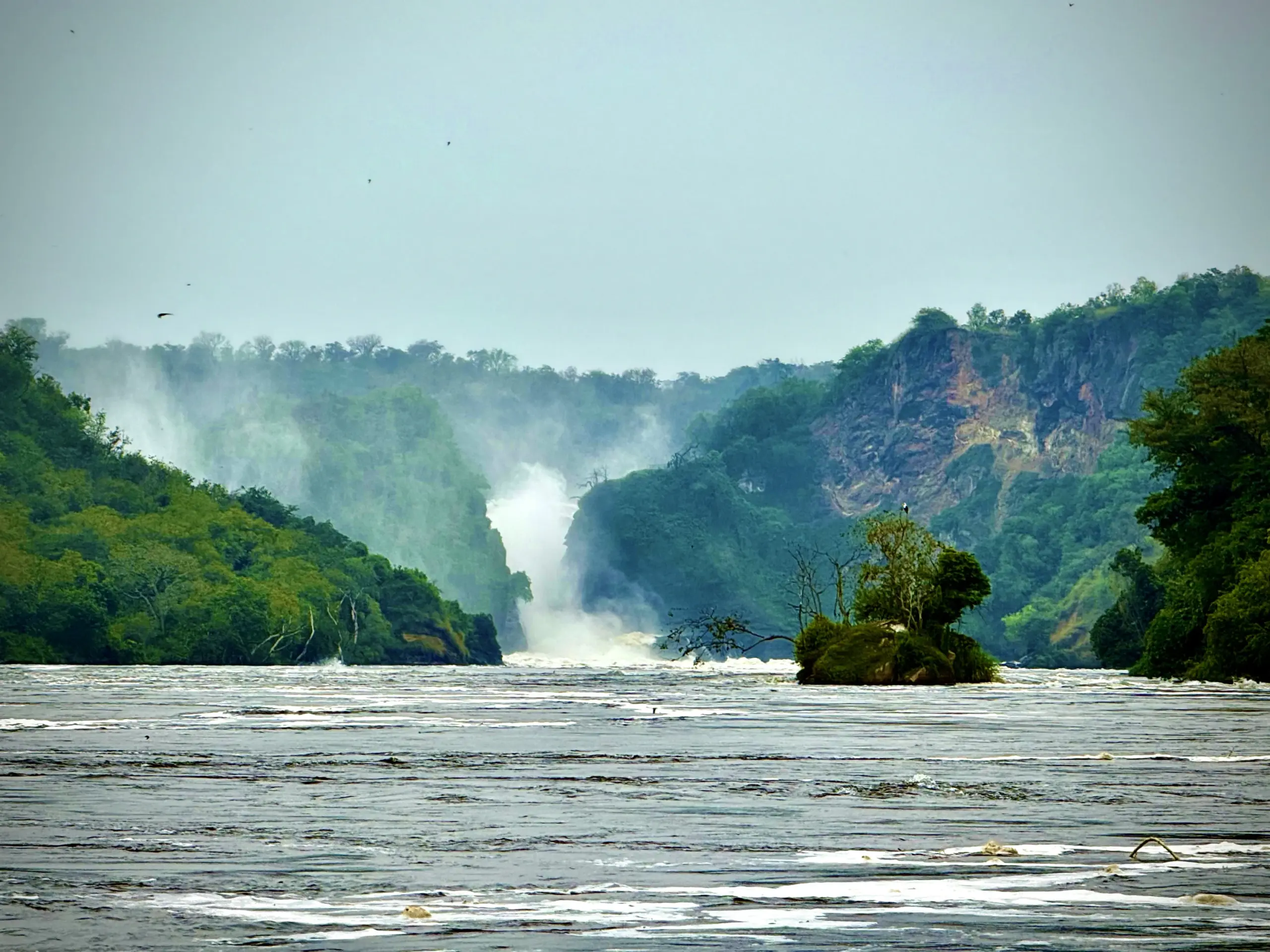
Unfortnately, the Nile was particularly high on our visit, so we couldn’t go all the way to the base. Hence, we had to content with the views from 2-300 meters behind where people go on normal days. You could feel the current getting serious as we pushed closer. According to the captain, falling into those waters without a life jacket is how you end up as a legend in the park rangers’ safety briefing, even before hippos and crocodiles enter the conversation.
And honestly, cruising along with the river right at eye level feels like a documentary in real time: hippos loafing in the shallows, birds everywhere, crocodile-y vibes on the edges… and then that delicious slow build-up where the air starts to feel heavier, the spray starts to sneak in, and the roar of the falls keeps getting louder until it is all you can hear.
About those names: why is Uganda still doing this?
The falls themselves also come with an identity crisis: Murchison Falls is still sometimes called “Kabalega Falls”, even if “Murchison” remains the international default. Sir Roderick Murchison probably dined out on that brag for years at the Royal Geographical Society. He could at least have shown up, stood in the spray, and earned the wet hair that comes with having 300,000 litres per second trying to bulldoze its way through a gorge.
And then there’s the source of the whole thing. Lake Victoria has perfectly good local names in circulation, like Nnalubaale, Nam Lolwe, Ukerewe and Nyanza, but the map name still honours a queen who never showed up for the view.
Right after the falls, all that noise and force pours into Lake Mwitanzige. Oops, sorry locals. The international maps mostly go with Lake Albert, named by Sir Samuel Baker after Prince Albert, who by then was already safely beyond all complaints about having an African lake added to his memorial portfolio.
No dig at Sir Roderick Murchison. He never asked for the falls to be named after him, although I’m sure he didn’t mind. His name is probably the most misplaced thing in the whole setting, though.
A quick reality check on history and timing
This corner of Uganda has not always been on the easy, postcard-friendly side of history. Until as late as 2006, the wider region still sat under the shadow of the Lord’s Resistance Army, a rebel group wrapped in religious rhetoric and extreme brutality, and very much not in the business of inviting visitors for church coffee. That context helps explain why Murchison Falls still feels like it is “coming up” now. Better access, more confidence, more infrastructure, and suddenly the park is getting the attention it has always deserved.
Murchison has been a tourism attraction for a long time, with a deep conservation history behind it. Then it faded badly for years. Now there is clear momentum again. You see it on the ground today: better access, more visitors, more attention, and a sense that Murchison is finally getting back onto the map. Not hype. Just one of Uganda’s strongest travel experiences starting to get noticed again.
Bonus adrenaline: the zipline
To top it all off with a little bonus adrenaline, Murchison features a zipline too.
At Sambiya River Lodge, i’s a two-part ride: first a 170 m run, then a 75 m run, skimming over lush green canopy with a mid-point transfer that makes you feel like you are switching tracks mid-flight. Is it the longest in Uganda? Depends who you ask, and which year their brochure was printed. Is it worth it? Absolutely. Especially if you like the idea of “I’m flying over the jungle” with the comforting add-on of a harness.
The simple takeaway
If you want one place that combines big landscapes, proper wildlife, an iconic waterfall, a boat safari, surprising history (hello, Hemingway), and enough ecosystem variety to keep you switching mental tabs all day… this is it.
You may or may not have heard about it.
But once you go, you are going to wonder why more people are not talking about it.