
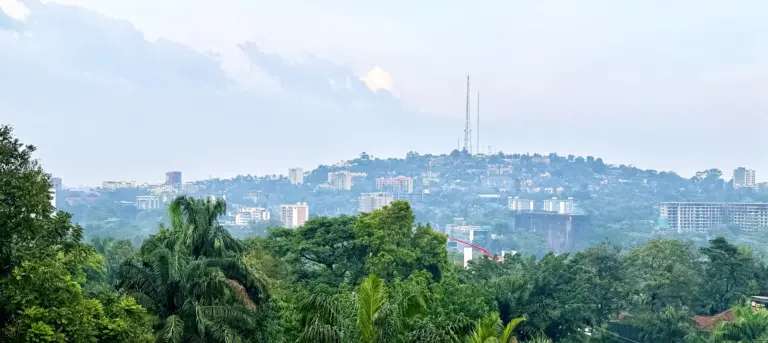


Kampala is wild and crazy. Its history runs deeper than in most African cities, partly because it has been around longer as a real centre of power. And the modern city is no less intense. The madness is bigger, the vibe is louder, and the whole place feels like it is running on a different setting.
Older than most, louder than many
Kampala was already important before the British showed up. This was Buganda ground, with its own power, politics, and history. The name is generally traced back to Old Kampala Hill and “the hill of impalas”, from when it was a hunting ground of the Kabakas.
You feel that older story in the shape of the place too. Kampala spreads over hills and drops into valleys, with roads that twist, climb, dip, and quite often seem to have given up any ambition of being practical. The skyline keeps rising, the malls keep multiplying, and new towers keep appearing where you vaguely remember something smaller from before. Kololo, Nakasero, Muyenga, Naguru, Bugolobi and a few other parts of town carry a lot of the city’s modern life. There is money, nightlife, traffic, restaurants, bars, offices, apartments, and people on the move everywhere.
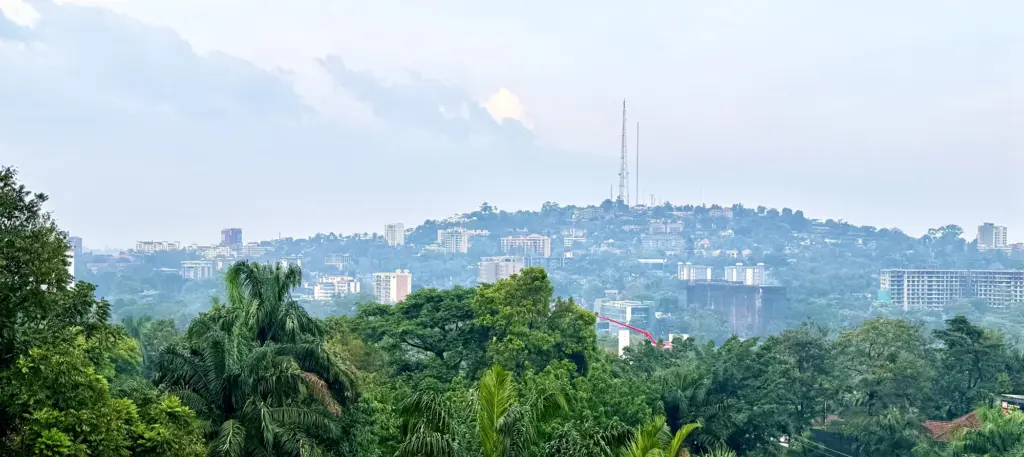
Kampala sits close to Lake Victoria, but most of the real urban pulse is around the central hills and the inner neighbourhoods. By the lakeside, things can feel surprisingly serene. In the inner city, quite the opposite.
And that inner city is properly full-on. Kampala is high-energy even by African capital standards. At times it feels like the whole place has had far too much coffee and no interest in slowing down. Kabalagala has long been one of the areas that proves the point. If you book a hotel there and then complain that you did not sleep, that is really between you and your booking decisions. Kampala nightlife is not for the faint-hearted. It is loud, social, late, and in some places basically hostile to the concept of a quiet evening. Kololo and Bugolobi can appear somewhat polished. Kabalagala not at all.
Buganda still shows
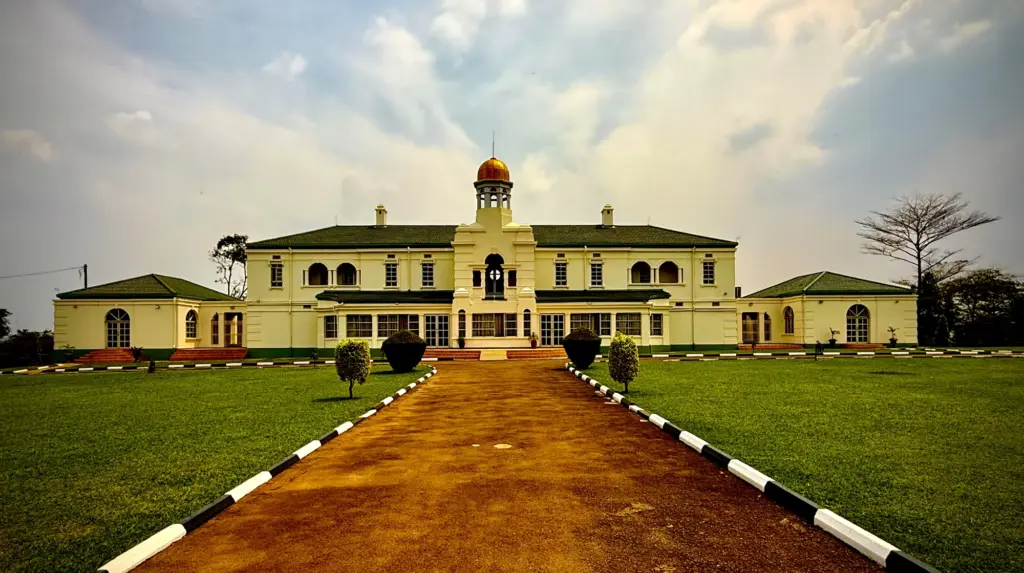
The heritage and old power structures are still very visible in Kampala. The Buganda culture and traditions are still very much alive, with the Kingdom as its central forceThe Kabaka, the Lukiiko, royal sites, and the strong clan structures are still very much part of the picture. That gives Kampala something that stands out from many other big African cities. The history and heritage continue in their modern, living versions, and proudly manifest themselves in a lot of places.
The Kasubi Tombs and the Kabaka’s Palace already figure prominently in most cultural itineraries. The Kabaka’s Lake, while less known, is another key heritage landmark, dug as a royal project and remembered by many as part escape idea, part flex, and part statement of power. It is the largest man-made lake in Uganda, and the Kingdom is currently working on upgrading significant parts of the waterfront to boost it as a tourism attraction.


The Royal Mile adds another layer to that geography. Running between the Kabaka’s Palace at Mengo and the Buganda Parliament, it is lined with monuments tied to the different clans of Buganda, giving that stretch of road far more meaning than just getting from one institution to the next. It is one of those places where Kampala’s older political and cultural structure is still visible in a very physical way.
Old Kampala is part of the story too. The British planted a fort opposite the older centres of Buganda power partly to establish control and partly, as colonial powers tend to do, to make sure everyone noticed. Kampala was never just handed over neatly. It had to be pushed, watched, and managed. That older backbone still seems to sit in the city’s personality now.
Rain, traffic, and total boda nonsense
Then there is the rain. The hills make Kampala more dramatic, but they also make it flood. When the rain comes down properly, the valleys and lower junctions can turn into chaos fast. Driving into Kampala on a rainy evening can feel like a completely unnecessary test of character. Visibility drops, traffic locks up, drainage starts losing the argument, and what should have been a straightforward drive becomes a long exercise in patience, caution, and disbelief. Flood it does!
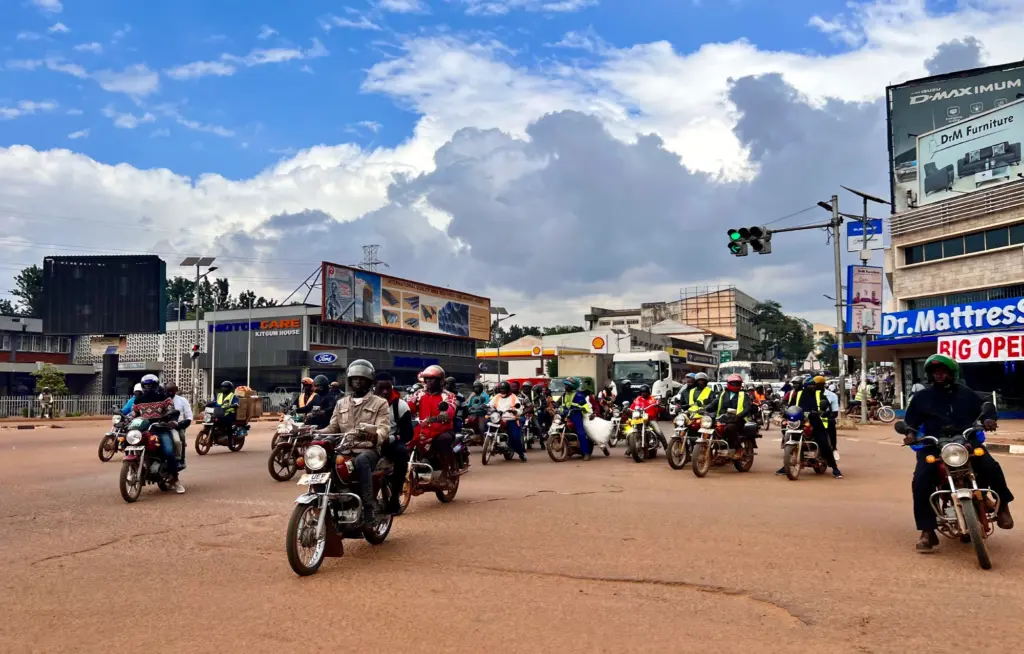
And speaking of disbelief, the traffic is ridiculous. I have driven in Nairobi. I have driven in Lagos. Kampala still has moments that make both look oddly reasonable. A big reason is the bodas. They are everywhere. Not in a charming local-colour kind of way. More like in a full swarm, mirror-brushing, gap-filling, law-optional kind of way. They come from both sides, squeeze through openings that should not exist, and behave as if traffic rules were more of a loose philosophical suggestion.
If something goes wrong, do not expect a calm exchange of insurance details. Expect noise, companions, strong opinions, and a very fast conclusion that it was somehow your fault anyway. Driving here can become a nightmare because the bodas simply don’t care. They will throw themselves in front of you from either side, wedge into gaps that are not there, and then act offended that your car happened to exist in their chosen line of attack. They move like locust swarms, and once you are stuck in proper Kampala traffic, especially in the rain, the whole thing starts feeling less like transport and more like some elaborate urban punishment.
The Party Don’t Stop
The good thing is that Kampala has plenty of rewards in store you once you stop fighting it and start going with the flow. It is a very decent city to go out in. The restaurant scene is better than many first-time visitors expect, and new places keep coming up. Yujo Izakaya does Japanese food with flair and local ingredients. Le Château leans Belgian and European, with a polished, old-school dinner feel. Tamarai goes Pan-Asian, with Thai, Vietnamese, and fusion dishes in a setting that works very well when the evening starts drifting from dinner into drinks and then possibly into a longer night than originally planned.
That’s one of Kampala’s strengths. One place becomes two, dinner becomes a bar, and suddenly the thought of a respectable bedtime looks totally unrealistic. And there are plenty of places beyond those too. Kampala is good for going out. Properly good. Whether you want dinner, cocktails, noise, clubbing, or a night that gets carried away from itself, the city usually has an answer.
Kampala is wild and crazy, and there is always a party somewhere. There is history here at another level compared to most African cities, because this was already a real centre of power long before colonial rule. Then on top of the historic heritage sits the modern city. Glass towers, jammed roads, shopping malls, kings, tombs, flooded junctions, sleepless nightlife, serious institutions, and total roadside madness, all somehow packed into the same place. Not always elegant. Hardly efficient. But definitely more vibe than most other other cities on the continent.