
I was in Tunis in 2019 for a business trip, mainly around investment meetings, but there was no way I was going to spend the whole visit moving between meeting rooms, coffee, and emails. So I made room to get out and see a bit of the place properly.
It was only a few days and only one part of Tunisia, but it was enough to make me want more. Tunis gave me enough coastline, old streets, history, and good food to keep the whole thing from feeling like just another work trip with a nice backdrop.
Tunisia, starting with Tunis
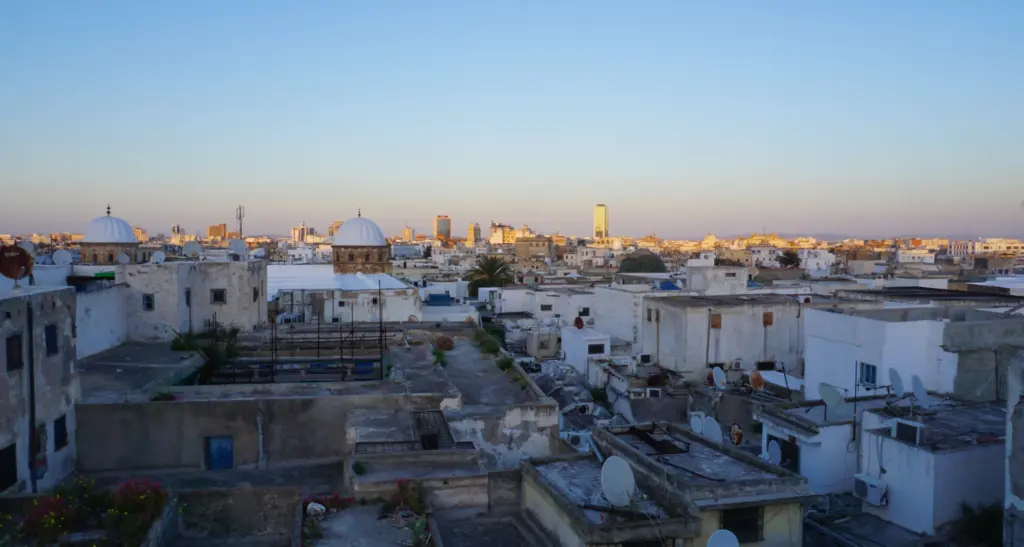
This was not a full Tunisia circuit. It was Tunis and the places around it. Two weeks and half the country would obviously have been better, but greater Tunis was also a good start. More on my next visit there.
Outside the meetings, calls, numbers, investor talks, and company visits, I also got to sample some sea breeze, old walls, tiled courtyards, prayer calls, traffic, and streets that had been handling human chaos and pedestrian congestion for centuries.
A good start in La Marsa
I wanted to give myself some extra time, so I flew in early and landed on a Sunday morning. A day without meetings meant one full day to explore before the schedule kicked in. Much better than landing and going straight into work mode.
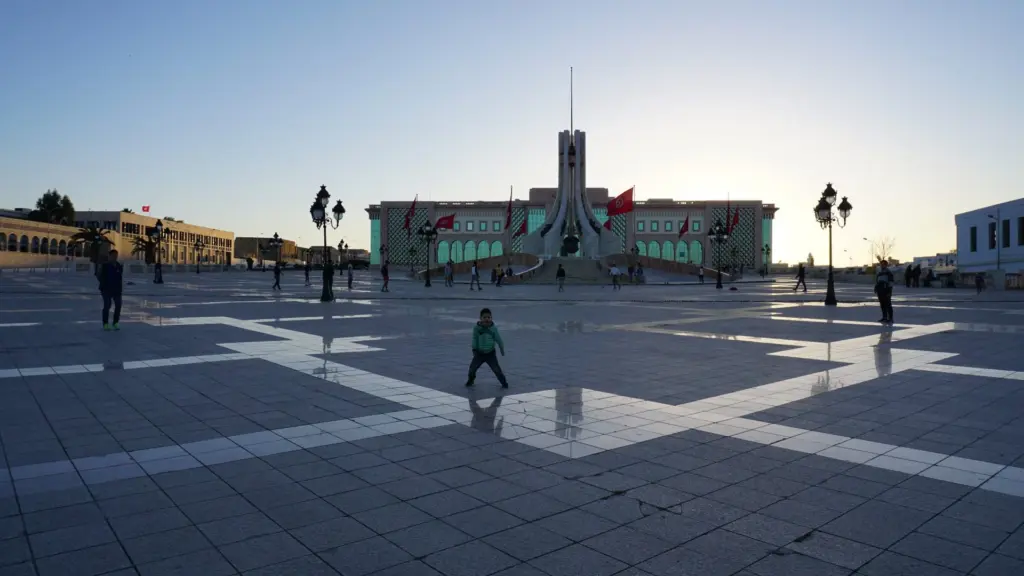
The Residence is an absolutely beautiful hotel and the suburb of La Marsa turned out to be a great starting point for my exploration mission. Enough space, enough air, enough sea, and still close enough to Tunis to keep things practical. It took the edge off the work-trip feeling before the business part properly got going.
And yes, having the Mediterranean nearby helped. You step outside, get some air, and remember that not everything in life needs a deck, a budget line, and a follow-up email.

White walls, blue doors, and a very good brik
Sidi Bou Said is one of those places where the look is already familiar before you even get there. White walls, blue doors, blue shutters, blue railings, and the Mediterranean spread out below. It’s one of those places that almost feels too postcard-ish, but with a vivid atmosphere. My thoughts almost immediately started wandering to Frigiliana in Spain. Then again, it’s the Mediterranean, so the similarity shouldn’t come as a surprise.
I didn’t need much there. Just time to walk, stop, look around, and let it sink in a bit. And obviously you can’t visit Tunis, or anywhere else for that matter, without trying the street food. Sidi Bou Said had that too. A proper brik. Tuna, some vegetables, capers, olives, and a runny egg fried together inside pastry that starts crisp and ends in glorious collapse. Very difficult to eat neatly. Not a concern. Just the memory of it makes me want to go back.
This was also one of those places that makes it easy to look like a better photographer than you actually are. That’s always a nice bonus!


Carthage, where the history is already loud enough
Carthage was high on my list long before I got to Tunis. Some of that goes back to school and those Latin classes that made the Punic Wars hard to forget. Then suddenly there I was, looking at what remained of the city that pushed Rome harder than almost anyone else managed.
This was Hannibal’s world. The man who marched through the Iberian Peninsula, dragged elephants across the Alps, and pushed Rome to the brink of defeat. One of history’s great military moves. Then, when he could have walked straight into the city and given history a totally different direction, he failed to finish the job. Which only makes the whole story weirder, and more memorable too.
Rome, unsurprisingly, did not just move on. Cato the Elder kept landing on the same conclusion: delenda est Carthago. Carthage must be destroyed. In the end, Rome got exactly that. Eventually, delenda erat Carthago. Very Roman. Very final.
Carthage was once a vast city. Now it lies scattered across a wide stretch near La Marsa and Sidi Bou Said, broken into fragmented archaeological sites. Even so, the impression is still mighty. Bits of ruins, open views, and the sea close by all help give a sense of scale. That scale says a lot about the civilization that ruled this side of the Mediterranean more than 2,000 years ago, and came within one strategic blunder of conquering Rome.


Two nights inside the Medina
Then the trip changed completely as I moved into the Medina for two nights. One of the people I was meeting in Tunis was deeply interested in the Medina and the cultural heritage of the city. He had bought and restored two classic buildings there, turning one into Dar El Jeld, a five-star boutique hotel, and the other into Fondouk El Attarine, a traditional restaurant.
For me, that meant two nights inside the Medina, living much closer to its tradition, heritage, and daily rhythm than I had expected. Passing through a medina for an hour or two is one thing. Waking up inside it is another. By then you are not just dropping in and moving on.
Dar El Jeld was a charm. Restored and designed for luxury, while following tradition right down to the details. Built around an inner courtyard, with spacious, tastefully designed rooms. The exquisite hammam in the basement, done in full traditional style, did not hurt either.
Fondouk El Attarine carried that same spirit from the food side. Tastefully crafted traditional Tunisian dishes, served in an open courtyard setting with real atmosphere. The kind of place that gives you a strong sense of the soul of a city. Tunisian delicacies at their best, subtly presented, generous in quantity, and the sort of lunch you remember years later.
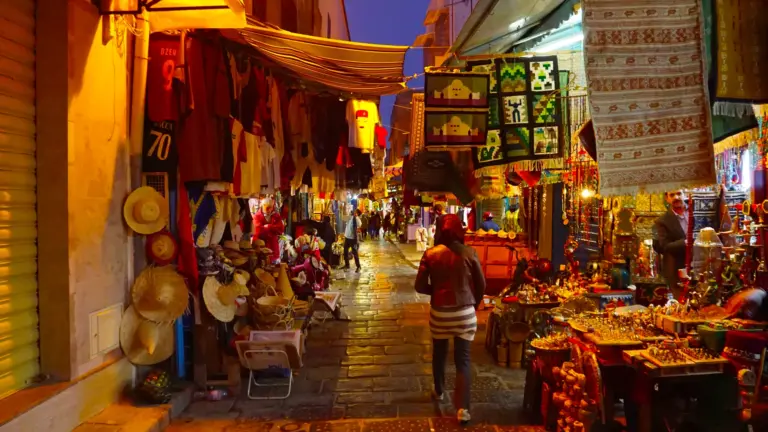
The Medina itself was at its best after dark. One stretch still busy, the next already quiet. Light from a shop or doorway cutting into darker alleys. Footsteps carrying. A turn into something rougher, then another into a courtyard with real elegance and old detail still intact. It kept shifting, but never felt messy. For sure, there were moments when I knew exactly where I was going, and others when my confidence was stronger than my sense of direction. Also part of the charm.
The Medina is still very much alive. Worn in places, beautiful in others, and often both at once. Old city quarters from before the car era tend to say much more about where a place came from. The medinas that still survive intact do exactly that. So, in their own way, do old Swahili towns like Lamu, Stone Town, and Old Town Mombasa.
These places carry traditions that have been living on for centuries, even if not in exactly the same shape. It is easy to imagine the Medina in Tunis with the same sounds and scents, the same congestion, and much the same pace a thousand years ago. The merchandise may have changed. The vibe probably hasn’t
Dar El Jeld showed what those old buildings can become when they are restored properly, without sanding all the character off them. Fondouk El Attarine did much the same from the food side. Traditional Tunisian food, old walls, strong setting, real atmosphere, and none of the feeling that the place had been softened up for visitors.


The part that lingered
Tunis was a basketful of experiences. La Marsa for the breathing space before the meetings started. Sidi Bou Said for the postcard-pretty experience that mirrors the pueblos blancos of Spain. And of course and that excellent brik too! Carthage for the history. The Medina for the atmosphere, the detail, and the fact that a wrong turn is just an opportunity to experience more.
That is probably why the trip lasted in my head. The work side and the wandering side kept running into each other. Meetings by day. Old streets by evening. Decks and numbers one hour. Ruins, prayer calls, and fried pastry the next. I have worked under worse conditions.
Business trip, yes, but also a proper first look at Tunis. The impressions were strong enough to make me want to come back and go much deeper into both the city and the country. That is usually a good sign.