
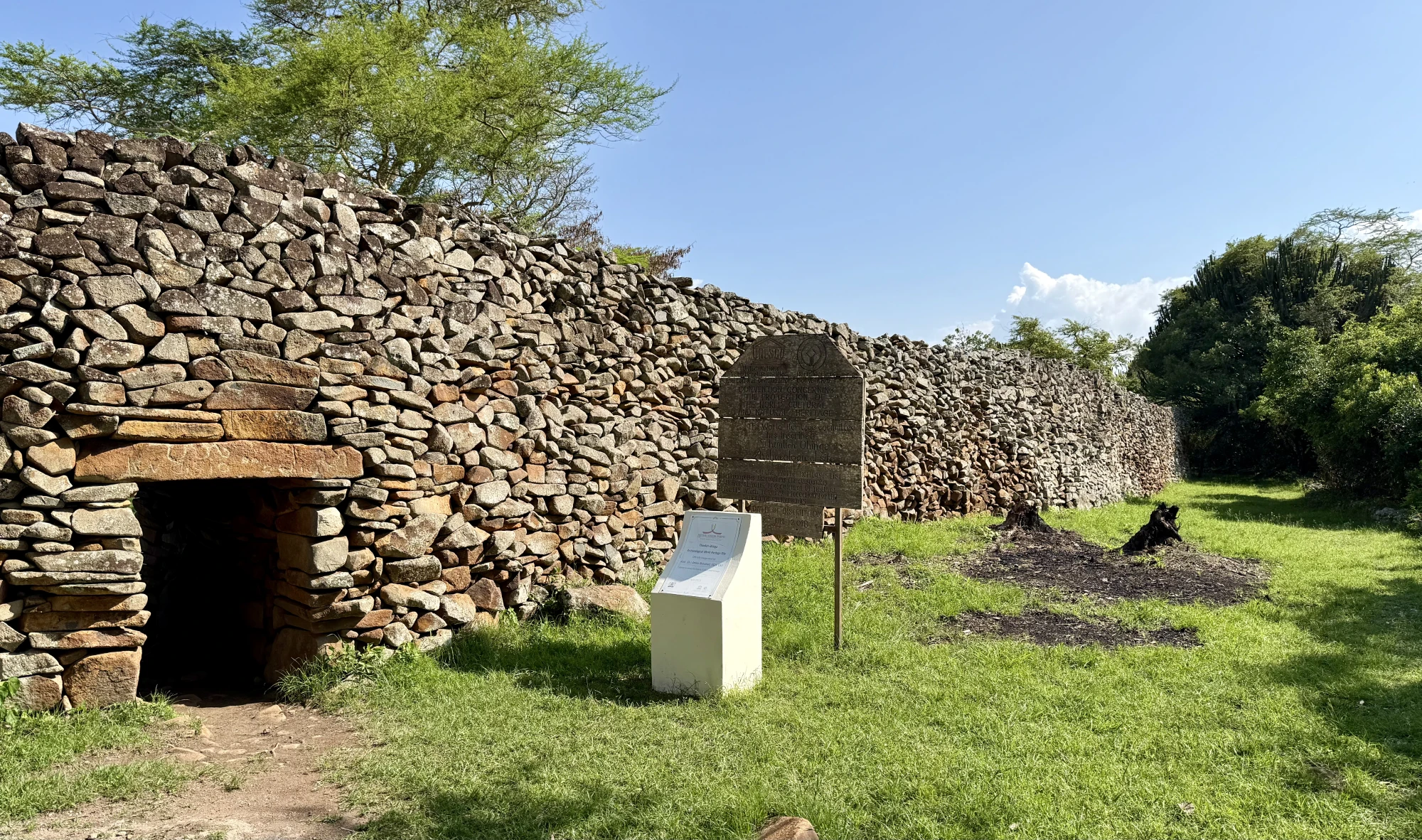
Malindi has always been its own thing on the Kenya coast. At least 1000 years old, and still stranger and more layered than it first looks. You get Swahili history, Portuguese leftovers, Italian habits, long beaches, and food good enough to keep your attention. On a coast run that takes in Kilifi, Watamu, and Lamu, Malindi is not one to rush through.
I first came to Malindi back in early 2003, when getting there meant squeezing a backpack into a matatu and trusting Kenyan roads where, in some places, potholes featured more prominently than the tarmac. I have been back many times since, but that first version of Malindi still holds up in my head.
It felt more Italian than almost any town in Kenya had any business feeling. Plenty of people seemed more comfortable in Italian than English, and the place had that slightly strange but very likable mix of Swahili coast, beach town, and Mediterranean habits. The gelato was good. The milkshakes were even better. In 2003, Malindi was one of the very few places in Kenya where proper ice cream did not feel like a compromise.
That layer is still part of the place. You still feel that old Italy-meets-East-Africa overlap in the food, in parts of the hotel scene, and in the general atmosphere. But it is only one layer, and not the main one.


History, ego, and the Swahili coast
The Italian side of Malindi is real enough, but the town is much older and much deeper than that. Malindi is at least 1000 years old. This was one of the major Swahili city-states, with real commercial and political weight on the coast and across the Indian Ocean world long before Europeans arrived to congratulate themselves. You don’t get a preserved old town in the Lamu sense, but the history is very much there.
The Vasco da Gama Pillar is the most obvious reminder. It still stands above the sea, tied to da Gama’s 1498 visit to Malindi after he had been chased away from Mombasa and welcomed by the Sultan of Malindi, who saw his enemy’s enemy as a fried. From here, he was given a pilot for the crossing to India, and the whole episode later got wrapped in the usual imperial storytelling about “discovery”, as if these waters had not already linked Africa, Arabia, Persia, and India for centuries.
Impressive monument, yes. Modest? Not exactly.


Not far from there is the Portuguese Chapel, generally described as the oldest Christian church, or first Christian place of worship, in East Africa. It is small and easy to miss, and says something not just about the Portuguese presence, but about the older Swahili world around it too. Malindi was already an established coastal power, and this coast was far more connected than the lazy version of history tends to admit.
Malindi also picked up another layer of legend in the twentieth century. Ernest Hemingway came to the Kenya coast for big-game fishing, operating out of Malindi, and he clearly liked the place. That old fishing-town aura still lingers a bit. Deep-sea fishing is also still very much part of Malindi for anyone who wants to go looking for it rather than just talk about Hemingway over dinner.
Beaches, sunrise walks, and serious food
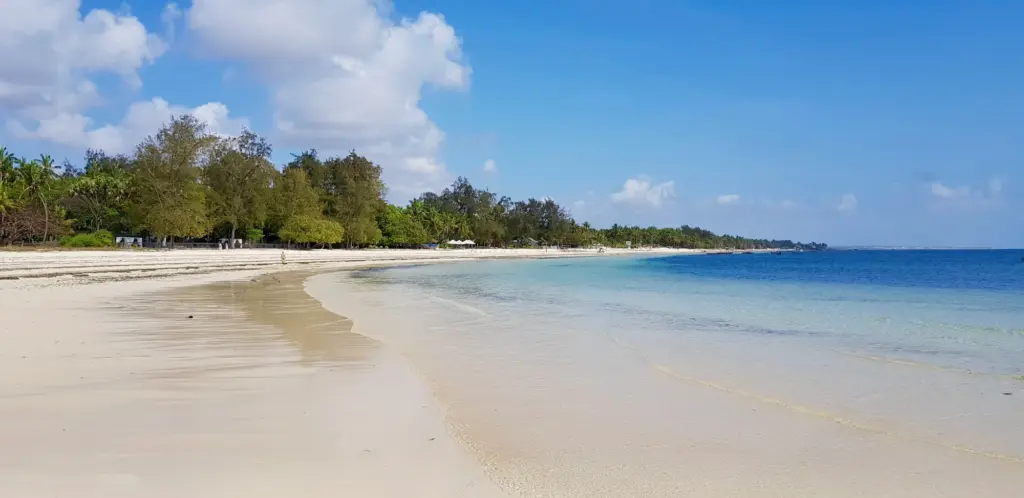
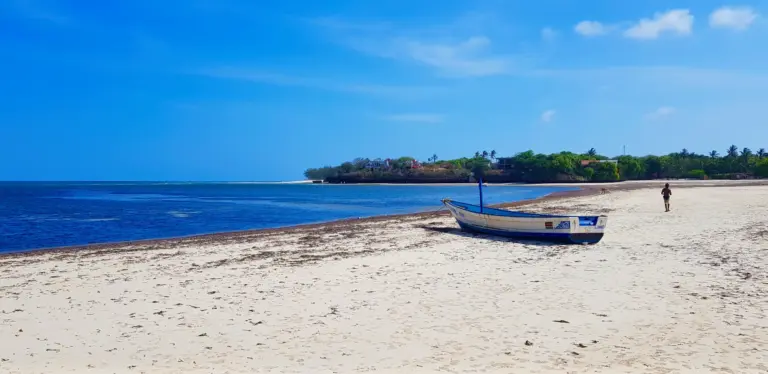
The beaches shift character depending on where you are. Up north, things get rougher and more open, with golden sand, patches of grass and scrub, and a slightly wilder edge. Down south, Silversands is the classic long stretch. Wide, open, and very hard to argue with at sunrise.
Yes, there is often seaweed. Fine. This is the coast, not a showroom floor.
Walking that beach early in the morning is one of the better Malindi habits, whether you are fresh out of bed or on your way back from a beach party after very little sleep. I’ve tried both.
Food has always been one of Malindi’s stronger cards. The Italian influence shows up everywhere, and often in the best possible way. You get excellent pizzas in town and by the beach, and the gelato still earns its reputation. Coco Beach wins on setting alone, perched on the rocks at the northern end of Silversands with a full view over the beach below.
Baby Marrow is one of the finer tables, and the seafood there can get dangerous for your self-control, especially if lobster is involved. Rosada Beach is one of those places where the setting already has the job half done before the pizza lands. Maasai Beach is more local in feel, but properly good, and a well-made pweza wa nazi there, fresh and perfectly tenderized, is exactly the sort of thing Malindi should be proud of.


And then there was The Old Man and the Sea, one of those classic Malindi institutions that felt built into the town itself. It didn’t survive Covid. That was a real loss.
Casuarina deserves a mention too, especially if beach restaurants are part of the plan. Tucked away between Malindi and Watamu and reached by narrow dirt roads, it has a secluded charm of its own. Malaika Beach Restaurant has long been one of the better-known stops there, and that whole stretch has the kind of easy coastal atmosphere Malindi does well.
Mambrui, Marafa, and the wider north coast


Malindi is also a strong base for exploring beyond town. Hell’s Kitchen in Marafa is roughly 45 minutes inland and looks spectacular in that scorched, sculpted, almost surreal way that barely feels coastal at all. It is one of the easiest wins in the area. Go early unless your ideal outing involves being slowly roasted.
Then you have Mambrui, the dunes, and that long open beach up there. And that brings you to Che Shale, which has had near-legendary status on this stretch of coast for years. Part of it is the seclusion. It sits out on the vast Mambrui beach with that properly removed, castaway feel that is still rare in Kenya. The other part is the food. Their seafood has always had a slightly more elaborate edge than the average beach operation, especially when it comes to crab.
They don’t just serve crab and move on. They make a point of it, and the menu has proper variety.
That wider Malindi zone is part of the appeal. You can do beach, history, seafood, dunes, a strange inland canyon, and long quiet stretches of coast without needing much effort or much planning. Malindi is useful like that.
Getting around without illusions
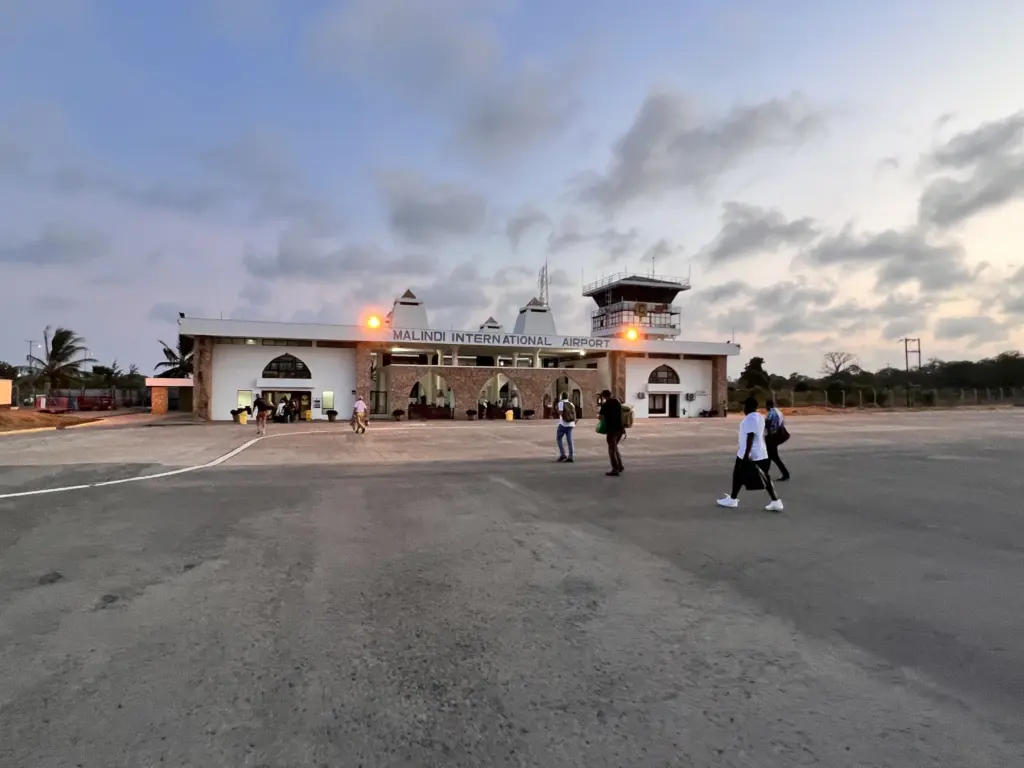
And a practical note, because it’s easy to get the mistaken impression that logistics are charming: do not expect Bolt or Uber to rescue you in Malindi. The few taxis around can try their luck with silly prices. The smarter option is usually a boda or a tuktuk unless you have driven down yourself, which I usually do. If it is more than a very short trip, the extra hours on the road are usually worth it just for the freedom once you are there.
Malindi has history. Real history. Not just beach bars and Italian menus.
It also has enough beach, food, character, and side trips to be worth the trip and the next visit on its own. A bit of wear does not hurt it. 1000 years is no age for an old Swahili town.
Malindi has its own mix, its own laidback style, and its own vibe. That is just Malindi.