


Thimlich Ohinga is one of those places that should be far better known than it is. Instead, it sits out in Migori County like a secret Kenya has somehow managed to keep from itself. Mention it in most conversations and you are likely to get a blank stare, maybe a confused “Thimlich… what?” Which is quite something, considering this is a UNESCO World Heritage Site and one of the most intriguing historic places in the country.
Part of the reason is simple. Getting there is not exactly a casual Sunday drive.
Even with a 4WD, the approach can be a proper mission. We got properly stuck once, then came close to doing it again, which felt like a fair enough initiation ritual for a place this remote. Thimlich Ohinga is hidden away, awkward to reach, and still so little visited that when you finally arrive, it does not feel like you have rolled up to some polished heritage attraction. It feels like you have found something. That is a very different feeling, and a much better one.
And what you find is extraordinary.
Stone, Silence, and Lots of Questions
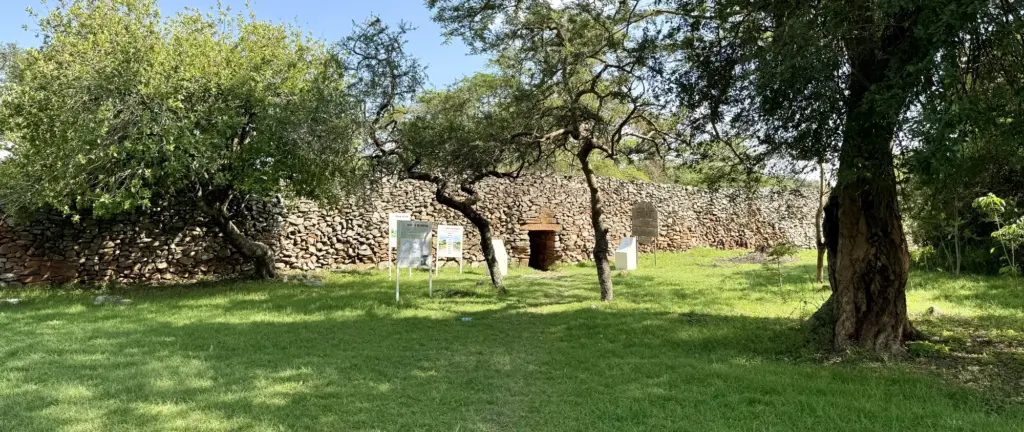
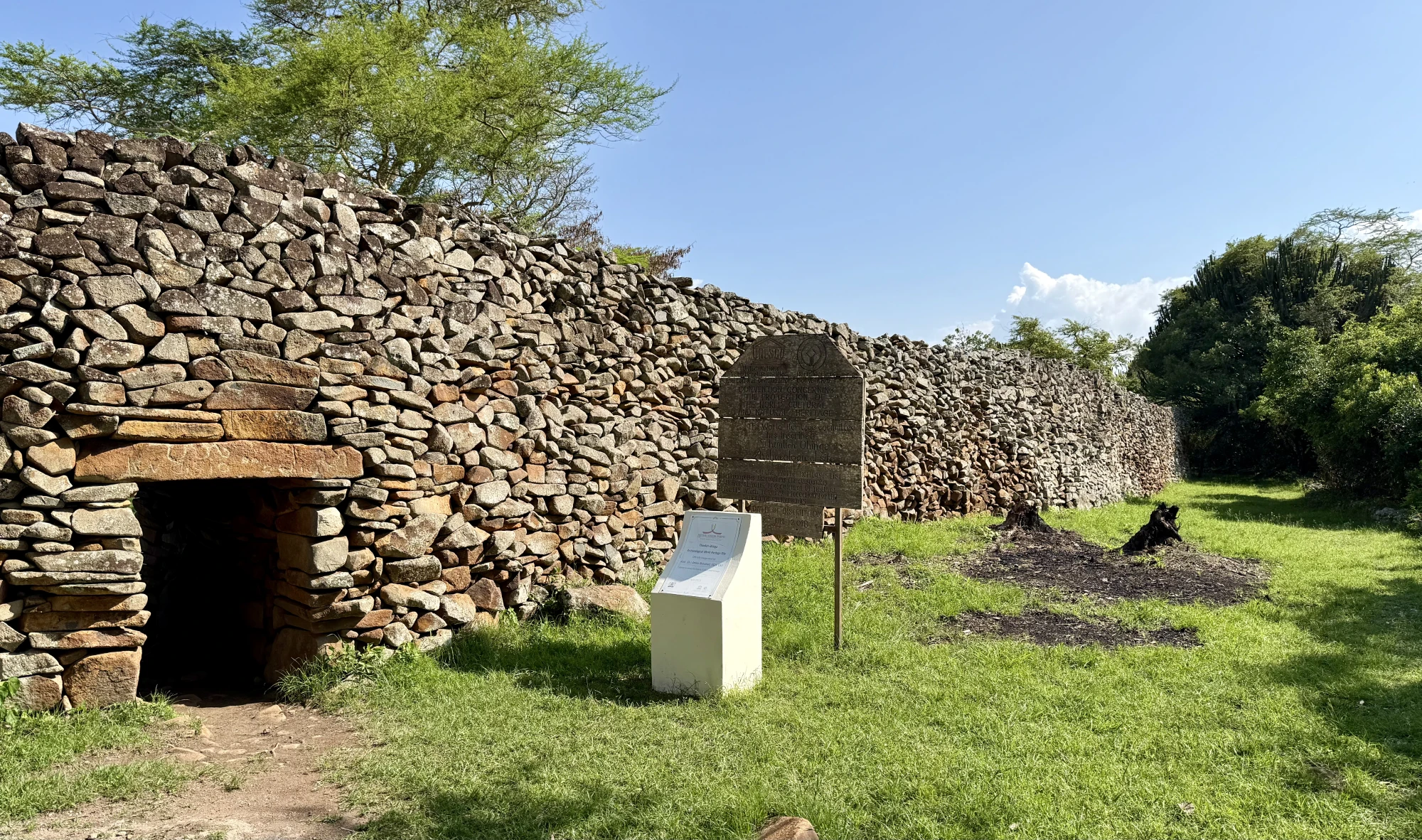
Out of this rugged landscape rises a huge dry-stone enclosure, built without mortar, with thick walls reaching roughly 3 to 5 metres depending on the section. These are serious walls. Not decorative. Not symbolic. Proper walls. The kind that make you stop for a second and think about the labour, planning, and organization behind them. Inside the main enclosure, there is a surprisingly large interior space, then more enclosures within that, layered into the site in a way that makes the defensive logic hard to miss.
Calling it a ruin almost undersells it. Thimlich Ohinga was essentially a fortress. And not a modest one.
Nobody stacks that much stone into something this complex unless there is a properly organized society behind it. This was not the work of some scattered group casually passing time with rocks. It points to labour, coordination, hierarchy, and a level of social structure that too many people still seem oddly reluctant to imagine when it comes to pre-colonial Africa. Primitive, it most certainly was not. If anything, Thimlich Ohinga feels like a surviving fragment of a lost civilization, or at the very least a lost chapter of one.
And then there is the mystery.
The Mystery is Half the Fun

Nobody really seems to know exactly how old Thimlich Ohinga is. The safest estimate places it at least in the 16th century, possibly older, but the place still sits under a cloud of uncertainty. Which, to be fair, suits it rather well. Thimlich Ohinga is one of those places that seems to enjoy withholding answers. You stand there looking at these massive stone walls in the middle of nowhere and realise we still cannot fully explain who built them, when exactly the site first took shape, or how the settlement evolved over time. For a place this important, that is both fascinating and slightly ridiculous. Maybe the archaeologists also got stuck on the road.
The mystery does not stop with the dating.
There are elements that fit into Luo tradition, and the site has long been tied to Luo history in the region. At the same time, there are architectural features that invite comparison with Great Zimbabwe and the broader dry-stone traditions of southern Africa. That does not prove some neat direct link, but it does raise a very fair question. Was there a connection? Was Thimlich Ohinga part of a wider network of ideas, trade routes, settlement patterns, or political systems stretching much further than most people assume? Was there some architectural conversation happening across this part of the continent long before colonial borders and imported history books started shrinking Africa’s past into neat little boxes?
We do not know.
That is what makes Thimlich Ohinga so compelling. It does not hand you a finished story with all the labels neatly attached. It leaves you with questions, and proper ones too.
Who were the people behind it? Was Thimlich Ohinga an early centre tied to Luo settlement after Nilotic migrations down the Nile? Or does it predate that phase? Was it built by others and later absorbed into Luo cultural memory and usage? Was Thimlich Ohinga part of a broader network of fortified settlements linked by trade, cattle, security needs, and regional power? Was there any real connection, direct or indirect, with the dry-stone worlds further south, including Great Zimbabwe? Archaeologists have asked variations of those same questions, and the frustrating bit is that the answers are still not conclusive.
That uncertainty is not a weakness. It is the whole pull of the place.
More Questions Than Visitors
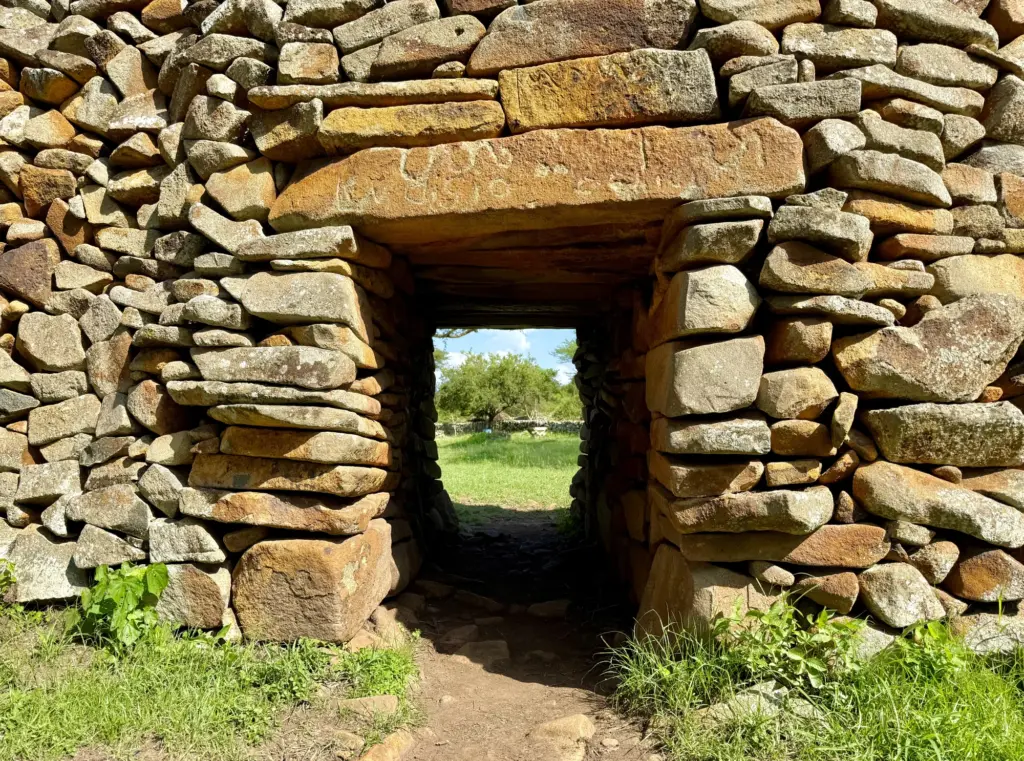
Thimlich Ohinga has a way of unsettling tidy narratives. It reminds you that there were systems here. Planning. Defence. Labour mobilization. Technical skill. Regional interaction. Serious social organization. Long before colonial rule, people in this part of Africa were building in stone, fortifying settlements, managing livestock, securing communities, and living in ways that were clearly more sophisticated than the lazy old clichés ever allowed. Thimlich Ohinga has the feel of a lost civilization without pretending to offer a neat answer to who exactly that civilization was.
And it is not just the main enclosure either. Once you look at the wider area, including what shows up on Google Maps, it becomes clear that this was not some isolated one-off. There are more enclosures scattered across the landscape. Thimlich Ohinga is the star, but it appears to belong to a much bigger pattern. That only deepens the sense that we are looking at the remains of a wider settlement and defence network than most people realise. Trade routes, local kingdoms, clan structures, regional systems of power and protection. The clues are there. The full picture still is not.
That is part of what makes it so maddening that Thimlich Ohinga remains such a forgotten backwater.
This should be one of Kenya’s headline heritage sites. Instead, it feels half-lost in the national imagination. You get there, and the few guys working on site are genuinely happy to see visitors. Not in the polished, over-rehearsed tourism way. More in the very human way that suggests visitors are still enough of a novelty to brighten the day. The visitor book told its own story. We were the first there that day, and it did not exactly feel as though that was some shocking exception. For a site of this importance, that says a lot.
Maybe the first thing Kenya should send there is not even more tourists, but more archaeologists.
Because standing at Thimlich Ohinga, you get the strong sense that we still do not fully grasp what we are looking at. Not just a ruin. Not just a fortified homestead. Not just a cultural monument. Something bigger. A clue to how societies in this region were organized before colonialism bulldozed older realities out of public memory. A clue to forgotten networks and political worlds. A clue to a deeper, more complex story of East Africa than the standard version most people grow up with.
And it all sits there, hidden behind bad roads, silence, and a level of obscurity that feels almost absurd.
That, really, is Thimlich Ohinga in a nutshell. One of Kenya’s most remarkable historic sites. UNESCO-listed. Architecturally impressive. Culturally significant. Shrouded in mystery. Barely known. Hard to access. Harder to forget.
It is the kind of place that rewards effort precisely because it has not been smoothed out for easy consumption. You do not glide into Thimlich Ohinga. You earn it a bit. You bounce your way there, get stuck in the mud, wonder whether this is still a sensible plan, and then suddenly find yourself standing inside thick stone walls that have been there for centuries, asking questions nobody has properly answered yet.
That is my kind of place.