




Axum is one of the real old ones in my travel archive. These photos are from 2004, back when Axum did not even have a mobile network, and Ethiopia was still in that phase where modern banking felt more theoretical than practical. At the time, the whole country had exactly one place where you could withdraw money with a bank card, at a bank office in Addis. So yes, this was Ethiopia before apps, before easy cash, before constant connectivity.
Axum was a very good place for that kind of travel. Calm, deeply rooted, and profoundly religious, with the quietly warm friendliness you find across Ethiopia in general, only somehow even more concentrated here. It felt serene and very real, with layers of history so deep that even an ordinary stroll through the old parts of town carried some weight.
Axum is much more than the quiet highland town that first meets the eye. This was the centre of one of ancient Africa’s great kingdoms, and the evidence is still all over the place: stelae, tombs, church compounds, and enough history underfoot to stop it ever feeling like just another small town.


Queen of Sheba, Solomon, and the long Ethiopian story
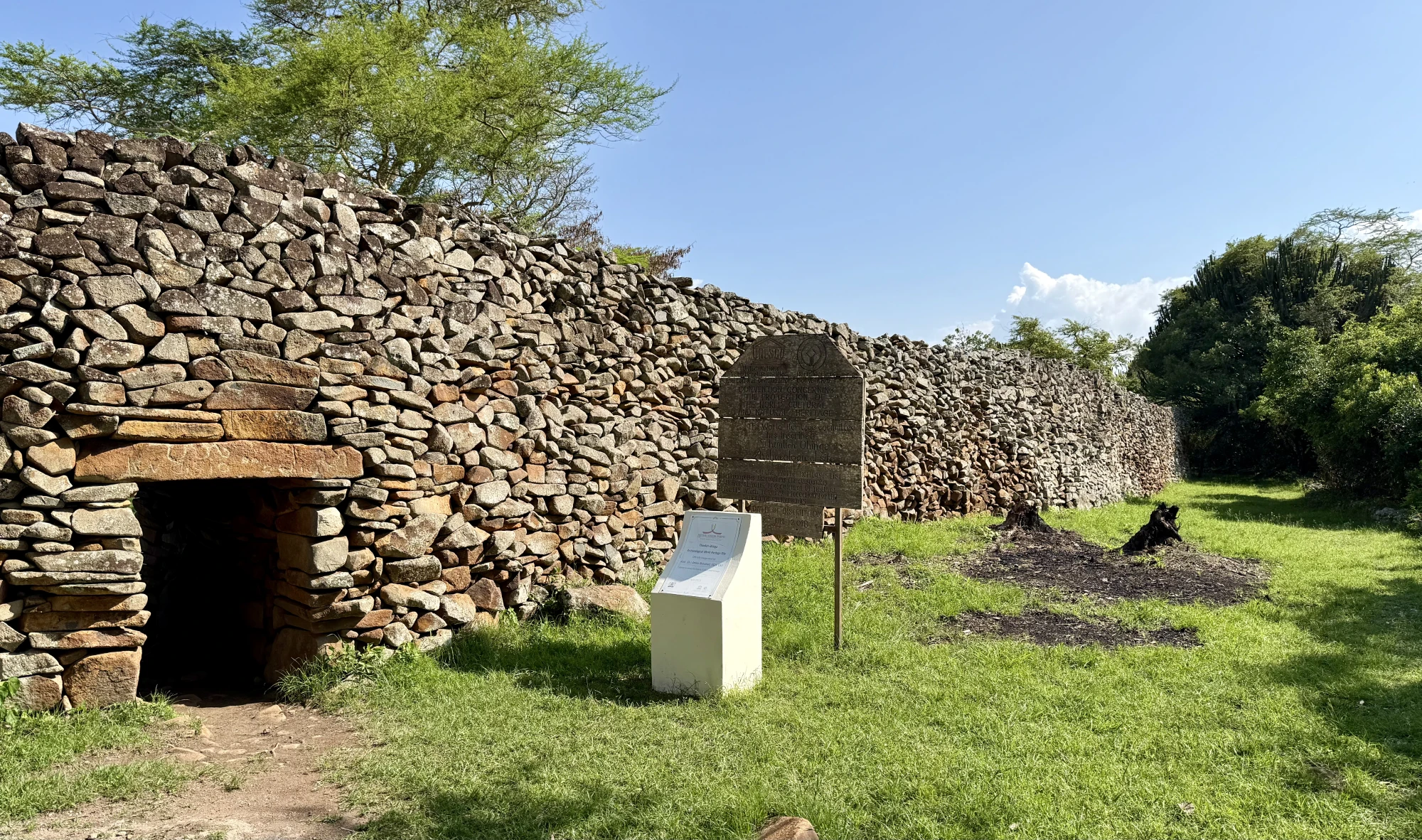
Axum, a UNESCO World Heritage site is inseparable from the great Ethiopian historical and religious tradition. This is the city of the Queen of Sheba, who in Ethiopian tradition is linked to King Solomon and to the origin story of the Solomonic line of emperors. Her palace, or what is believed to have been it, lies on the outskirts of town. Some of the images here come from that site.
Whether every detail belongs more to history, legend, or that blurry zone where the two have been sharing the same room for a very long time is almost beside the point. In Axum, these stories are not treated like distant folklore. They are alive. They shape the place. They are part of how the city understands itself.
And then there is the biggest story of them all.


The Ark, the guardians, and belief that is still fully alive
According to Ethiopian tradition, the Ark of the Covenant was brought here from Jerusalem and is kept in a shrine beside St. Mary of Zion. Is it really there? The Ethiopian Orthodox Church says yes, and the rest of the world can argue with itself.
What makes the story even more Axum is the figure of the Guardian of the Ark, chosen young and bound to that role for life. That alone tells you how central these beliefs are. They sit right inside everyday life here. For most people, they are as real as the ground under their feet.
You see that everywhere in Axum and far beyond it. Replicas of the Ark are found in churches across Ethiopia. Faith here is central, public, visible, and woven right into daily life.


Stelae, empire, and serious ambition
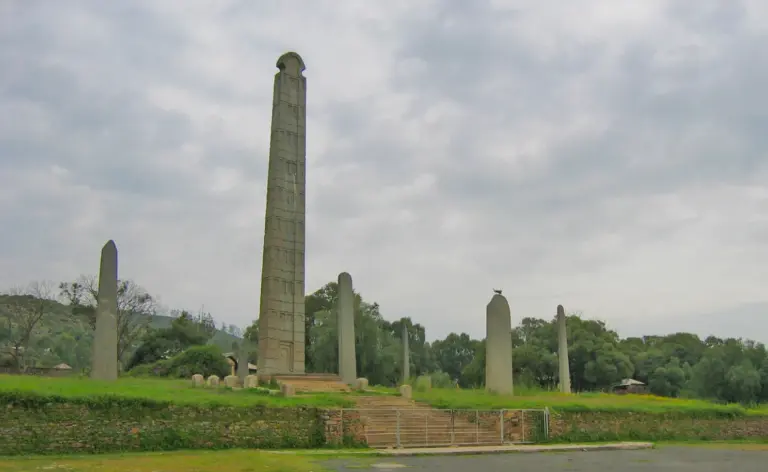
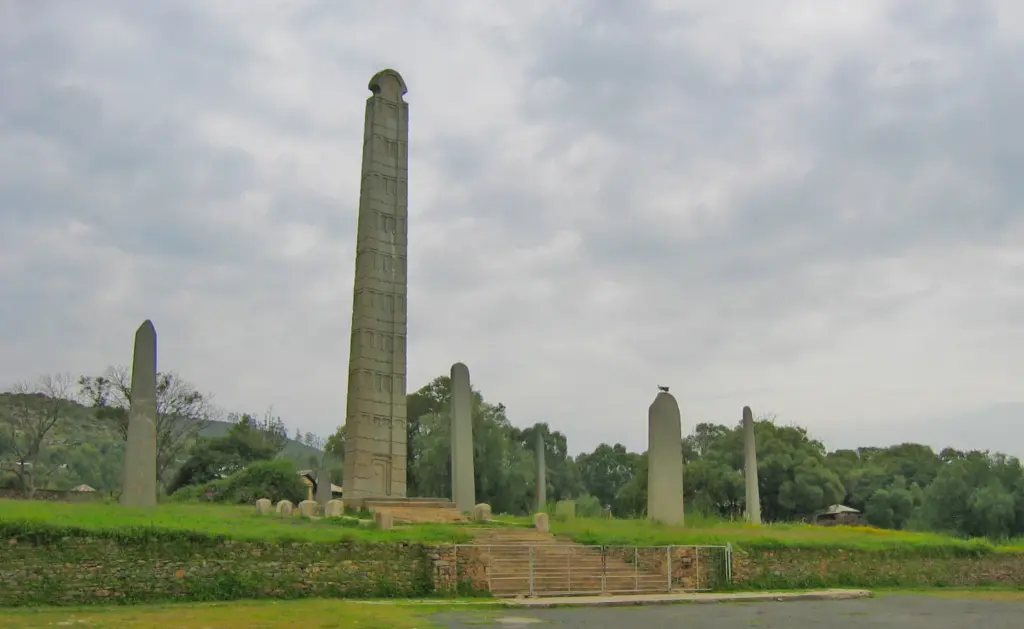
Then there are the stelae. Axum’s most iconic visual signature. Massive, elegant, slightly mysterious, and unmistakably tied to one of ancient Africa’s great civilisations. They still have that effect of making you stop, look up, and think: serious people built serious things here.
When I visited in 2004, the 4th-century King Ezana Stele stood intact above the smaller monuments around it. The following year, Italy returned the slightly taller stele it had taken to Rome in 1937 during the brief Italian occupation. After 68 years away, one of Ethiopia’s great Aksumite monuments was back where it belonged.
This is more than an archaeological site. It is one of the places that helps define Ethiopia’s historical depth and cultural identity.
Pentelewon and one very unlikely crown moment
Outside town, on a hill, sits Pentelewon Monastery. It is said to hold the crown of King Kaleb, the Axumite ruler who later retired there as a hermit. Warrior king. Crown. Monastery. Hilltop retreat. Ethiopian heritage often comes with a few extra layers.
And then there is my own slightly insane footnote to all this.
In 2004, tourists were still rare enough in Axum that things were a lot less formal than they would probably be now. So when I asked if I could try King Kaleb’s crown on my head, there was no scandal, no security panic, no dramatic intake of breath. No problem. The photo exists. Me wearing the crown and holding the cross of Gebre Meskel, looking far too comfortable for someone who had absolutely no business doing either.
I doubt that is part of the standard visitor experience now.


Sundays in white
Axum is one of the most profoundly religious places I have visited anywhere. On Sundays the whole town seems to turn white, with people dressed for church and gathering in huge numbers. The devotion is striking. Churches fill up, and when there is no more room, people stay outside. Sun, rain, whatever comes. They stay.
That is one of my strongest memories from Axum. Not only the monuments. Not only the legends. The devotion. The patience. The dignity. The unquestioning faith woven into everyday life, all day, every day.


Sacred objects, fragile rooms
Axum also holds an extraordinary wealth of religious material. Paintings, parchments, crosses, manuscripts, ancient books, all tied to centuries of belief and scholarship. What struck me then was that some of these treasures were being kept in conditions that did not exactly suggest ideal archival preservation. In many places, the buildings seemed hardly designed to protect such things over the long term.
And yet there they were. Still present. Still revered. Still carrying an unbroken thread of memory through centuries of change, conflict, empire, poverty, devotion, and survival.
That is Ethiopia in a nutshell, really. So much depth. So much continuity. So much history being carried forward by institutions and people who were never exactly spoiled with resources.


Axum, Adwa, and a region dense with memory
Axum and Adwa are not the same story, but in northern Ethiopia the layers of history lie close together. Ancient empire in one direction, one of Africa’s most important victories against a colonial army in another. That is part of what gives this region such unusual weight.
Adwa matters far beyond Ethiopia. Menelik II’s victory over the invading Italian army in 1896 remains one of the defining defeats of European colonial ambition in Africa. In this part of Ethiopia, history is never far away.

The feel of Axum
History is only one of the reasons Axum is so memorable. Beyond history, it is really about the whole feel of the place.
The calm. The devotion. The lack of rush. The friendliness. Ethiopia is generally one of the friendliest countries I know, and Axum somehow turns that quality up another notch. People were welcoming, open, curious, and kind in that easy, unforced Ethiopian way.


Axum is one of the most important places in Ethiopian culture and heritage, but it does not feel weighed down by self-importance. It feels serene. Grounded. Deeply human.
That is probably why I still like these old Axum images so much. They are not from some polished, hyper-connected travel era. They come from a time when getting there felt like getting properly there. A time when you travelled a bit more blindly, relied a bit more on chance, and occasionally ended up wearing the crown of an ancient king because, apparently, nobody saw a major issue with it.
That was Axum in 2004. Ancient, devout, calm, and impossible to confuse with anywhere else.