
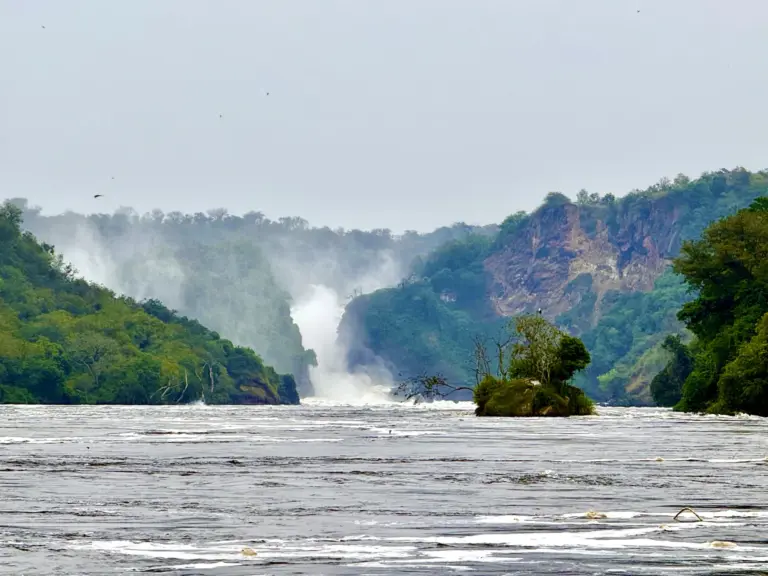
Murchison Falls deserves far more attention than it usually gets. People talk about the usual East African safari names, then somehow leave out a place where the Victoria Nile gets forced through an 8-metre gap and drops 45 metres in a wall of spray and noise. It is one of those places that makes its point immediately.
The first thing that hits you is the sheer power. Upstream, the river is wide and calm. Then the rock closes in, the water bunches up, and everything gets shoved through one narrow gap before exploding out below. Standing there, you are not looking at some small scenic detail. You are watching the Nile get squeezed into something violent and loud.
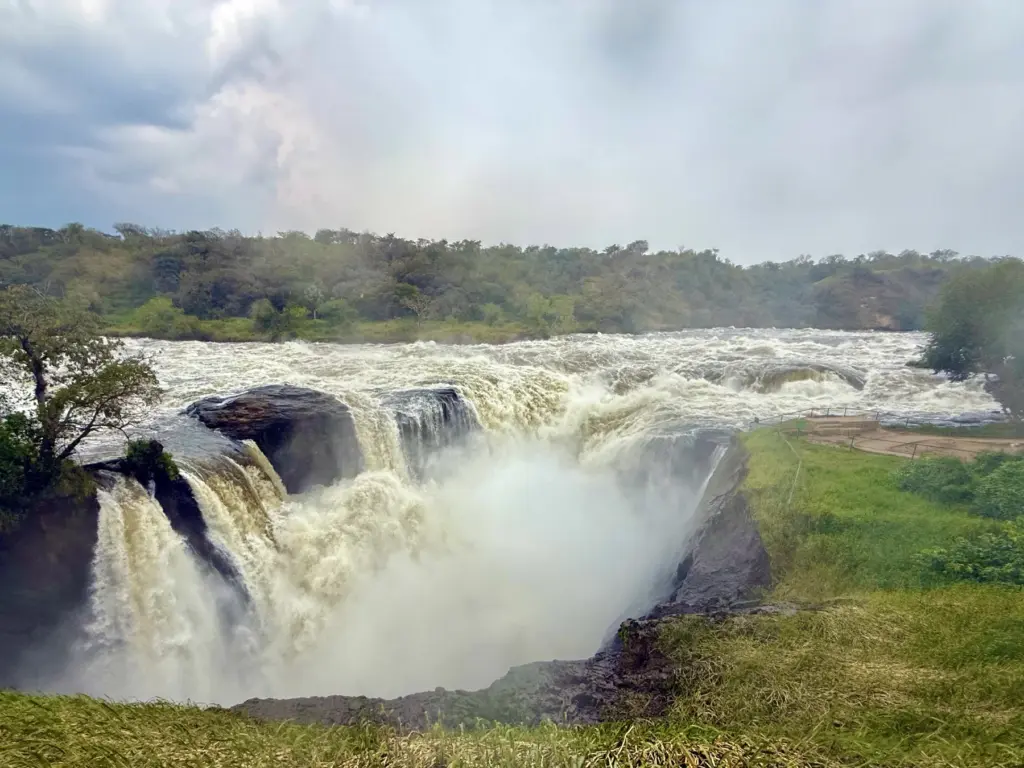
That is what gives Murchison its punch. Huge river. Tiny gap. Brutal release. There is nothing abstract about it once you are standing above it or down near the base. The spray hangs in the air, the sound carries, and the whole place has proper force to it. Real brute force.
It is also one of those rare natural features where the scale lands straight away. You do not have to talk yourself into it. You do not have to pretend it is more dramatic than it is. It IS pure drama!
More than just the falls
Another thing that makes Murchison stand out is that the waterfall is not carrying the park by itself. Once you’re done with the main attraction, there is still so much more to see. Open savanna, riverbanks, wildlife everywhere, and enough variation that experience is far from a one-stop affair.
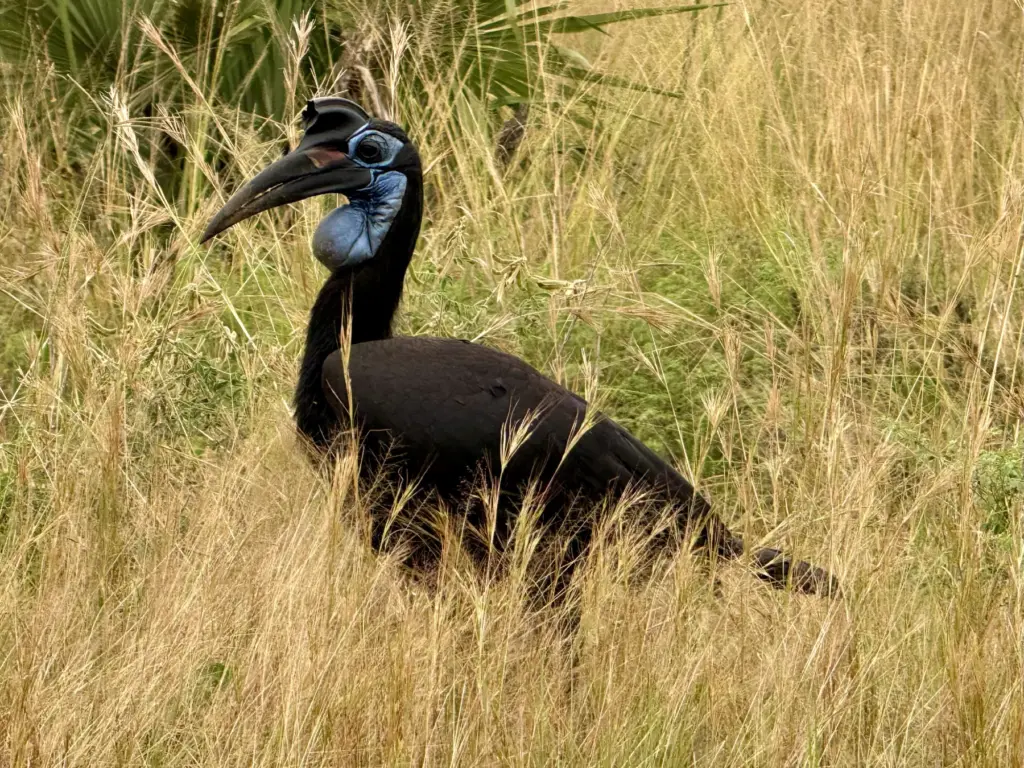
You get elephants, buffalo, giraffes, antelope, crocodiles, hippos, monkeys, and a strong birdlife scene running through the whole experience. The ground hornbills deserve a mention too. They look slightly prehistoric and you really cannot fail to notice them in the terrain.
You come for the falls, obviously, but the park does not drop away once you have seen the main event. The river keeps pulling the whole thing together. It shapes the landscape, it keeps wildlife close, and it makes the rest of the river cruise feel like part of the destination rather than something tacked on to fill the programme.


The river is central to the rhythm of the place. You see it in the falls, then again in the quieter stretches with hippos in the water, crocodiles on the banks, birds moving along the edges, and boats drifting through scenery that still feels big and properly alive.


Northern Uganda with room to breathe
Another thing in Murchison’s favour is that it feels easier to reach and move through than many people assume. Once you’re in, the park opens up well. The scale is still there, the landscapes still feel broad, but you don’t spend the whole time dealing with rough logistics and congratulating yourself for surviving the journey.
That helps more than people think. It lets the attention stay where it should. On the river. On the wildlife. On the changing terrain. On the fact that one minute you are looking at one of Africa’s great river spectacles, and the next you are watching giraffes cross open country or buffalo standing about like they own the place, which to be fair they more or less do.


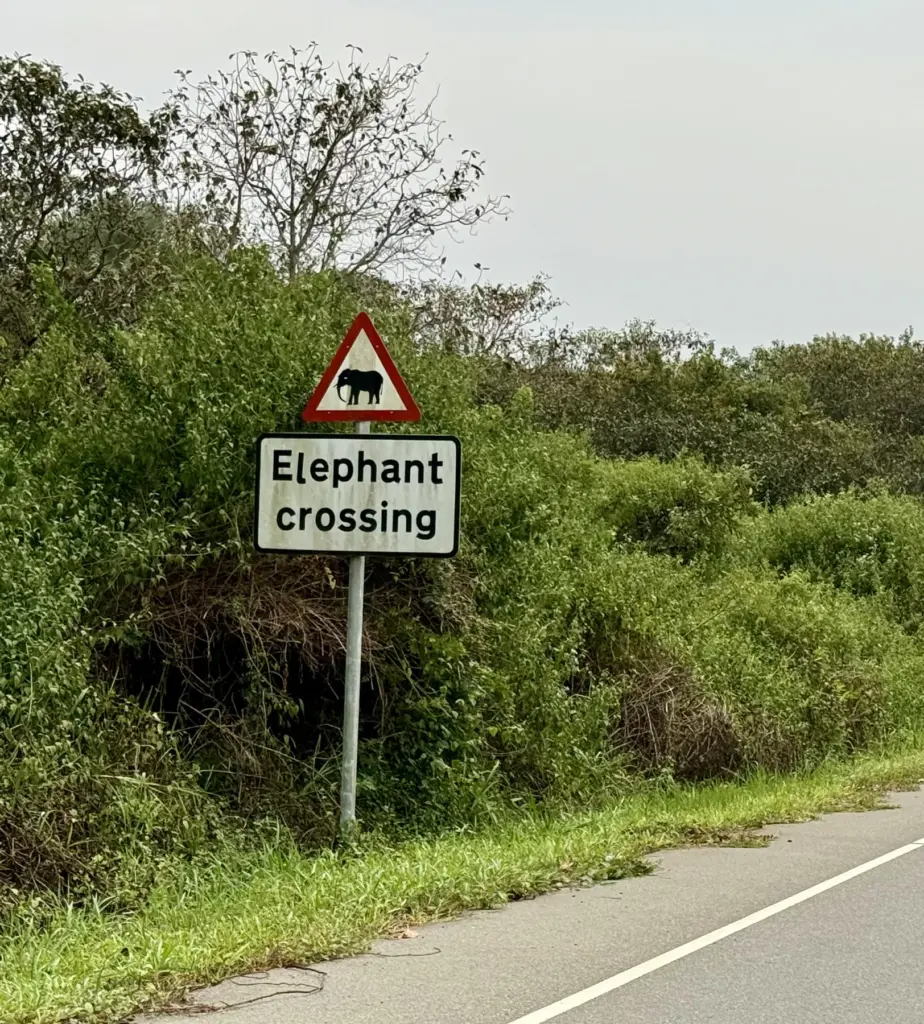
There is also something quietly satisfying about seeing an elephant crossing sign in a place where the sign doesn’t feel decorative.
A stronger park than its fame suggests
Murchison is Uganda’s oldest and largest national park, with the Nile cutting through it, throwing itself into what is often described as the world’s most powerful waterfall, and then carrying on through a landscape full of wildlife. That is a serious combination anywhere in Africa.
What lifts it further is the balance. The falls bring shock and noise. The river brings movement. The wider plains open everything out again. Then the animals keep showing up often enough that the place never drops into scenery alone.


That is where Murchison really earns its place. It gives you one of the continent’s great waterfall scenes, but it also gives you a full park around it. Not a backdrop. Not filler. A proper national park with enough range and enough wildlife to stand on its own even without the famous gorge.
And yet the falls are still the anchor. They are the reason the name sticks. They are the reason people should be talking about this place a lot more than they do.
Final stretch
Murchison feels like a heavyweight that somehow still gets introduced like an outsider. That probably will not last forever. Places with this much force, this much wildlife, and this much range tend to get their due eventually.
For now, though, it still feels like one of those East African parks that people have not fully caught up with.
That alone makes it worth paying attention to.