
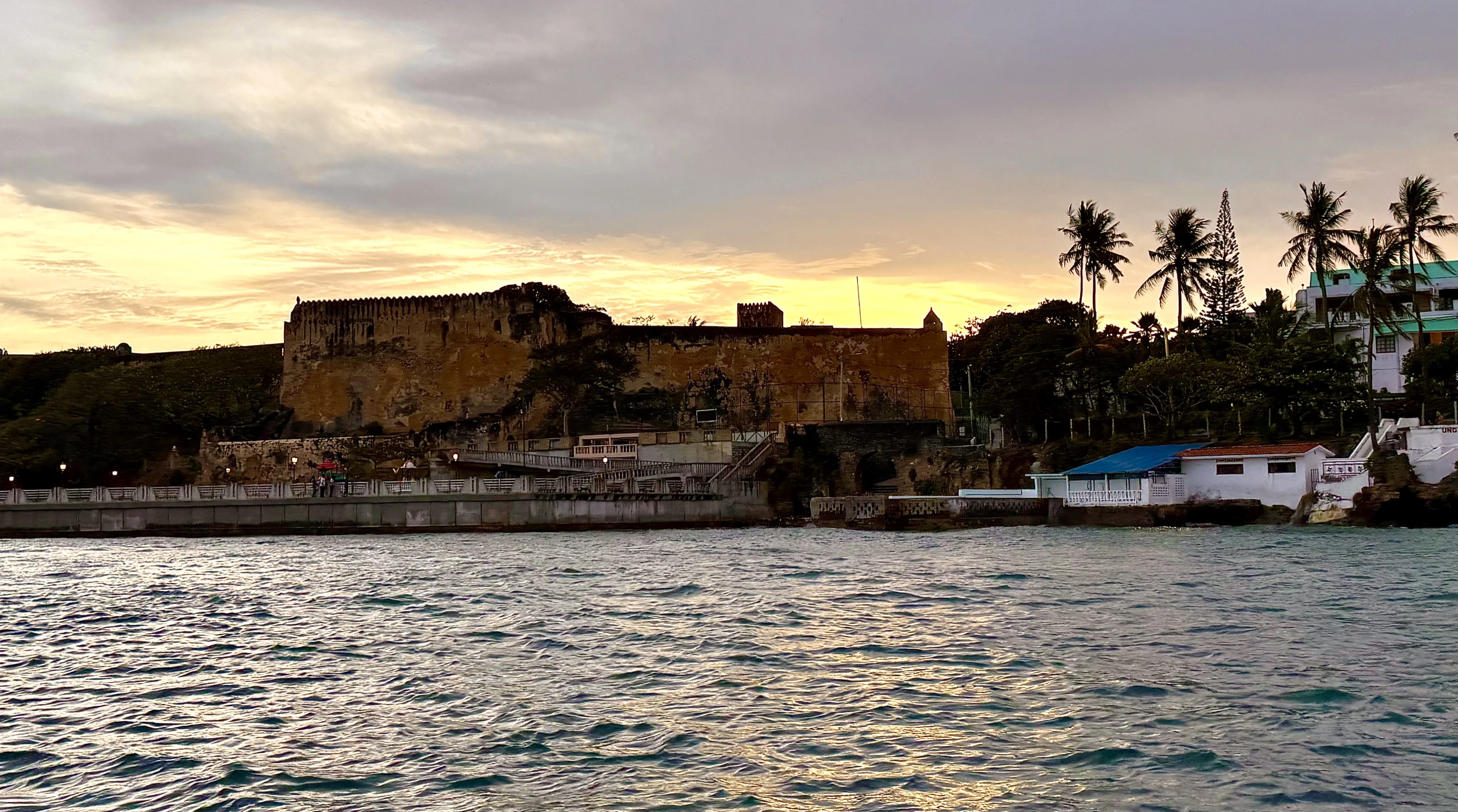

Fort Jesus in Mombasa is one of the heavyweight historic sites on the Kenyan coast: a UNESCO World Heritage Site in the middle of old Mombasa, with centuries of trade, war, empire, and Swahili history packed into one fortress.
The fort stands as a stark reminder of the era when European empires began sailing into the sophisticated trading hubs of the Swahili Coast with the clear ambition of controlling its cities, its coastline, and ultimately the Indian Ocean trade routes.
The Swahili Coast was not easily conquered.
A Coast That Didn’t Need Discovering
It was ambitious, to put it mildly, when Vasco da Gama claimed he had ‘discovered’ East Africa in 1498.
As if the thriving Swahili cities trading with Arabia, Persia, India, and China for centuries had simply been sitting there, unaware of themselves, until a Portuguese fleet arrived to enlighten them.
When da Gama arrived off the coast of Mvita, the traditional name for Mombasa, he entered a world that was already deeply plugged into the wider Indian Ocean economy. Merchant dhows rode the monsoon winds between ports. Gold, ivory, spices, mangrove timber, textiles, and, tragically, enslaved people moved constantly through the network. Traders spoke multiple languages. Families stretched across continents.
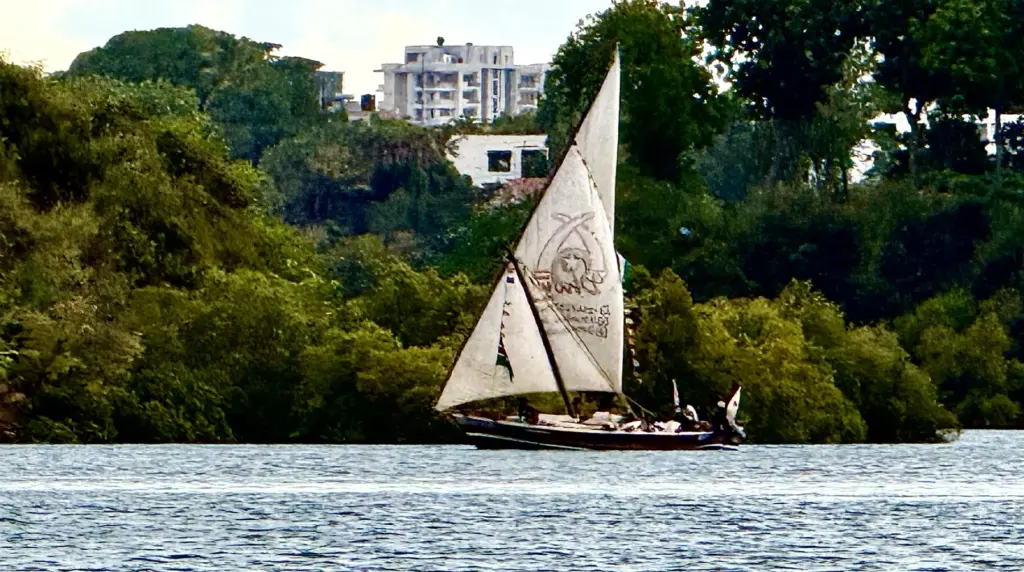
This was not an isolated coast waiting to be discovered. It was a functioning global marketplace, thriving in its position. The newcomers were viewed accordingly.
The reception Vasco Da Gama got in Mombasa was far from warm. Outright hostile, some would say.
While the Portuguese did exchange some gifts with the sultan, they never disembarked. Fearing an ambush, Da Gama ordered his ships to set sail again after anchoring for four days.
The hostility did not come out of nowhere. Portuguese fleets moving along the East African coast were already earning a reputation for arriving heavily armed, soaked in imperial arrogance, and perfectly willing to use brutality in pursuit of trade routes that were not theirs to seize.
There was also a deeper historical edge to it. After the Moors were driven out of Granada in 1492, the Iberian kingdoms emerged with a heady sense of victory, superiority, and unfinished revenge. They were no longer just trading powers looking outward. They were states with a growing taste for conquest, and with little doubt about who they thought should rule. From the Muslim side of the Indian Ocean world, these newcomers did not look promising. They looked like exactly the sort of brutal conquerors whose arrival could only mean trouble.
Word travelled along the coast the way it always had: through merchants, sailors, and travellers moving between ports. News passed from harbour to harbour faster than ships themselves.
So by the time Portuguese sails appeared offshore, people already had a fairly good idea of what kind of visitors they were dealing with.
Malindi’s Calculated Friendship
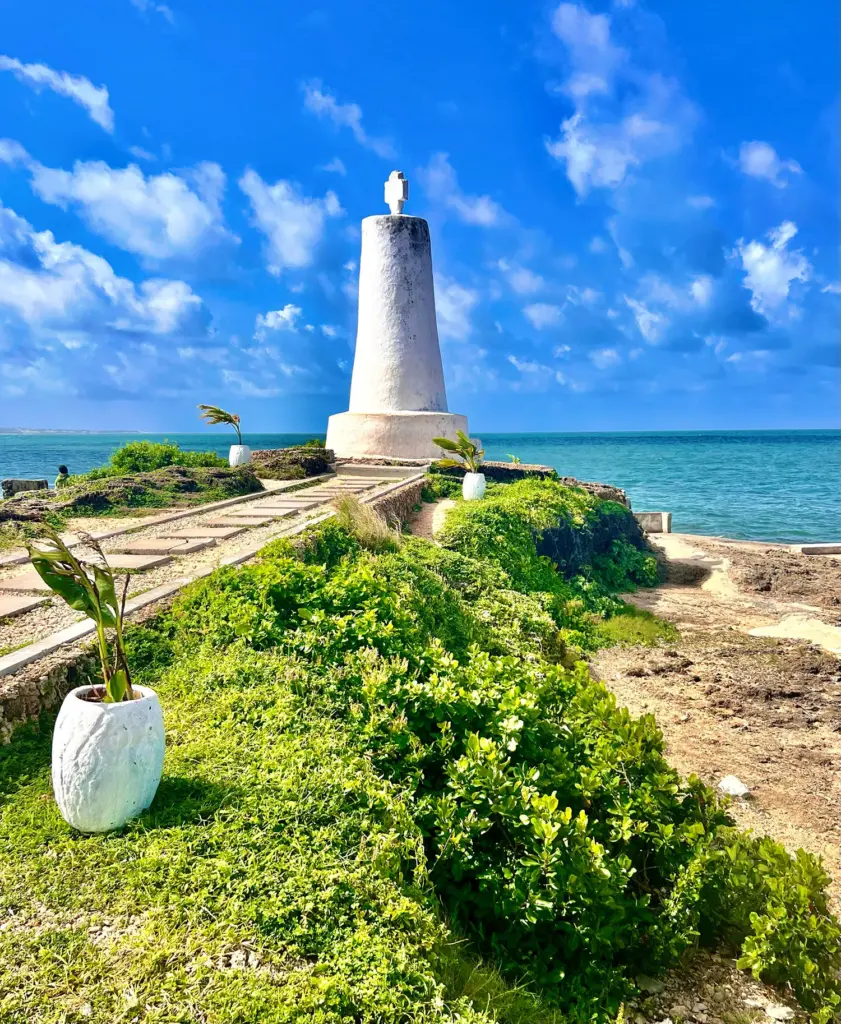
A little further north, the Sultan of Malindi made a different calculation.
Malindi and Mombasa were long-standing rivals. Coastal politics here was never simple. Backing the Portuguese suddenly looked like a practical way to shift the balance.
They offered supplies, hospitality, and, most importantly, a navigator who understood the Indian Ocean monsoon system well enough to guide the Portuguese fleet across to India.
Historians still debate whether that navigator was Ahmad ibn Majid, an Arab cartographer from present-day Ras Al Khaimah in the United Arab Emirates, or Kanji Malam, also rendered as Malemo Cana, a Gujarati seafarer. Either way, without that knowledge of the monsoon system, da Gama’s crossing to India would have been far harder.
In either case a small decision in a regional rivalry ended up reshaping global trade.
From that point on, the Portuguese became a permanent presence along the coast, and their ambitions grew quickly.
When Trade Becomes Empire
The Portuguese approach to the Indian Ocean was fairly straightforward: control the sea lanes, dominate key ports, and make sure everyone else traded on terms set in Lisbon.
In practice, that meant pressure, intimidation, and occasionally cannon fire.
Further south along the coast, Portuguese fleets began asserting influence over important Swahili trading cities such as Kilwa, which controlled major gold routes coming from the interior. Ports that had thrived for centuries suddenly found themselves dealing with a new kind of visitor. One with ships full of artillery and a very strong belief in their own divine right to regulate commerce.
Eventually the Portuguese realized that the Swahili Coast was not going to be easy to control. That realization eventually drove them to build the fort.
Fort Jesus: A Monument to Control
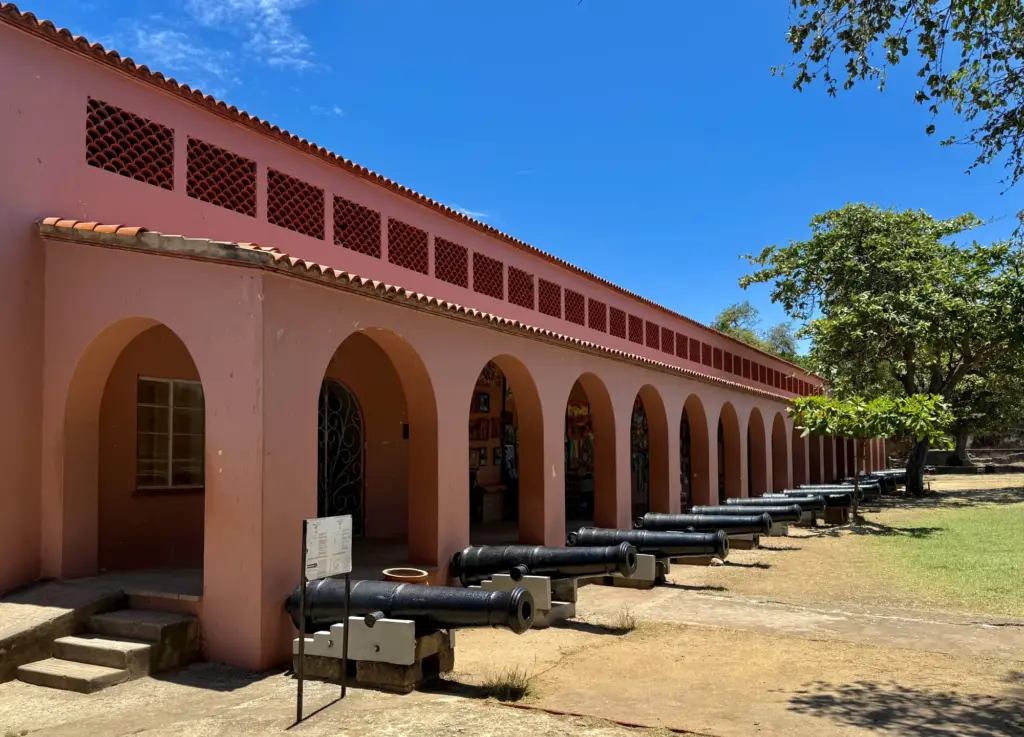
Fort Jesus was built in 1593, nearly a century after Vasco da Gama first sailed past these shores.
The Portuguese had learned that a few passing warships were not enough to maintain influence over such a strategically important coastline. If they wanted to dominate the Swahili Coast, they needed something permanent.
Designed by the Italian architect Giovanni Battista Cairati and built from coral stone cut from the nearby reef, Fort Jesus was placed to command the entrance to Mombasa’s harbour. From its walls, cannons could control ships approaching the port.
The point was obvious enough. The Portuguese were not on a courtesy call. Still, strong walls did not stop Fort Jesus from changing hands repeatedly.
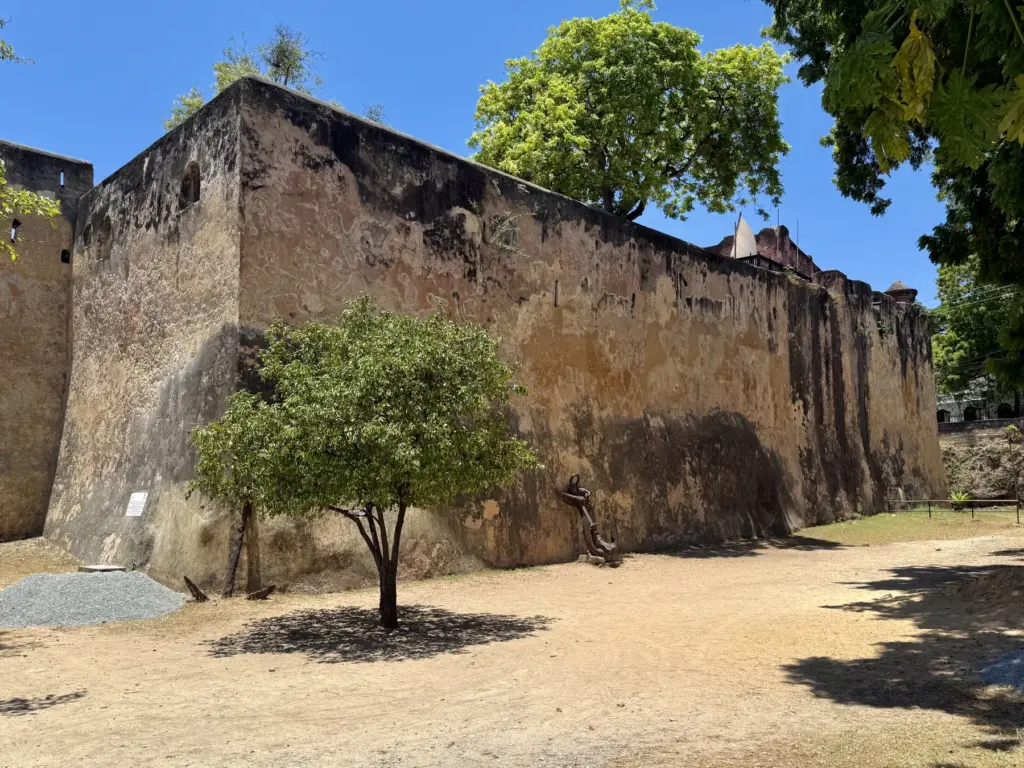
Over the centuries, control shifted back and forth, mainly between the Portuguese and the Omanis. The Omanis would retake the fort, then Portugal would return with stronger reinforcements and take it back again. That cycle continued until the late 1600s, when the Omanis laid siege to Fort Jesus for an astonishing 33 months.
Starvation, disease, and constant pressure eventually broke the Portuguese defenders. The Omanis took Mombasa, and with it a major piece of control along the coast.
Later the British arrived, and like many colonial structures around the world, Fort Jesus was briefly repurposed as a prison.
Today it stands as a UNESCO World Heritage Site and one of the most important historical landmarks on the Swahili Coast.
But what makes Fort Jesus interesting is not just the stone walls. The surroundings tell their story too.
Mombasa Old Town: History in the streets
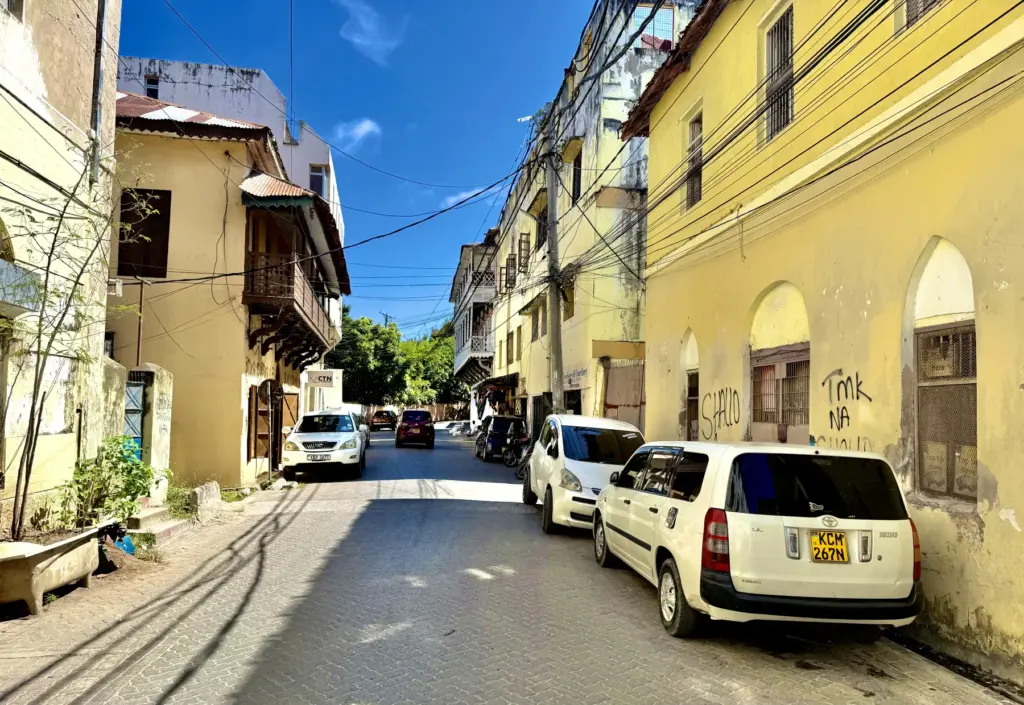
Step out of the gates of Fort Jesus and you walk straight into Mombasa Old Town.
And immediately the atmosphere changes, as the geometry of empire gives way to the slightly chaotic reality of living culture.
Narrow streets twist unpredictably between old buildings. Balconies lean over the alleys. Wooden doors—some of them hundreds of years old—are carved with intricate patterns that reveal layers of influence: Arab calligraphy, Indian floral designs, African craftsmanship.
Old Town is not perfectly restored. It is not polished or curated the way Stone Town in Zanzibar is gradually becoming.
Shops spill into the street. Children run through the alleys. Elderly men sit outside playing bao and discussing politics, football, or whatever else seems worth debating that day.
The architecture reflects the long history of cultural fusion along this coast. Swahili identity was never a single influence. It was built through centuries of interaction between African communities, Arab traders, Persian merchants, and later Indian settlers.
Mombasa Old Town carries all of that in its walls.
A City That Keeps Adapting
Stone Town reflects a far more intentional preservation effort. Mombasa, by contrast, feels rougher around the edges, less protected, and more like a place that never stopped evolving.
The Old Town district still carries the deep roots of Swahili culture, but the broader city around it shows how that culture has adapted to modern life.
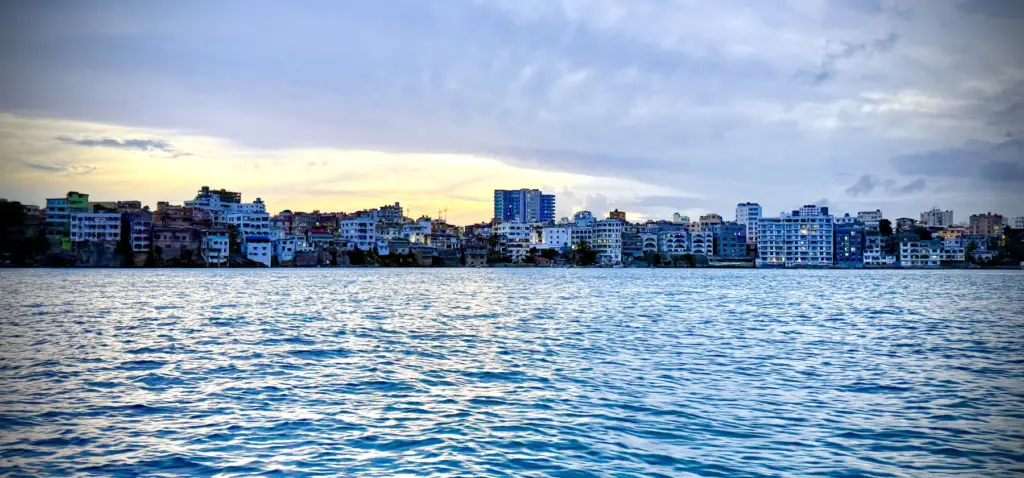
Mombasa today is busy, noisy, slightly chaotic, and endlessly fascinating.
Container ships move through the port. Motorbikes weave through traffic. High-rise buildings sit beside mosques that have stood for centuries. The rhythms of Swahili culture continue to shape daily life, even as the city expands and modernizes.
In that sense, Mombasa is actually a very authentic continuation of the Swahili story that is still evolving.
The Fort, the City, and the Coast
Fort Jesus was built to control the Swahili Coast. The success was mixed at best.
Empires came and went. Fort Jesus changed hands back and forth. The Portuguese faded. Omani power rose, followed by the Zanzibari Sultanate, which came to control Mombasa and the wider Kenyan coast. The British later took over through colonial rule, though the Sultan of Zanzibar still retained nominal authority over the coastal strip until independence, when it was finally ceded to Kenya.
But the cultural foundations of the Swahili Coast endured.
Walk through the old streets near the fort today and you can still feel that continuity. The languages, the architecture, the food, the rhythm of daily life. It all reflects a coastal civilization that existed long before Vasco da Gama or Fort Jesus showed up claiming to have discovered something.
Fort Jesus stands as a reminder of that moment when global powers tried to reshape the region.
Mombasa itself stands as proof that the coast was never really reshaped.